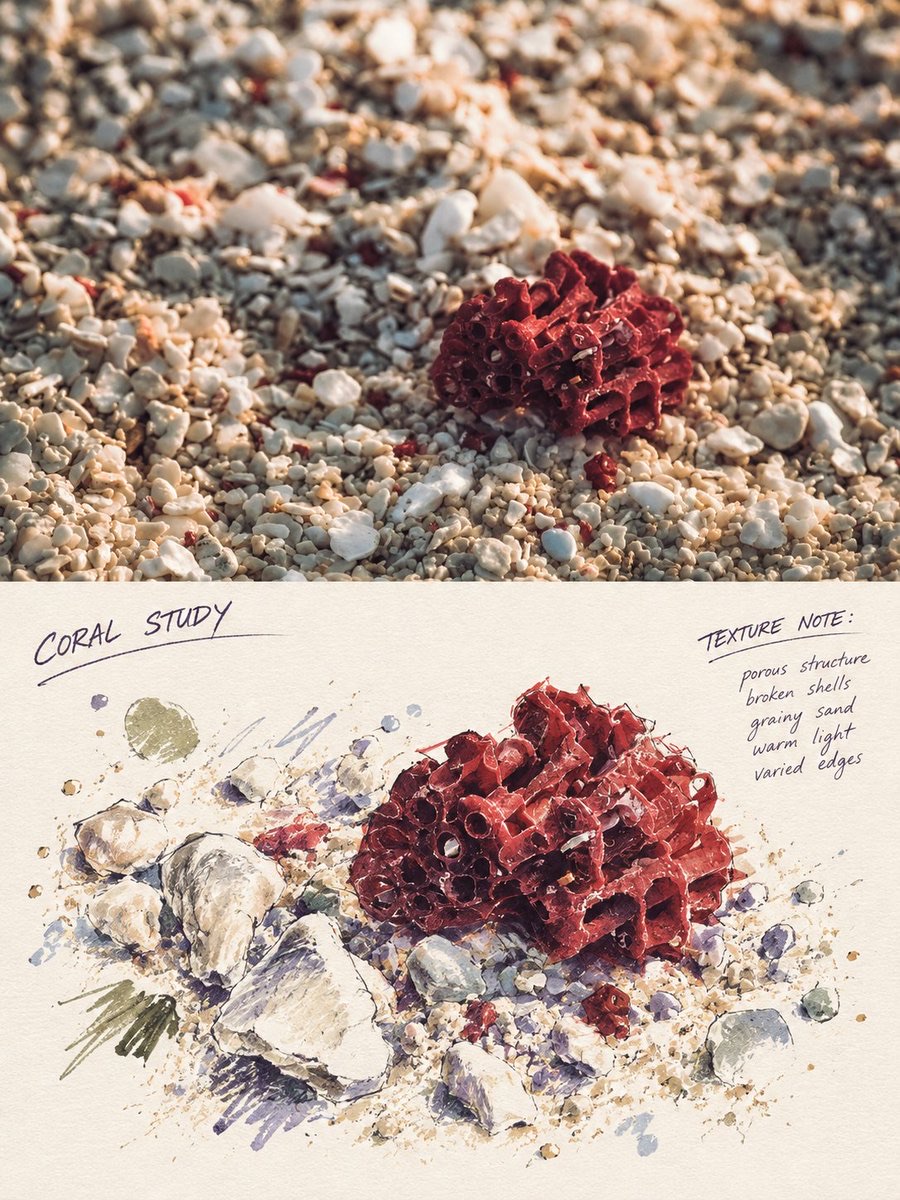
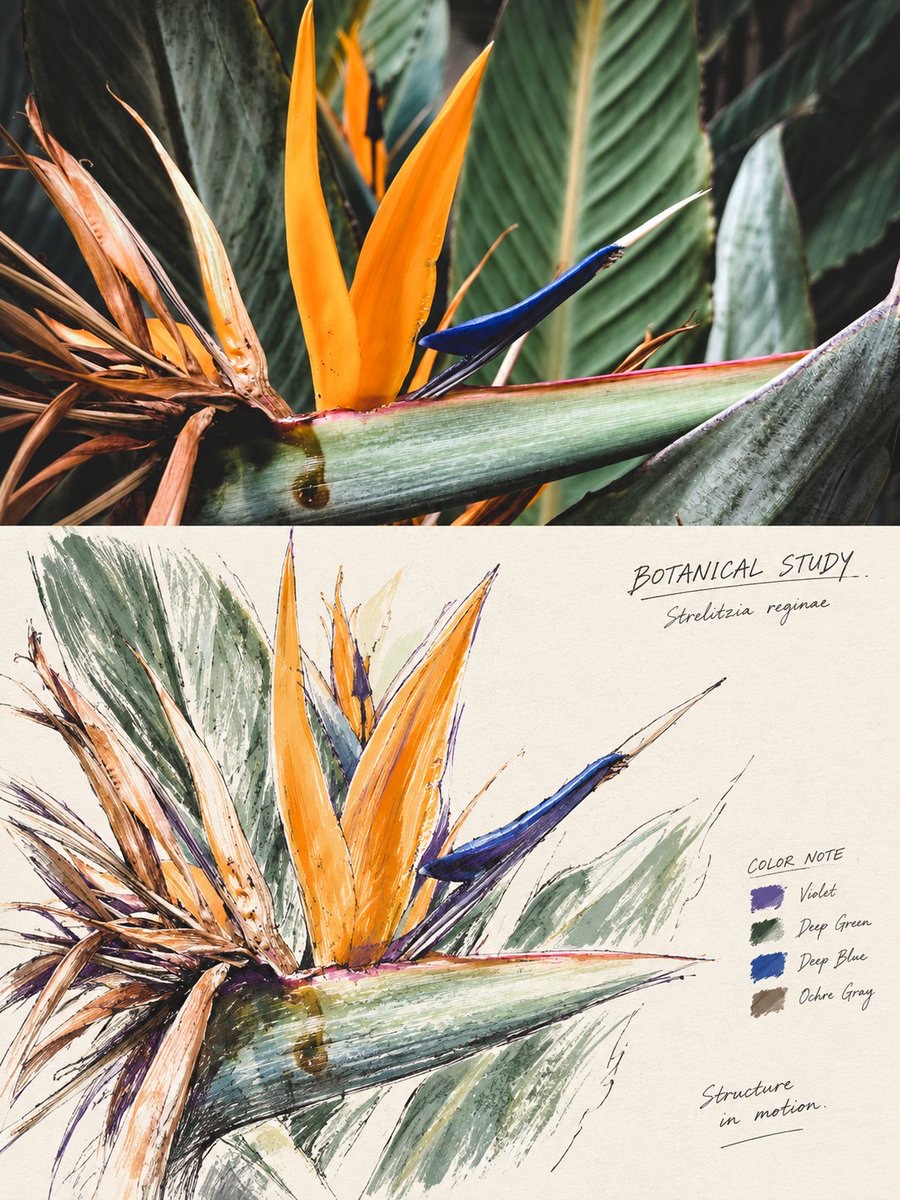
Image
Color Ink Specimen Gesture Plate
Keep the input photo as a real image in the upper half, and redraw the lower half as a research plate with hand-drawn strokes, selective color ink, and observation marks.
 蛋黄堡@Hamburgerai
Prompt
Transform the input photo into an upper-and-lower comparison image in the style of 【GESTURAL SPECIMEN PLATE|Color Ink Specimen Gesture Plate】, suitable for plants, animals, people, food, architecture, vehicles, and any travel scene, with no subject matter restrictions.
Divide the image strictly into upper and lower sections; do not use a side-by-side collage or a multi-panel grid. The upper section should occupy about 42%–52% and preserve the input photo itself: the subject, number of subjects, pose, perspective, lighting, and key background relationships must remain clearly recognizable and true to the photo, with only slight editorial color grading. The lower section should occupy about 48%–58%, and redraw the same subject on warm-white observation paper. Keep its spatial relationships and identifying features consistent with the upper section, while allowing enlargement, cropping, a changed viewing angle, and more negative space, like a research specimen plate extracted from the photograph.
Use one to three hand-drawn ink colors in the lower section, such as violet, dark green, deep blue, or ochre gray. Lines should show realistic changes in pen pressure and speed: include visible broken lines, retracing, crossings, slight wobble, erased marks, open contours, and short hatching. Use only a few structural lines to show volume, texture, veins, folds in clothing, architectural layers, or the edges of objects; do not turn the photo into uniform automatic outlines. Extract one to three key colors from the upper section and use thin color ink or transparent color patches to selectively emphasize the subject. Leave the remaining areas as exposed paper; do not fill the whole surface with a flat wash.
The lower section may include a few handwritten-style observation marks: fine arrows, circled annotations, short English color names, dates, or numbers. Keep the text sparse, clear, and correctly spelled, and do not cover the subject. Give the paper only slight fibers, ink bleed, pencil erasure marks, and scattered ink dots. Keep it light and quiet, like an observation sketch on a worktable. Leave only a clean horizontal divider between the upper and lower sections, with no decorative frame.
Keep the subjects in the two sections strictly matched. Do not add unrelated objects, change the number of people, replace landmarks, or turn the photo area into an illustration. Prohibited: misaligned layouts with small photo windows, minimalist line art in a single olive green, heavy crayons, full-page watercolor, embroidery or beads, torn-paper collage, old newspaper layouts, colorful geometric posters, smooth vector lines, 3D rendering, cartoon expressions, logos, watermarks, fake Chinese text, AI badges, and original-image badges.
将输入照片转绘为【GESTURAL SPECIMEN PLATE|彩墨标本手势图版】的上下对比图,适用于植物、动物、人物、食物、建筑、交通工具和任意旅行场景,不限定题材。
画面严格分成上下两段,不做左右拼贴和多格网格。上半部约占 42%–52%,保留输入照片本身:主体、数量、姿态、透视、光线和关键背景关系必须真实可辨,只做轻微出版调色。下半部约占 48%–58%,在暖白观察纸上重新绘制同一主体;位置关系和识别特征对应上半部,但允许放大、裁切、改变视线和留出更多空白,像从照片提取出的研究标本图版。
下半部使用紫罗兰、墨绿、深蓝或赭灰等一至三种手绘墨色。线条要有真实笔压和速度变化:局部断线、回描、交叉、轻微抖动、擦除残线、未闭合轮廓和短排线都应可见。只用少量结构线表现体积、纹理、叶脉、衣褶、建筑层次或器物边缘;不要把照片转换成均匀的自动描边。根据上半部提取一至三种关键色,以稀薄的彩墨或透明色块局部强调主体,其余区域保留纸面露白,不做整面平涂。
下半部可加入少量手写式观察标记:细箭头、圈注、短英文色名、日期或编号,文字必须少、清晰、拼写正确,不盖住主体。纸张仅带轻微纤维、吸墨晕边、铅笔擦痕和零星墨点,保持轻薄、安静、像工作台上的观察稿。上下两段之间只保留干净的水平分界,不加装饰边框。
保持上下主体严格对应,不新增无关物件,不改变人物数量,不替换地标,不把照片区域也画成插画。禁止小照片窗错位布局、单一橄榄绿极简线稿、厚重蜡笔、整页水彩、刺绣或珠饰、撕纸拼贴、旧报纸版面、彩色几何海报、光滑矢量线、3D 渲染、卡通表情、Logo、水印、假中文、AI 角标和原图角标。
How to use
Usage suggestion: Upload a photo with a clearly visible subject, such as a plant, animal, person, food, building, or travel scene, then choose one to three color-ink tones as needed.
Details
More from 蛋黄堡
-
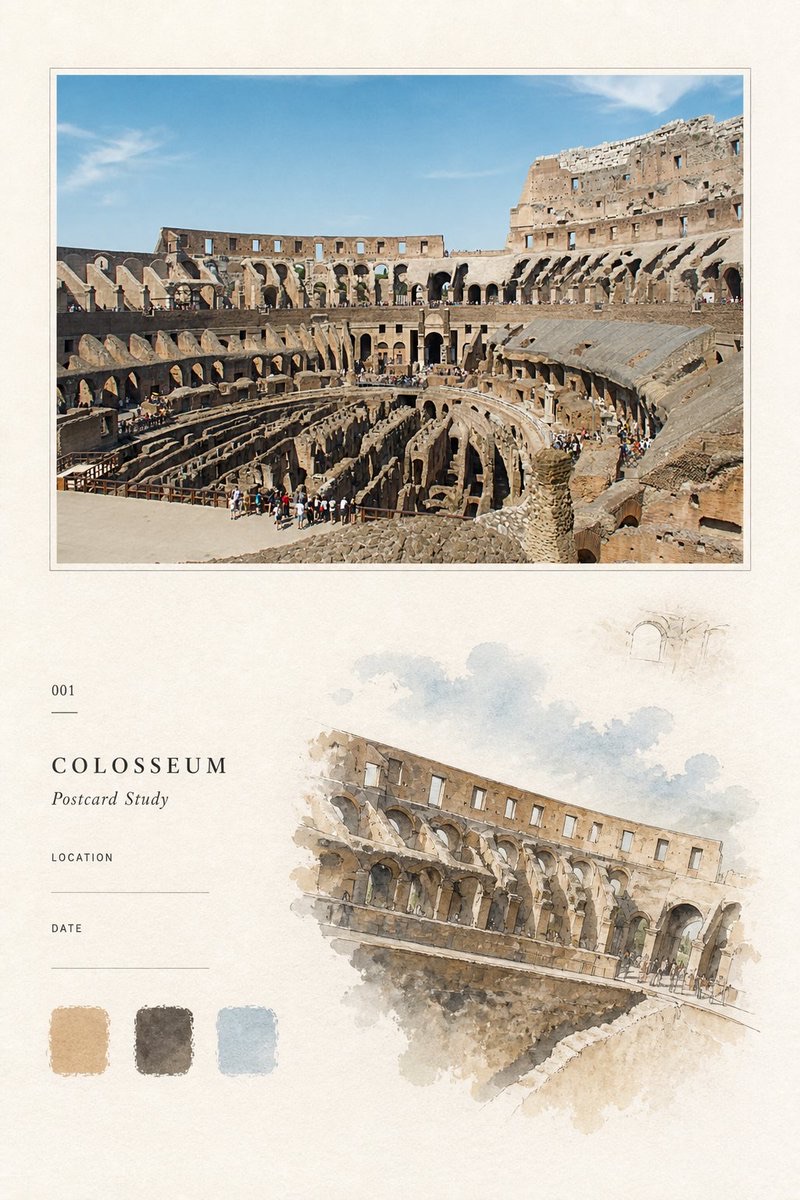
Travel Palette Watercolor Study Poster
-
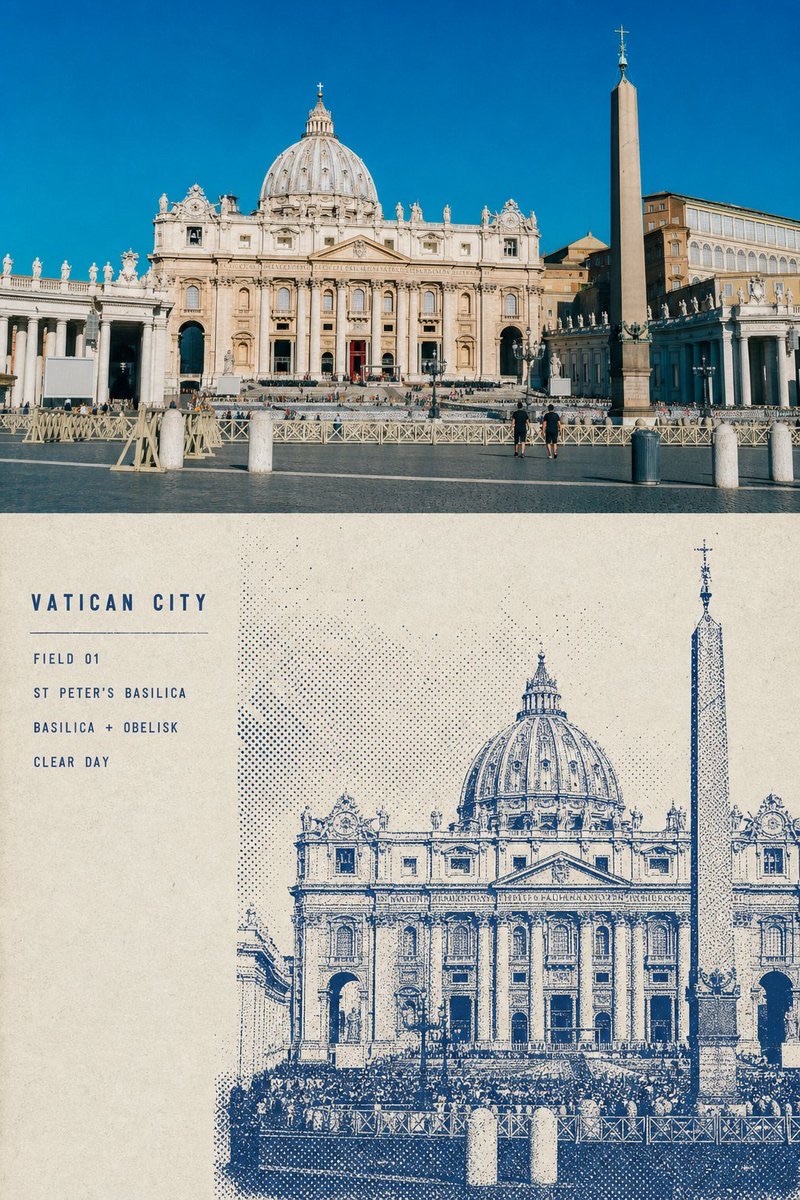
Blue Halftone City Archive
-
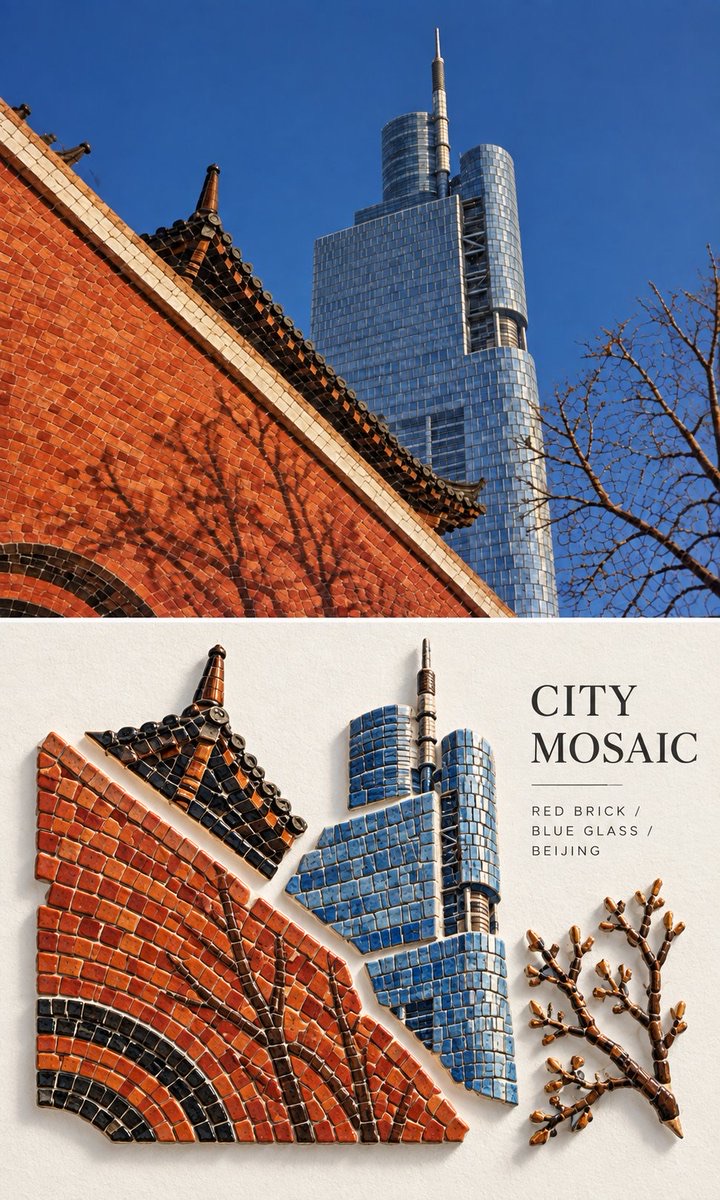
Travel Photo to Glazed Mosaic Relief Poster
-
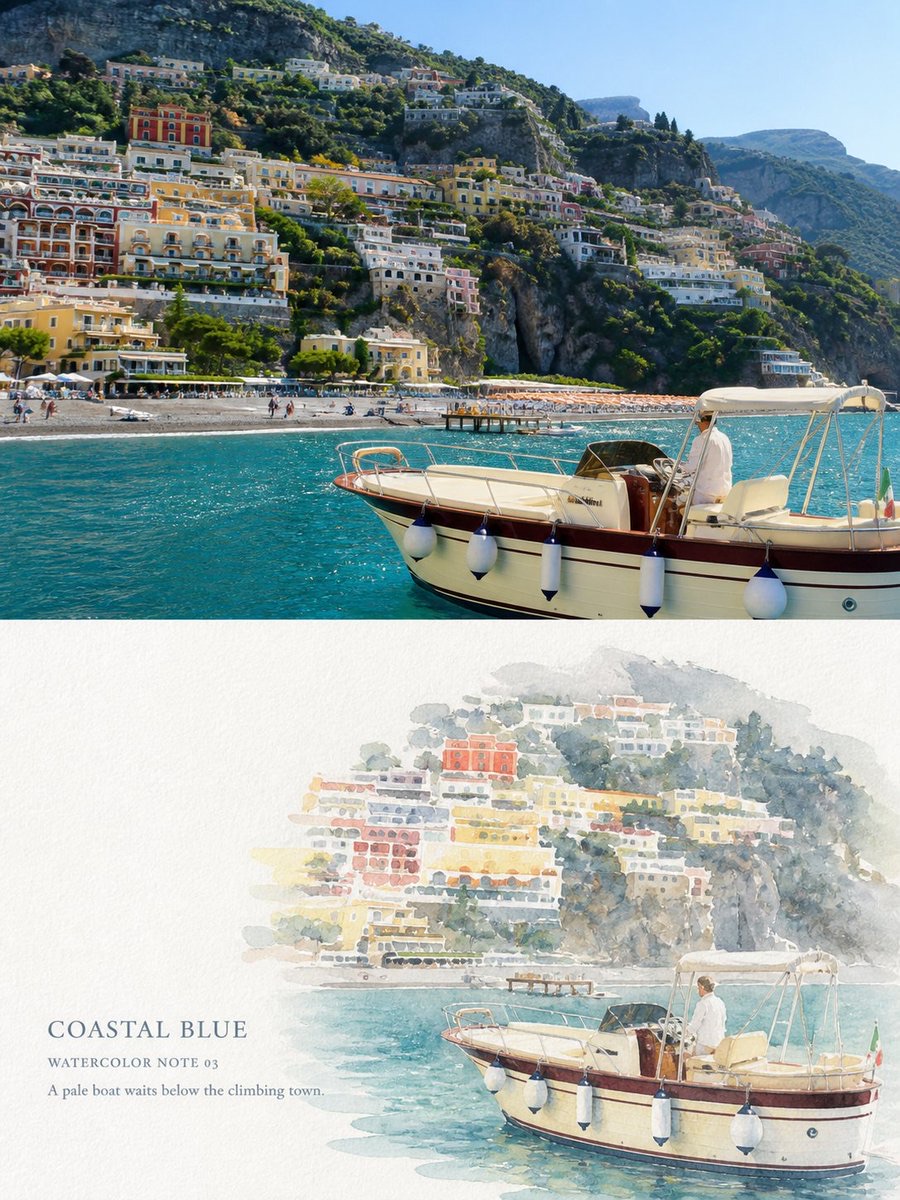
Clear White-Paper Travel Watercolor Editorial Poster
-
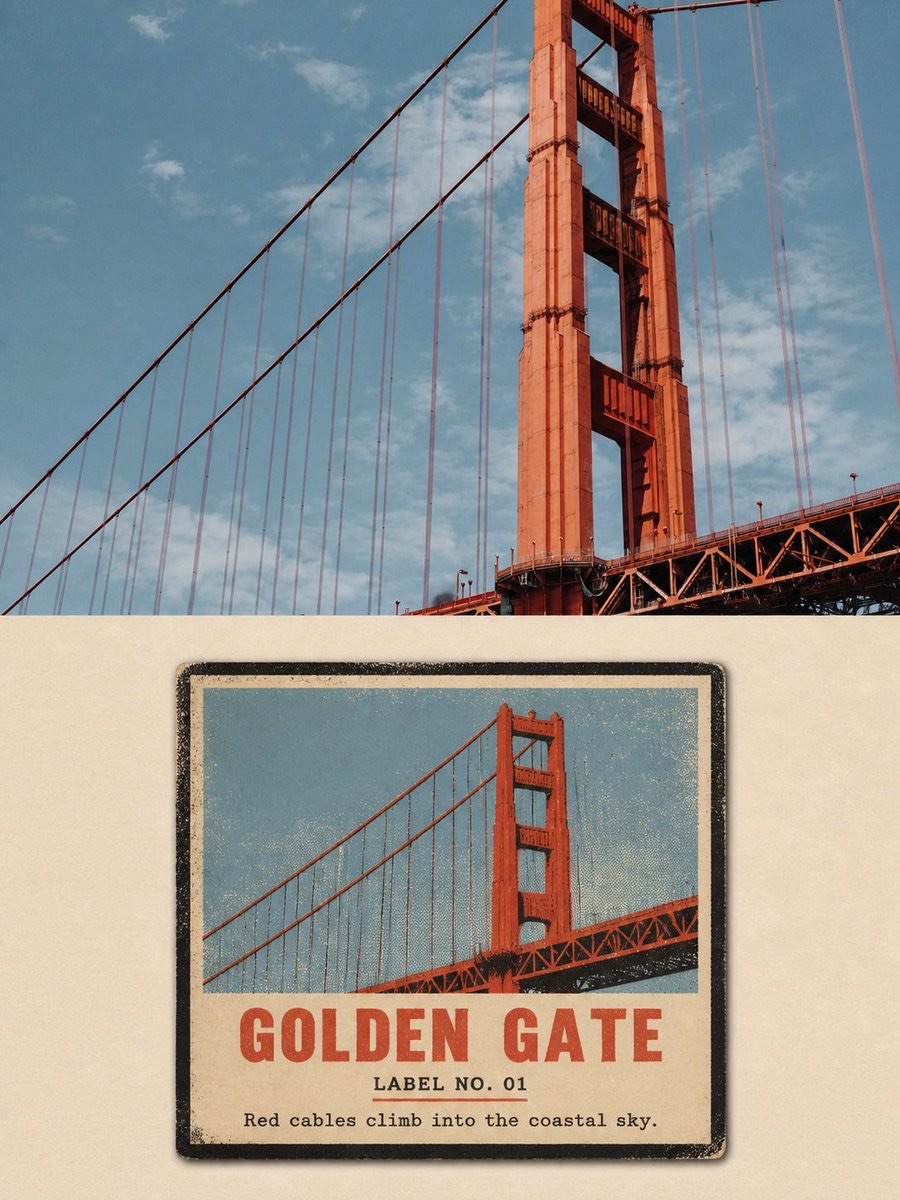
Vintage Matchbox Travel Label Poster
-
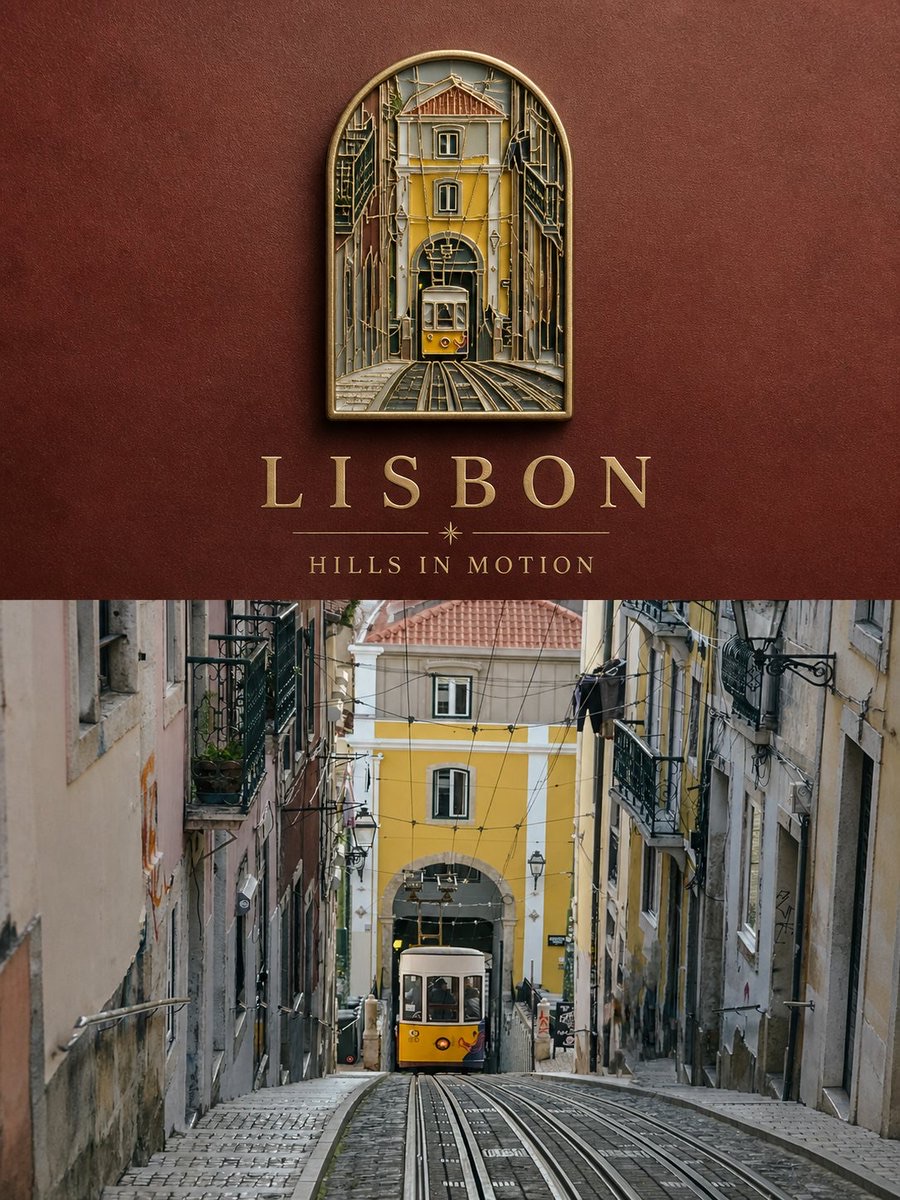
Travel Enamel Fridge Magnet Souvenir Poster
-
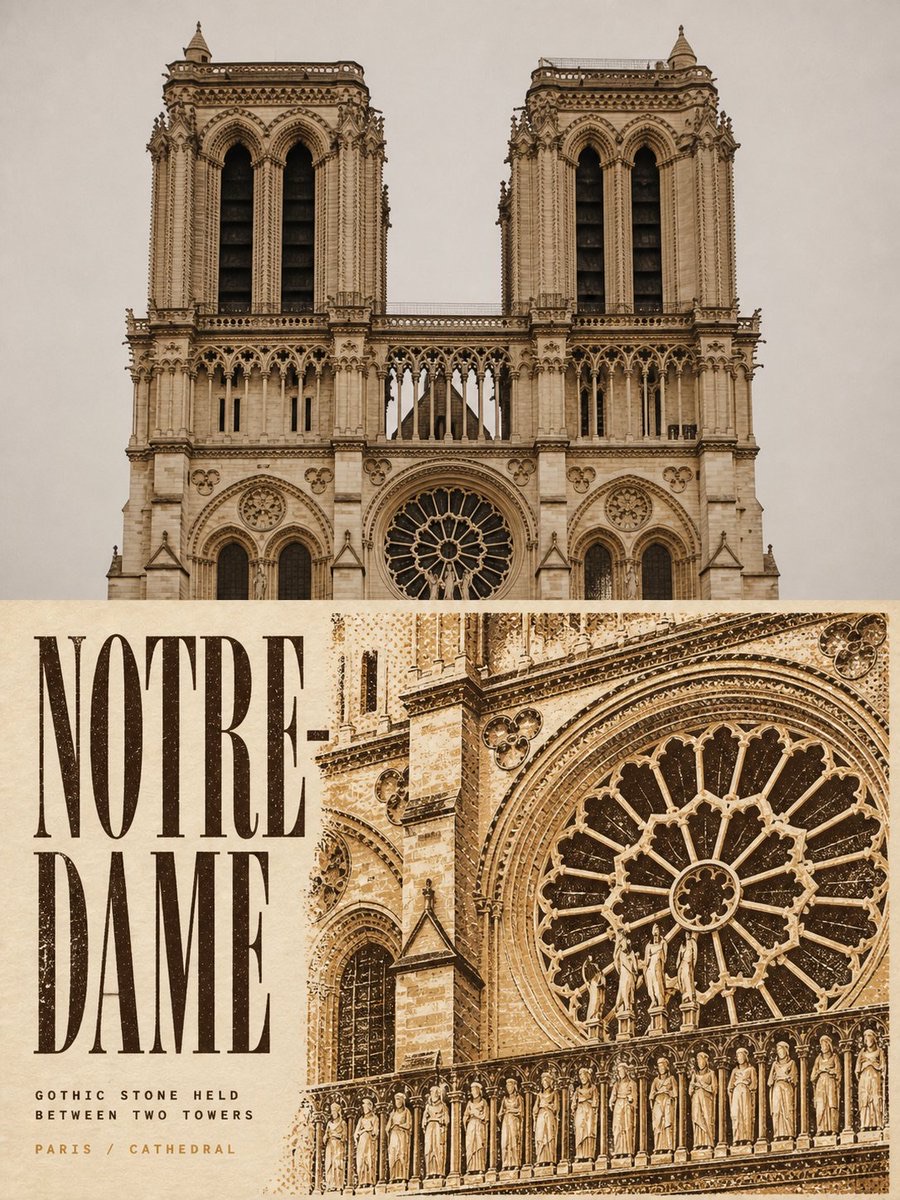
Two-Color Cultural Landmark Editorial Poster
-
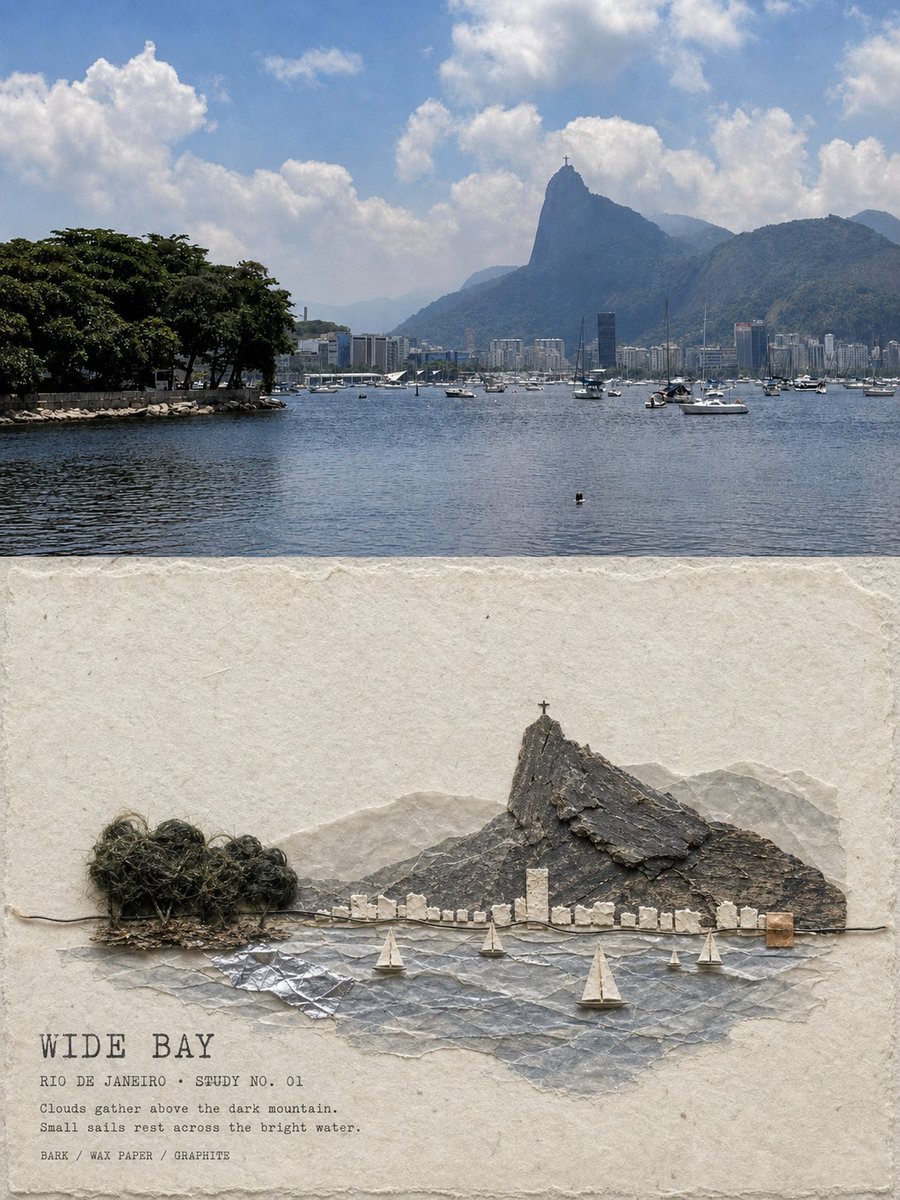
Material Assemblage Contrast Poster from a Travel Photo