Image
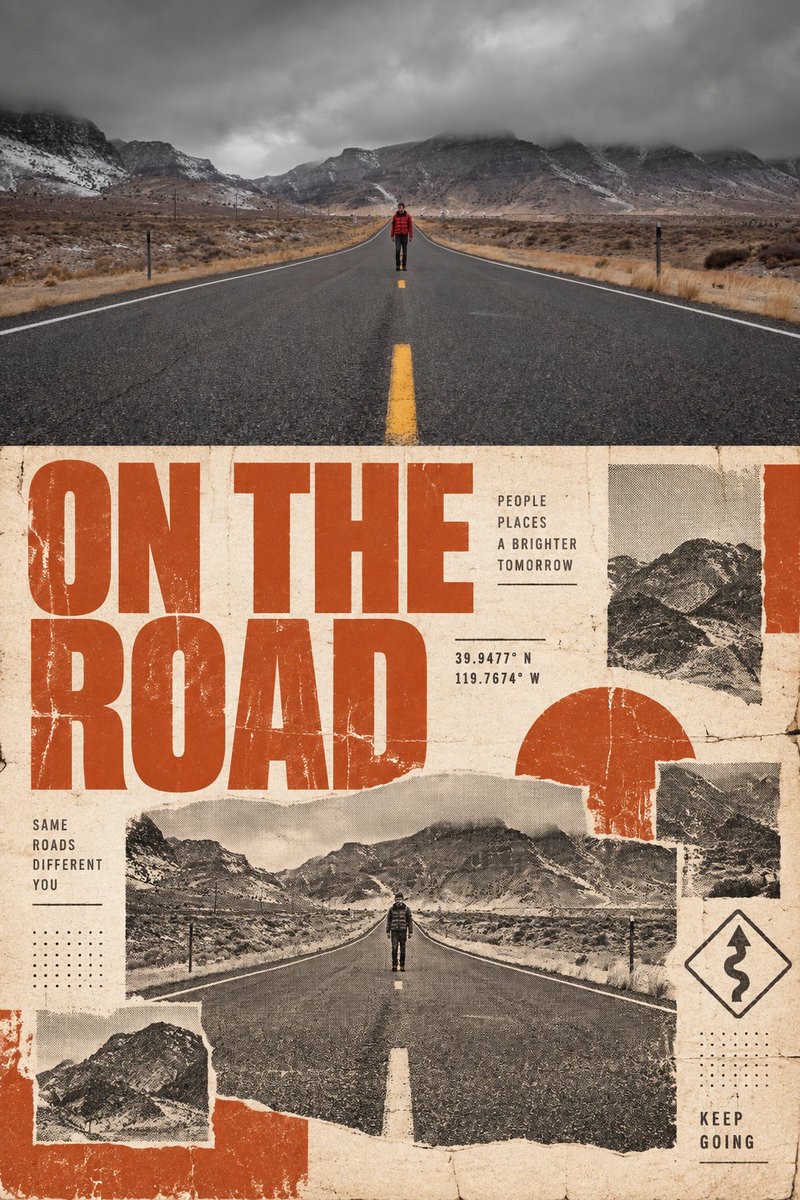
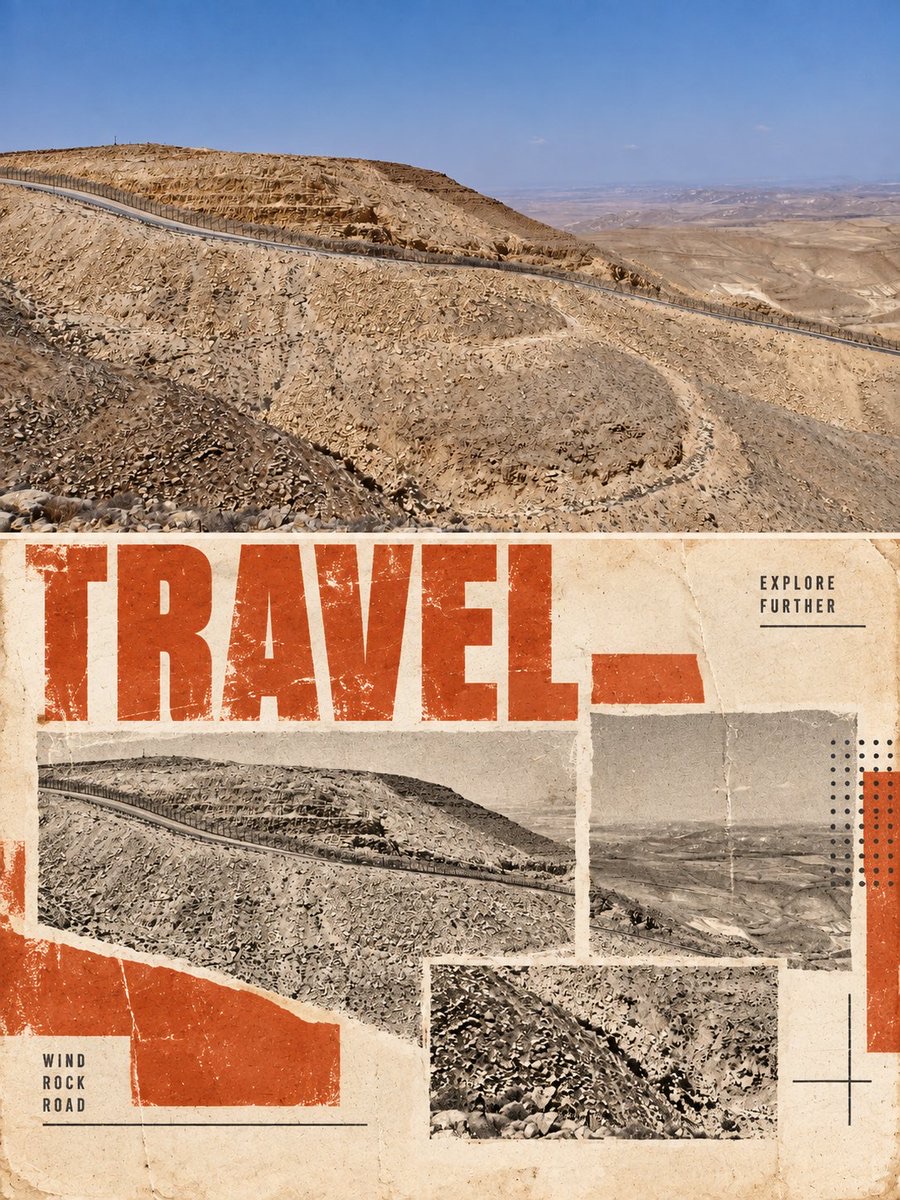
Rust-Orange Travel Editorial Collage Poster
Reconstruct the user's travel photo as an editorial-style poster on warm ivory paper, arranging black-and-white or sepia photographic slices, rust-orange geometric blocks, oversized cropped headlines, and a worn print texture.
 蛋黄堡@Hamburgerai
Prompt
Turn the input photo into a versatile travel editorial poster: preserve the recognizable terrain, architecture, people, or roads from the original scene, splitting it into several black-and-white or sepia photographic slices at different scales on a warm ivory paper background. Intersperse them with rust-orange or ochre-red geometric blocks in a color drawn from the photo; add oversized cropped headlines, short coordinate-style fields, fine dividers, and a few road sign or halftone elements. Text must consist of short, controllable thematic words. Give the paper realistic cracks, screen-print misregistration, and offset-print wear. Establish a clear hierarchy of information, do not fill the entire layout with photos, and do not add “original image/AI image” corner labels or invented locations.把输入照片转成一张通用旅行编辑海报:保留原场景可识别的地形、建筑、人物或道路,在暖象牙纸底上拆成数块不同尺度的黑白/棕褐摄影切片,并以一种从照片提取的锈橙或赭红几何色块穿插其间;加入巨型裁切标题、短坐标式字段、细线分隔和少量路牌/网点元素,文字必须是短而可控的主题词。纸面有真实裂纹、丝网错位和胶印磨损,信息密度有主次,不把所有照片铺满,不加“原图/AI图”角标或虚构地点。
How to use
Usage suggestion: Upload the travel photo you want to process and provide a short thematic word or phrase. If location information is needed, provide the real location separately to prevent the model from inventing one. After generation, check that the terrain, architecture, people, or roads remain recognizable, make sure the headline is controllable and the layout has a clear hierarchy, and review whether the cracks, screen-print misregistration, and offset-print wear support the overall visual depth.
Details
More from 蛋黄堡
-
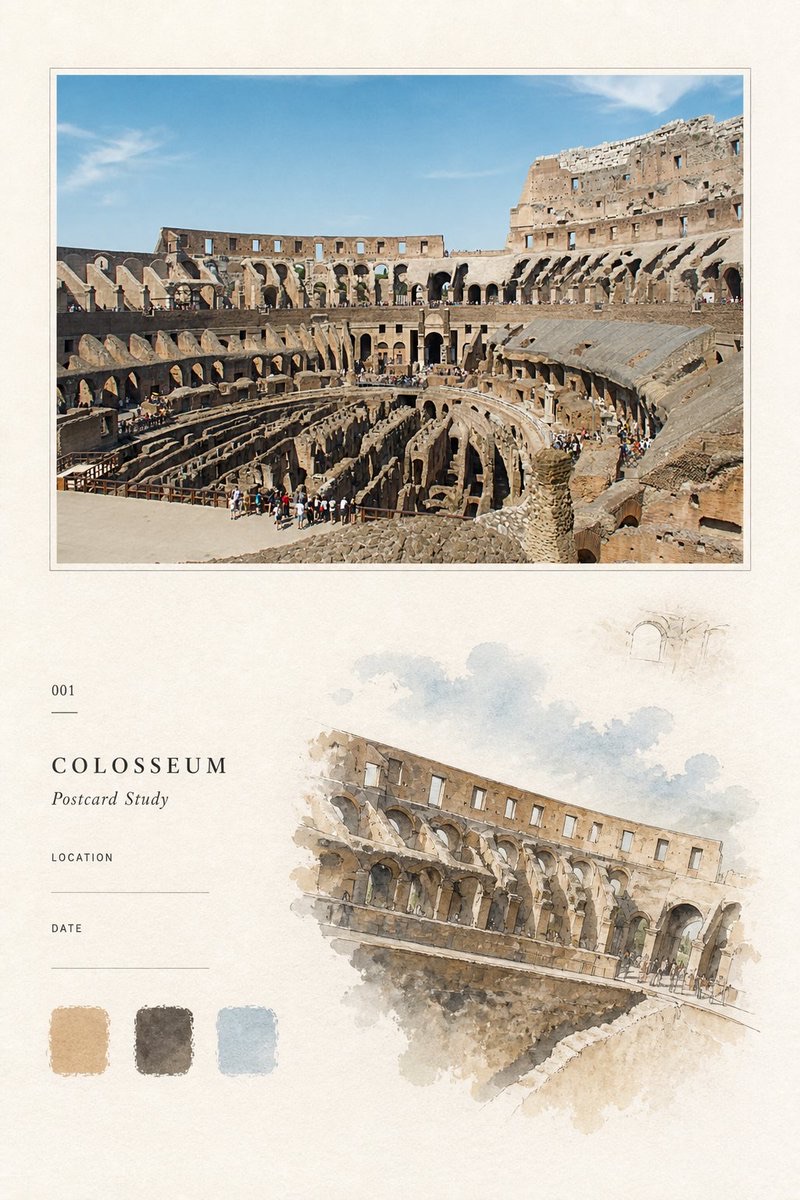
Travel Palette Watercolor Study Poster
-
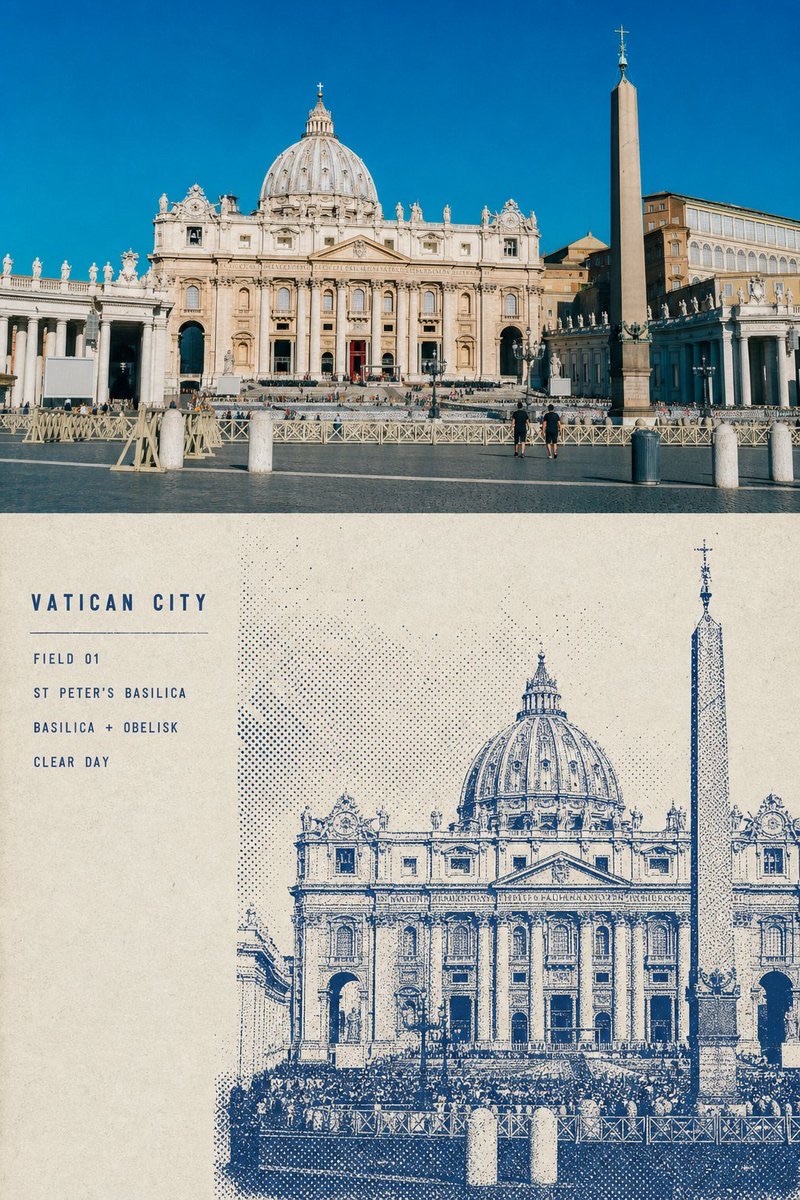
Blue Halftone City Archive
-
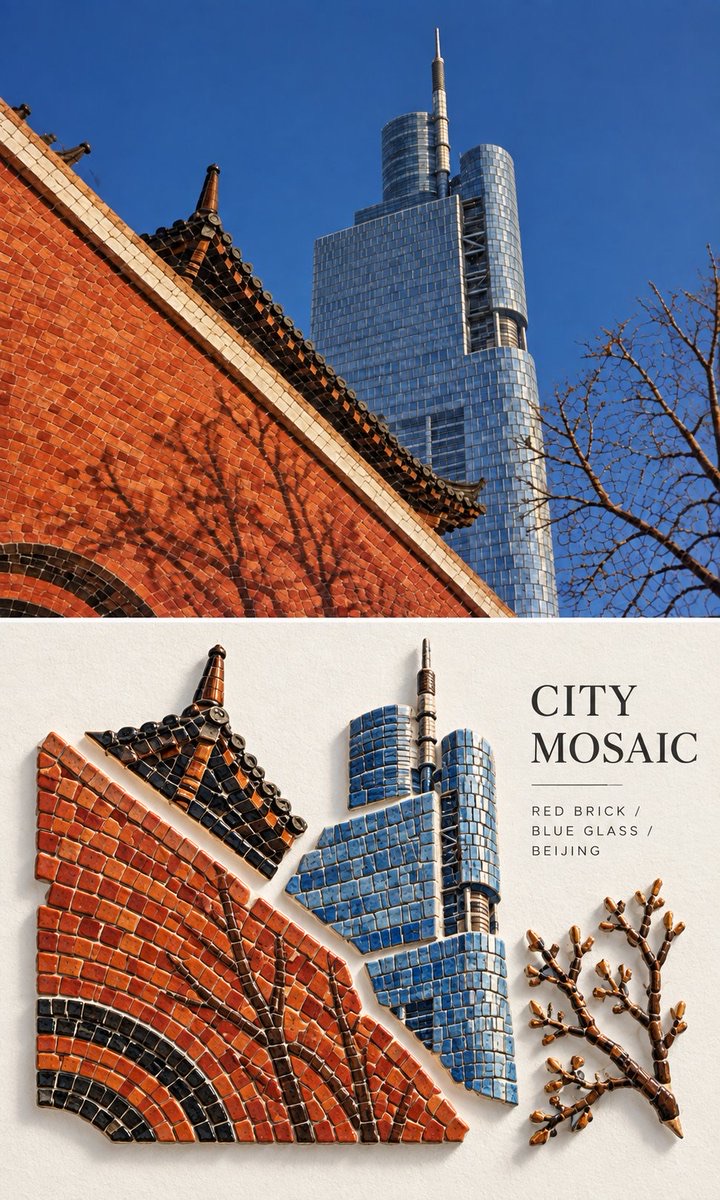
Travel Photo to Glazed Mosaic Relief Poster
-
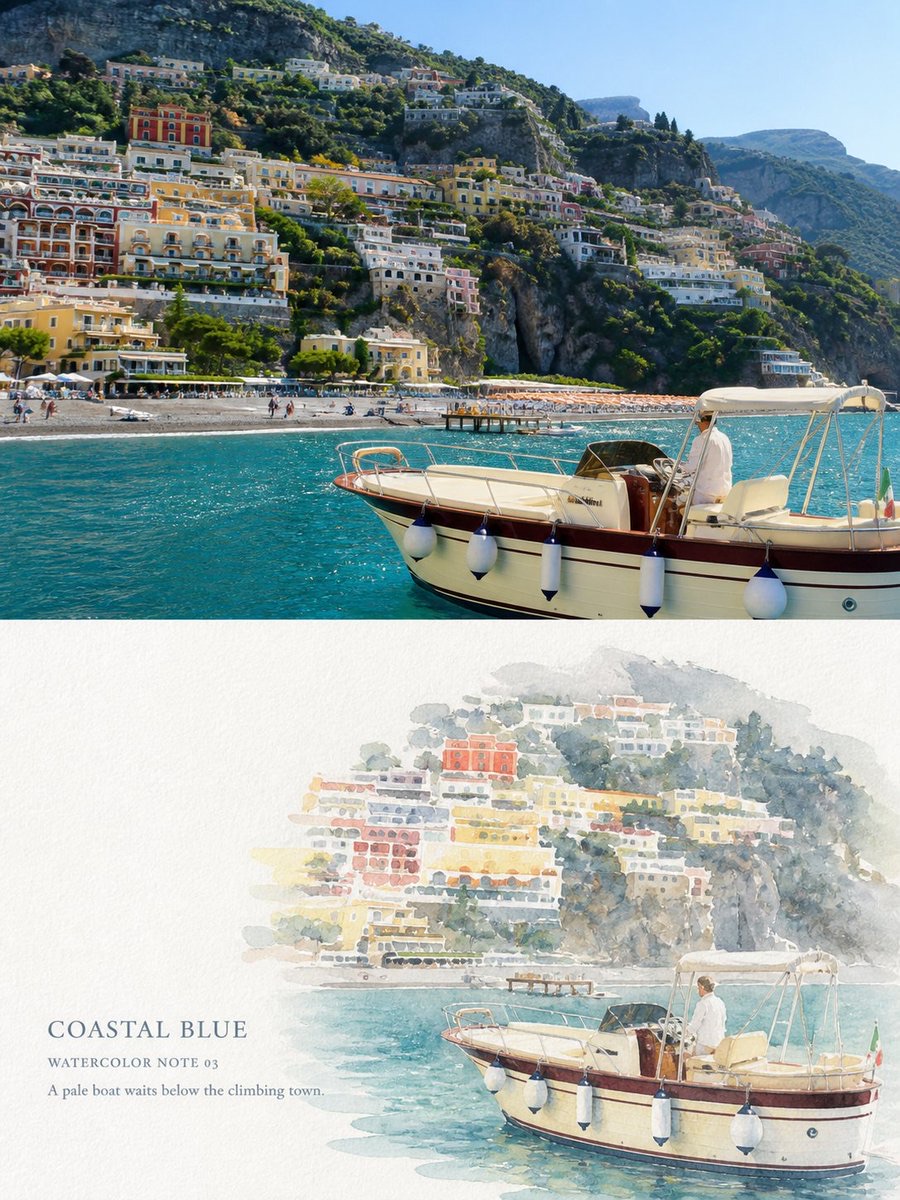
Clear White-Paper Travel Watercolor Editorial Poster
-
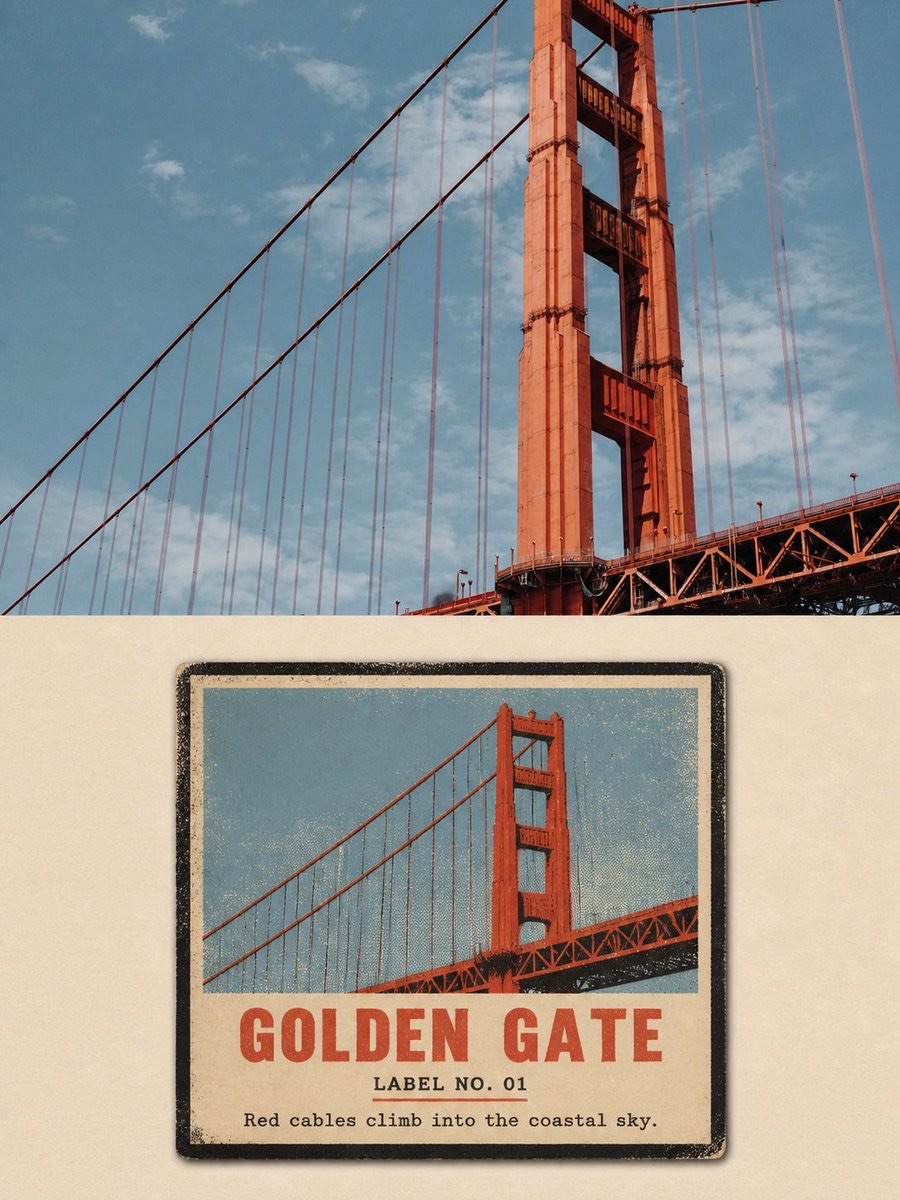
Vintage Matchbox Travel Label Poster
-
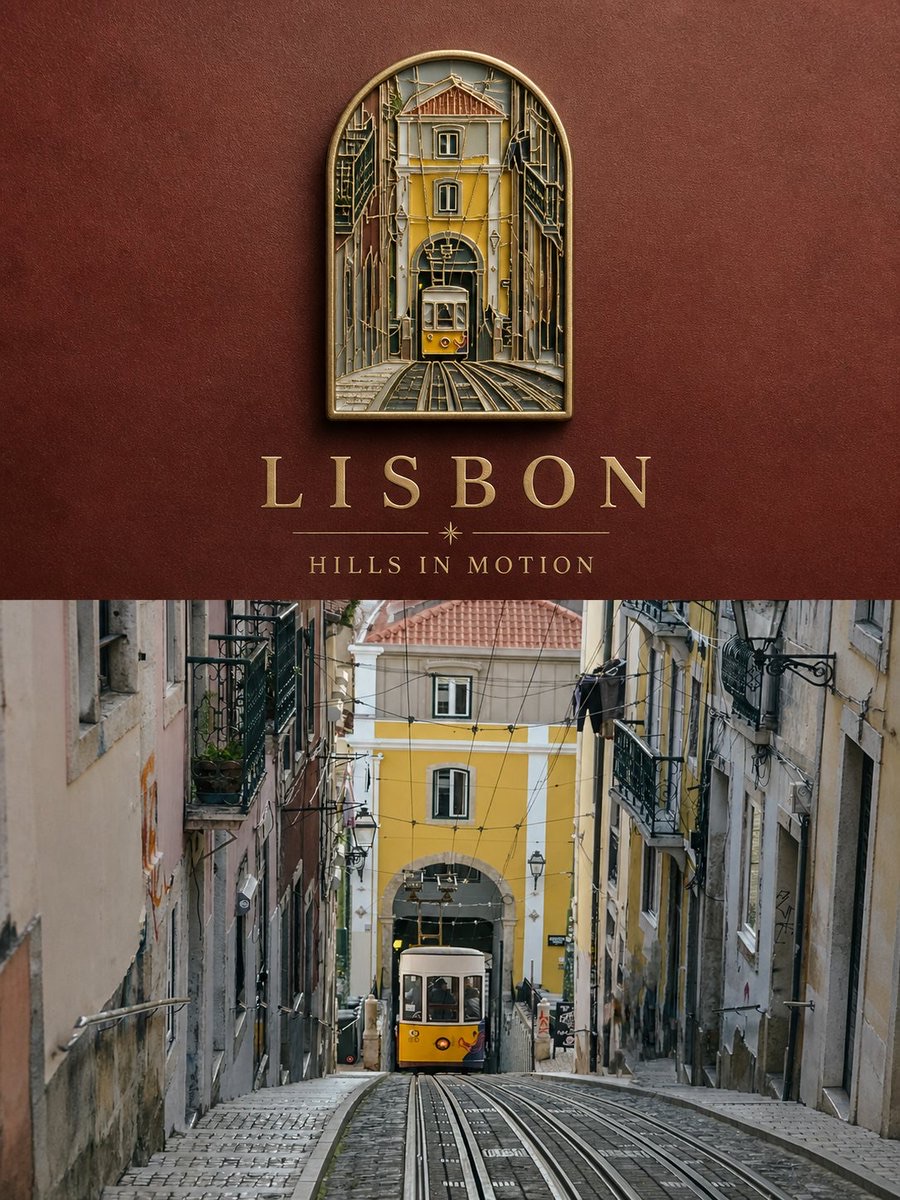
Travel Enamel Fridge Magnet Souvenir Poster
-
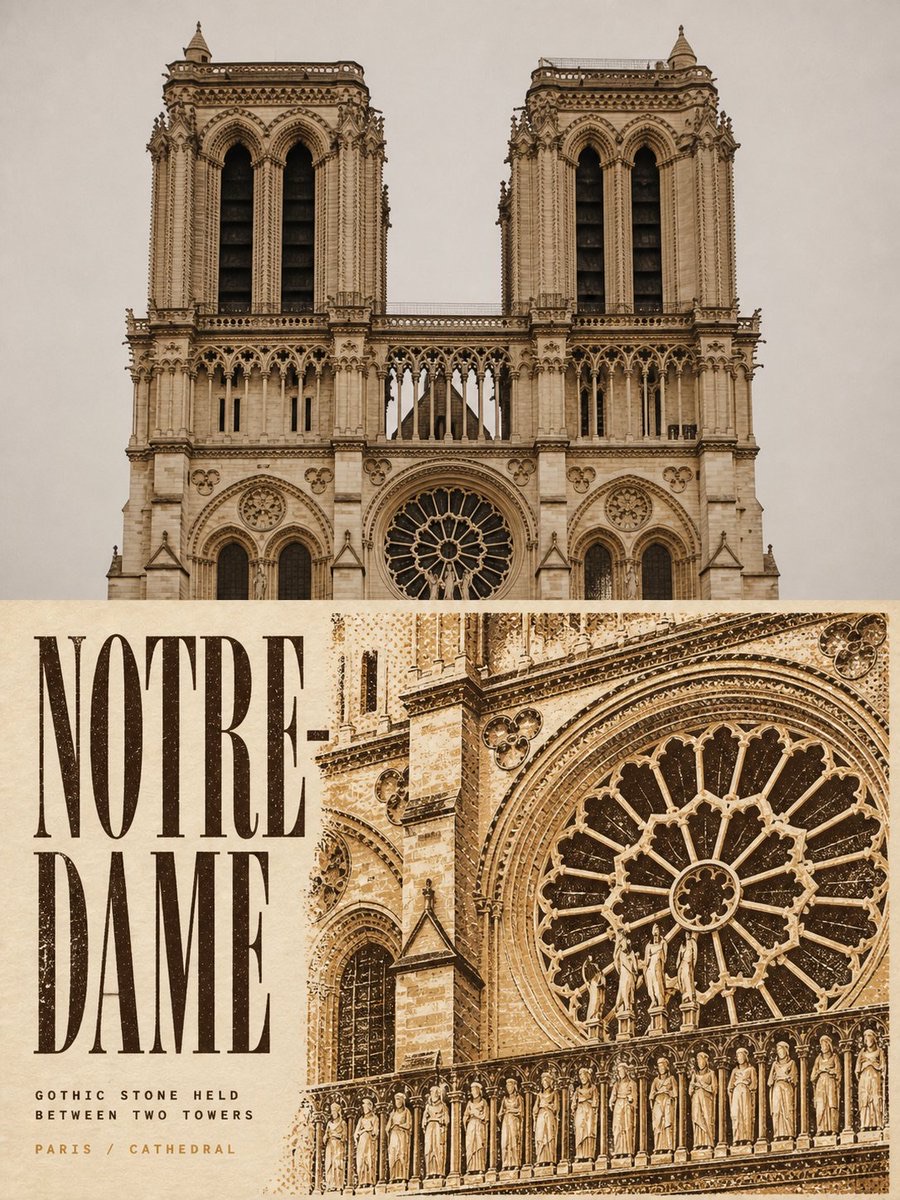
Two-Color Cultural Landmark Editorial Poster
-
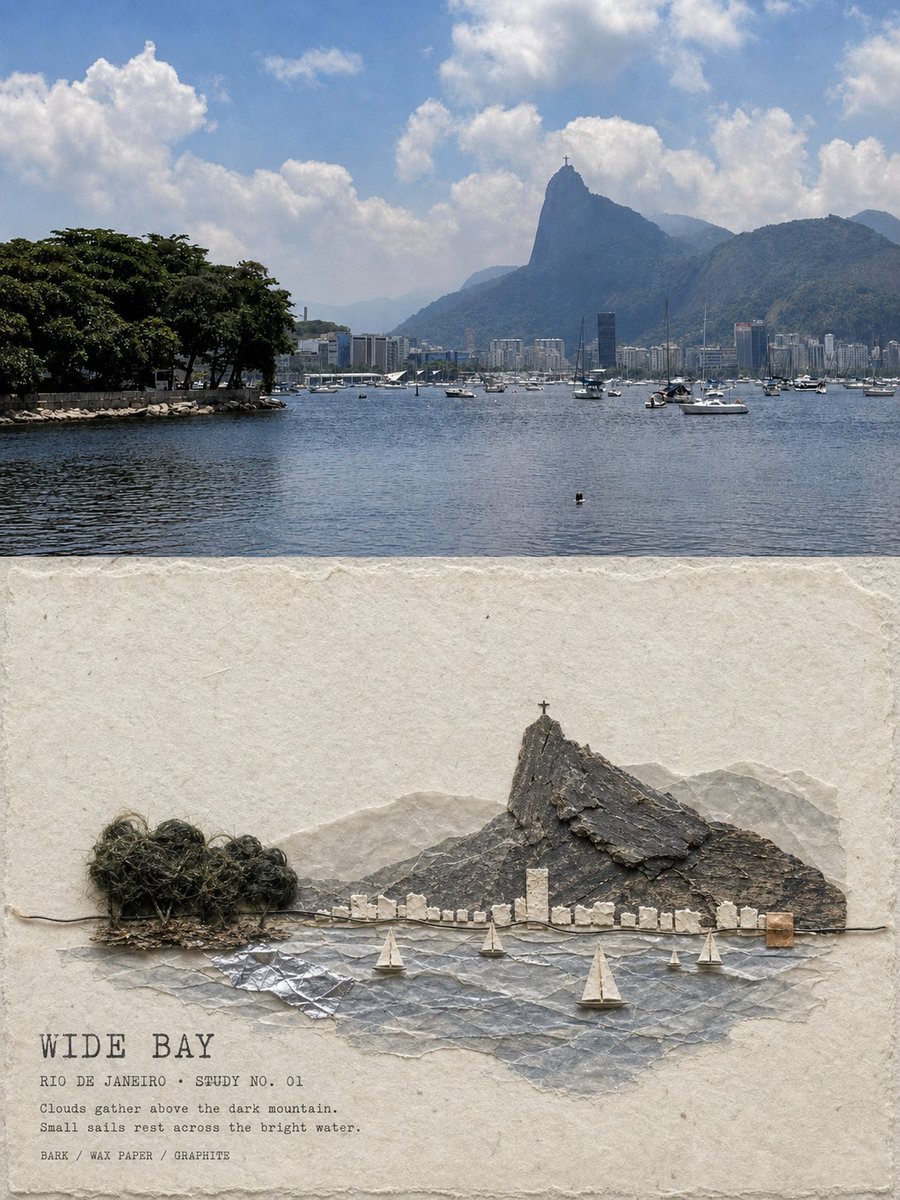
Material Assemblage Contrast Poster from a Travel Photo