Image
Minimal Line Photo Travel Notes
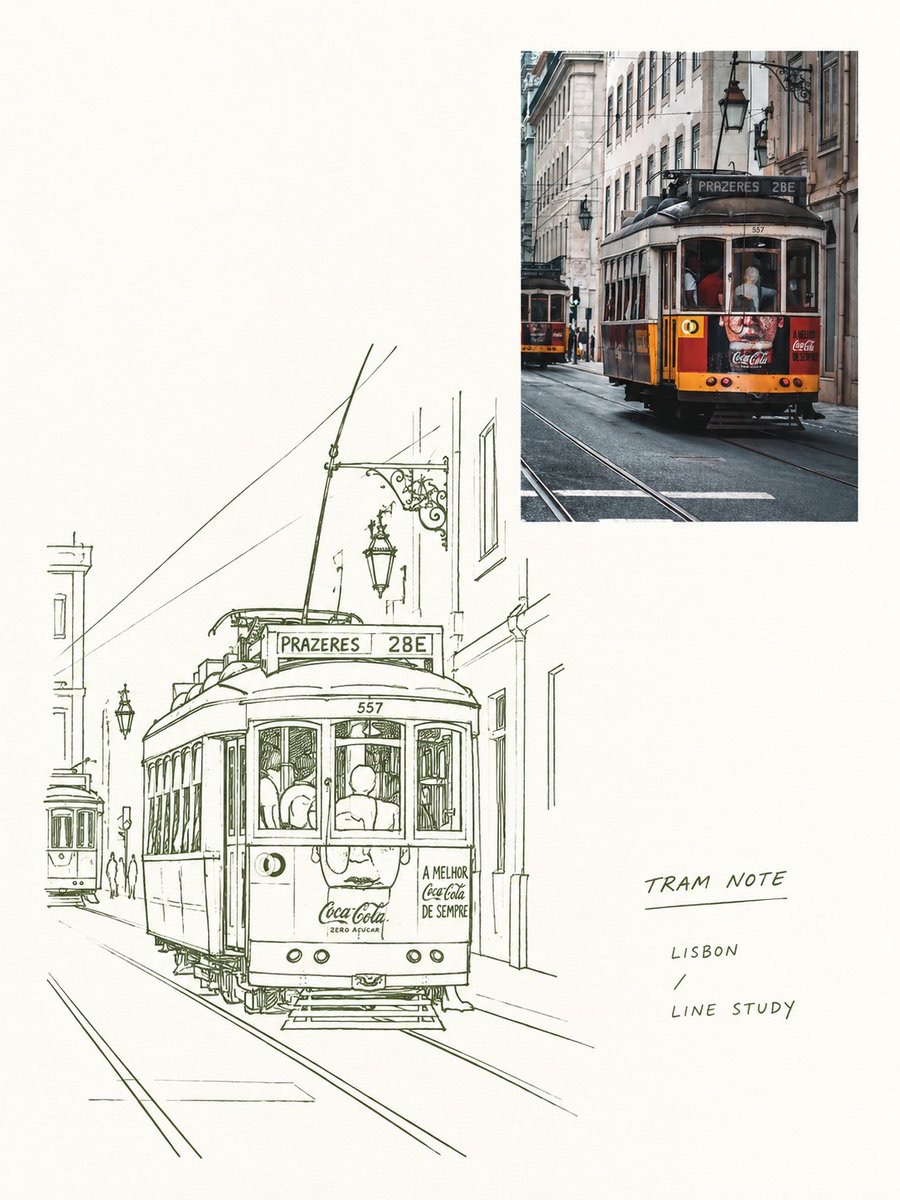
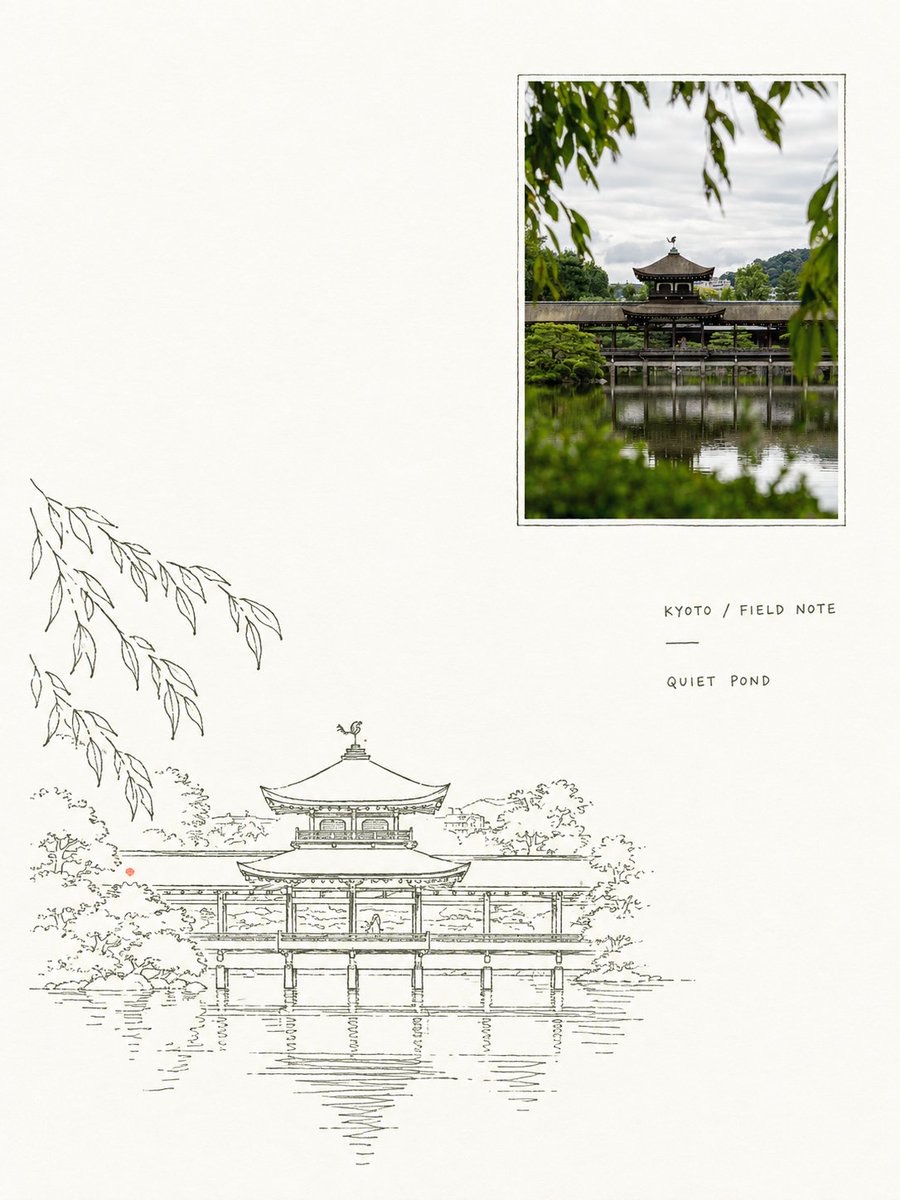
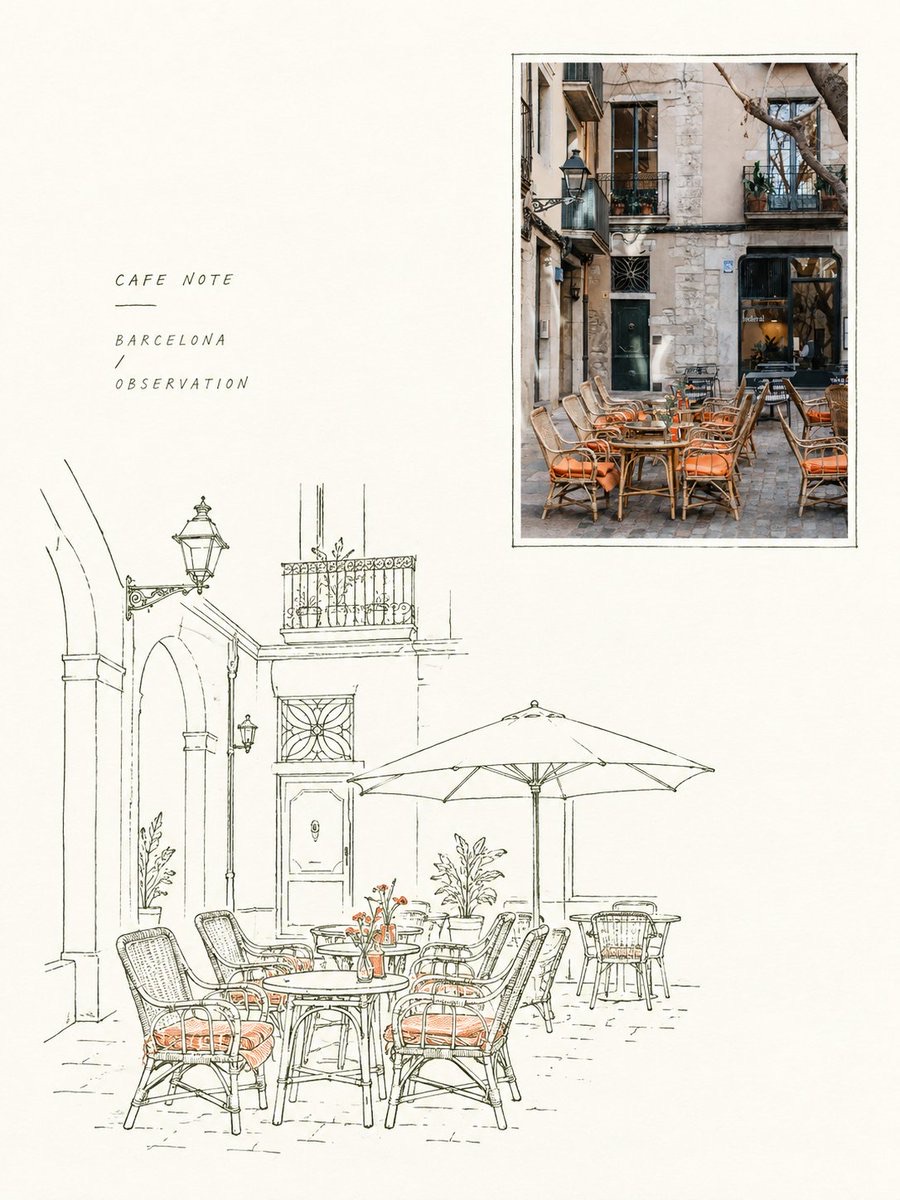
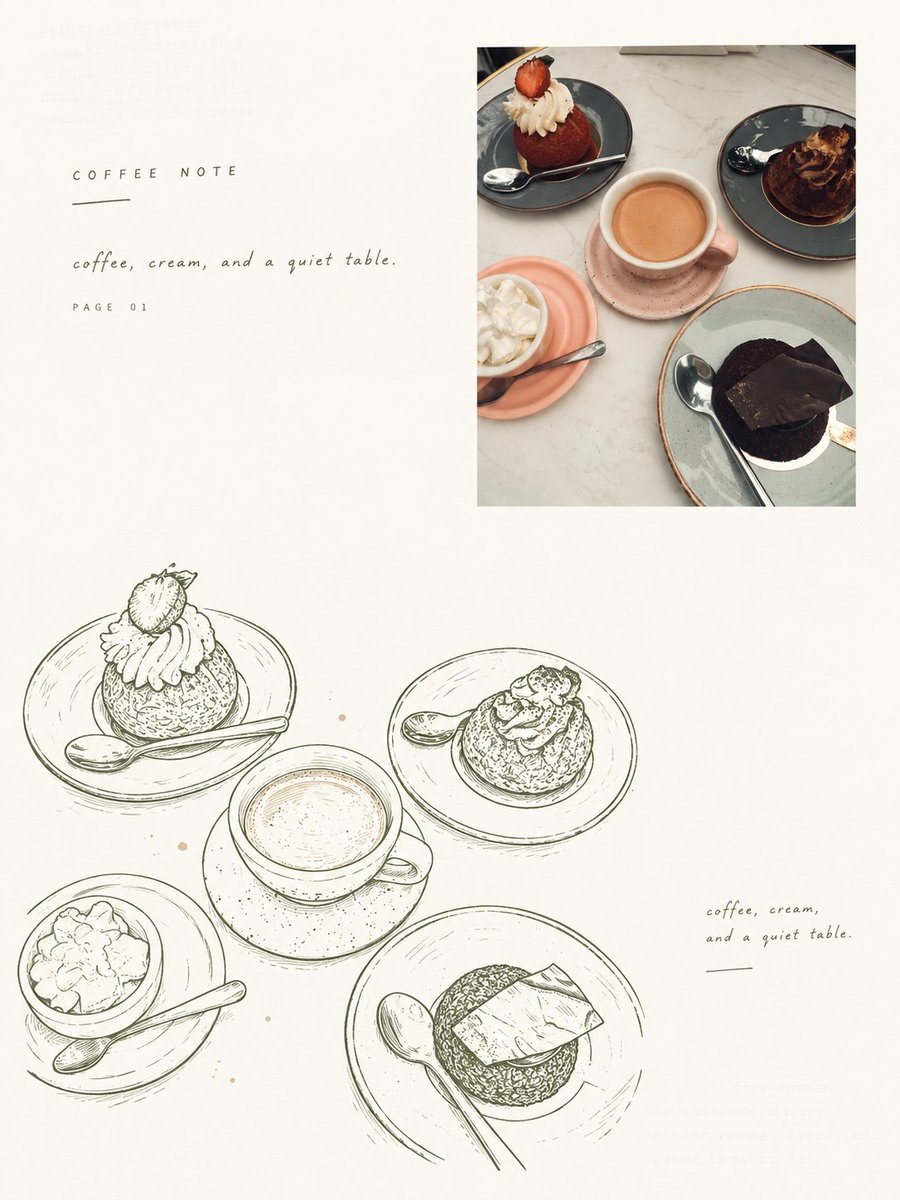
Arrange user-provided photos of travel, food, objects, or people into a warm white, airy page, accompanied by offset-layout, monochrome hand-drawn line echoes.
 蛋黄堡@Hamburgerai
Prompt
Create a vertical 3:4 travel editorial note, styled as "MINIMAL LINE PHOTO NOTE | Minimal Line Photo Note". This is not a top-bottom comparison, nor an equal-size diptych. Use a nearly blank warm-white paper page as the entire canvas. Place a small, neat, real photo window occupying 18%–32% of the frame in the upper right or middle right, fully preserving the subject, quantity, action, composition, and natural colors of the input photo, with only slight color correction.
Draw a larger, simplified hand-drawn echo of the same subject in the lower left or lower area, occupying 25%–40% of the frame. The line art should keep only the minimum but recognizable outline, quantity, and key actions, using a single olive green, grey-green, or light ink fine line, with basically consistent line width but slight hand-drawn wobble; use a few repeated short strokes to indicate plate rims, leaf veins, fabric folds, or shadows, without dense hatching or completing complex backgrounds.
The photo window and line art are distributed in an offset manner, with no horizontal divider line in between, and at least 55% of the frame remains continuous warm-white negative space. The paper surface carries only an extremely faint, nearly unreadable haze of book-page text, without obvious pulp texture, stains, tears, indentations, or heavy material. Small short English titles, a small field, and one very short observational sentence may be added to the blank areas, as if written with a fine fineliner or light pencil onto the page; the text must not become a poster headline.
The photo keeps natural photographic color, and the line art stays monochrome or near-monochrome, with at most one extremely faint touch of original photo color. Prohibited: colored geometric blocks, two-color overprinting, full-page watercolor, thick crayon texture, complex paper craft, whole-image line-art filters, children's doodles, cartoon stickers, top-bottom diptychs, photos enlarged to fill the page, logos, watermarks, fake Chinese text, AI corner marks, and original-image corner marks.
制作一张竖向 3:4 旅行编辑手记,风格为“MINIMAL LINE PHOTO NOTE|极简线条照片手记”。这不是上下对比,也不是等尺寸双联。以近乎空白的暖白纸页为整张画布,在右上或右中放置一张占画面 18%–32% 的小型规整真实照片窗,完整保留输入照片中的主体、数量、动作、构图和自然色彩,只做轻微调色。
在左下或偏下位置绘制同一主体的较大简约手绘回声,占画面 25%–40%。线稿只保留最少但足够识别的轮廓、数量和关键动作,使用单一橄榄绿、灰绿或浅墨色细线,线宽基本一致但带轻微手绘抖动;用少量重复短线表示盘沿、叶脉、织物褶皱或阴影,不画密集排线,不补全复杂背景。
照片窗与线稿错位分布,中间不使用水平分隔线,至少 55% 的画面保持连续暖白留白。纸面只带极淡、几乎不可读的书页文字雾影,不加入明显纸浆纹理、污渍、撕裂、压痕或厚重材质。可在留白处加入极小的英文短标题、一个小字段和一句极短观察句,像细针管笔或轻铅笔写入页面;文字不能成为海报标题。
照片保留自然摄影色彩,线稿保持单色或近似单色,最多加一处极淡的原图色彩点。禁止彩色几何块、双色套印、全页水彩、蜡笔厚纹理、复杂纸艺、整图线稿滤镜、儿童涂鸦、卡通贴纸、上下双联、照片放大铺满、Logo、水印、假中文、AI 角标和原图角标。
How to use
Usage tip: Upload a real photo to be processed and use it as an input reference; you may add a very short English title, fields, or an observational sentence as needed. After generation, check whether the number of subjects, their actions, and the photo colors have been preserved.
Details
More from 蛋黄堡
-
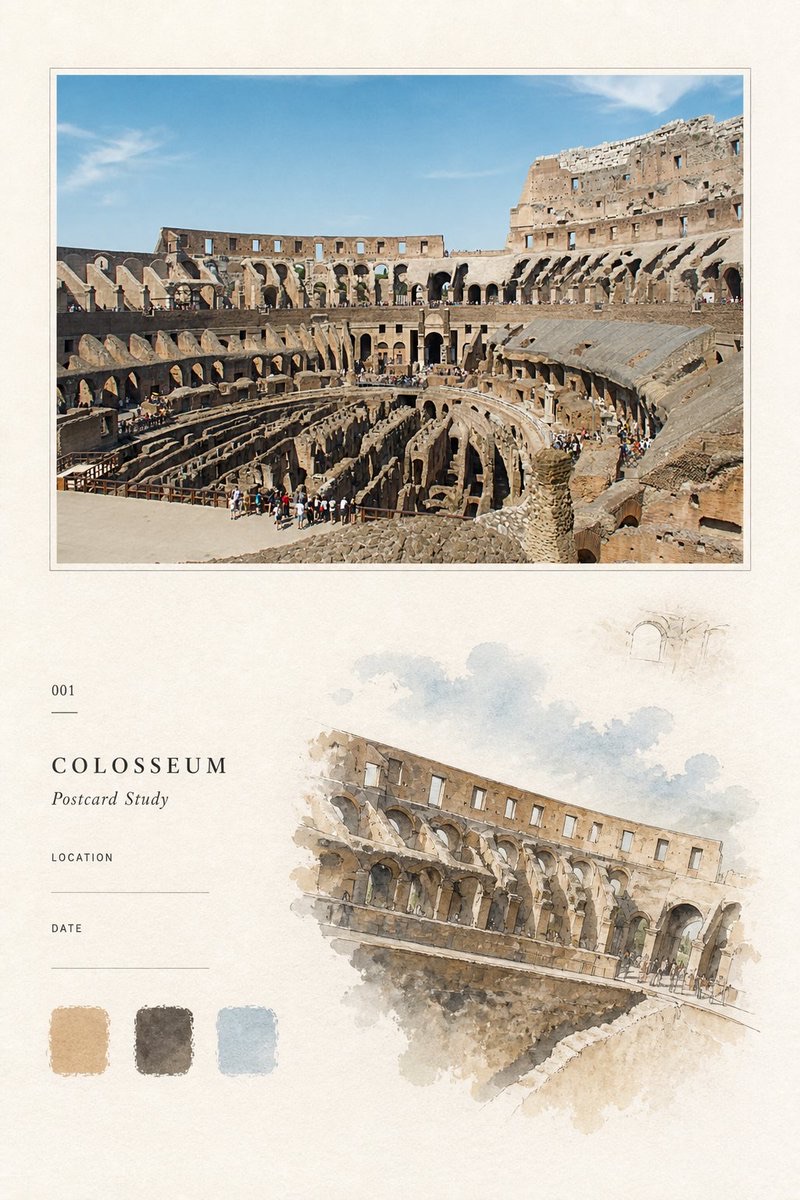
Travel Palette Watercolor Study Poster
-
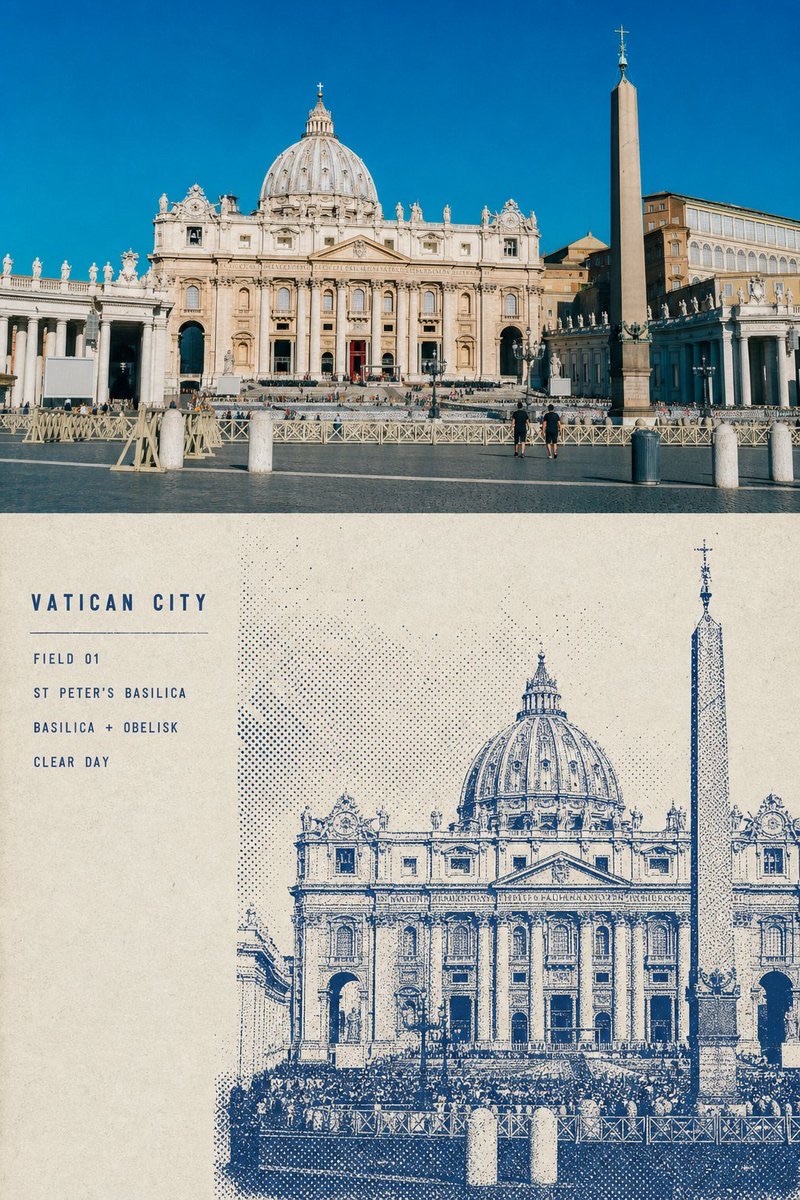
Blue Halftone City Archive
-
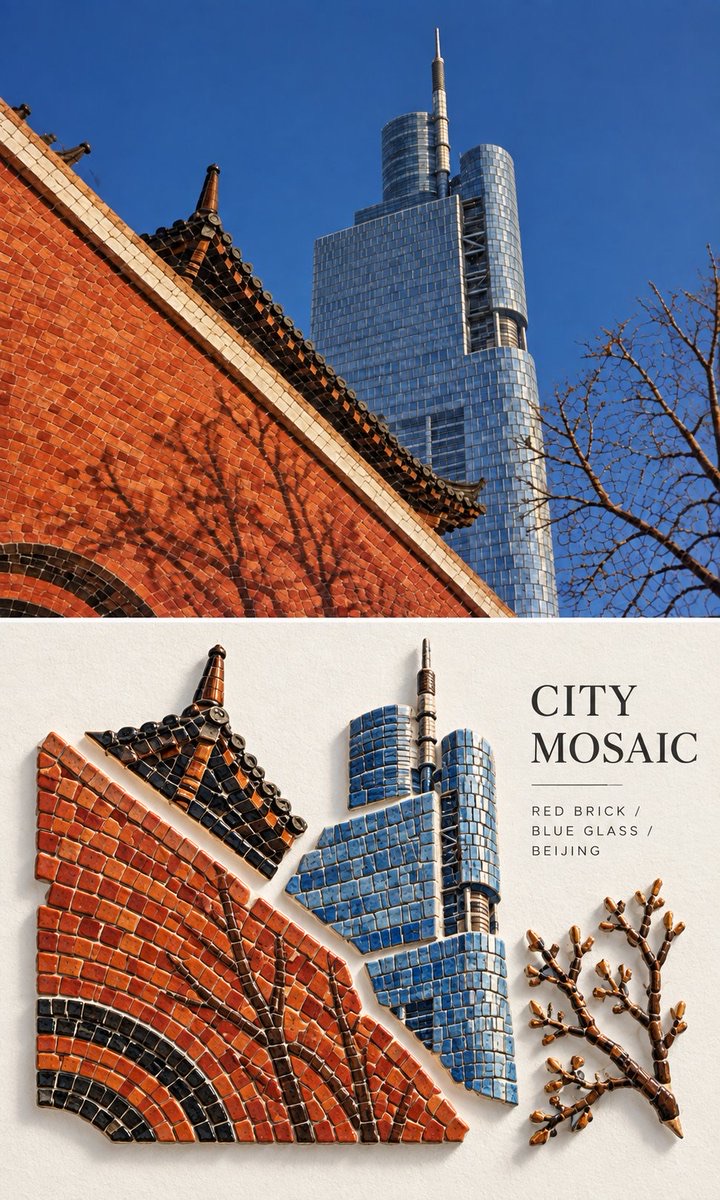
Travel Photo to Glazed Mosaic Relief Poster
-
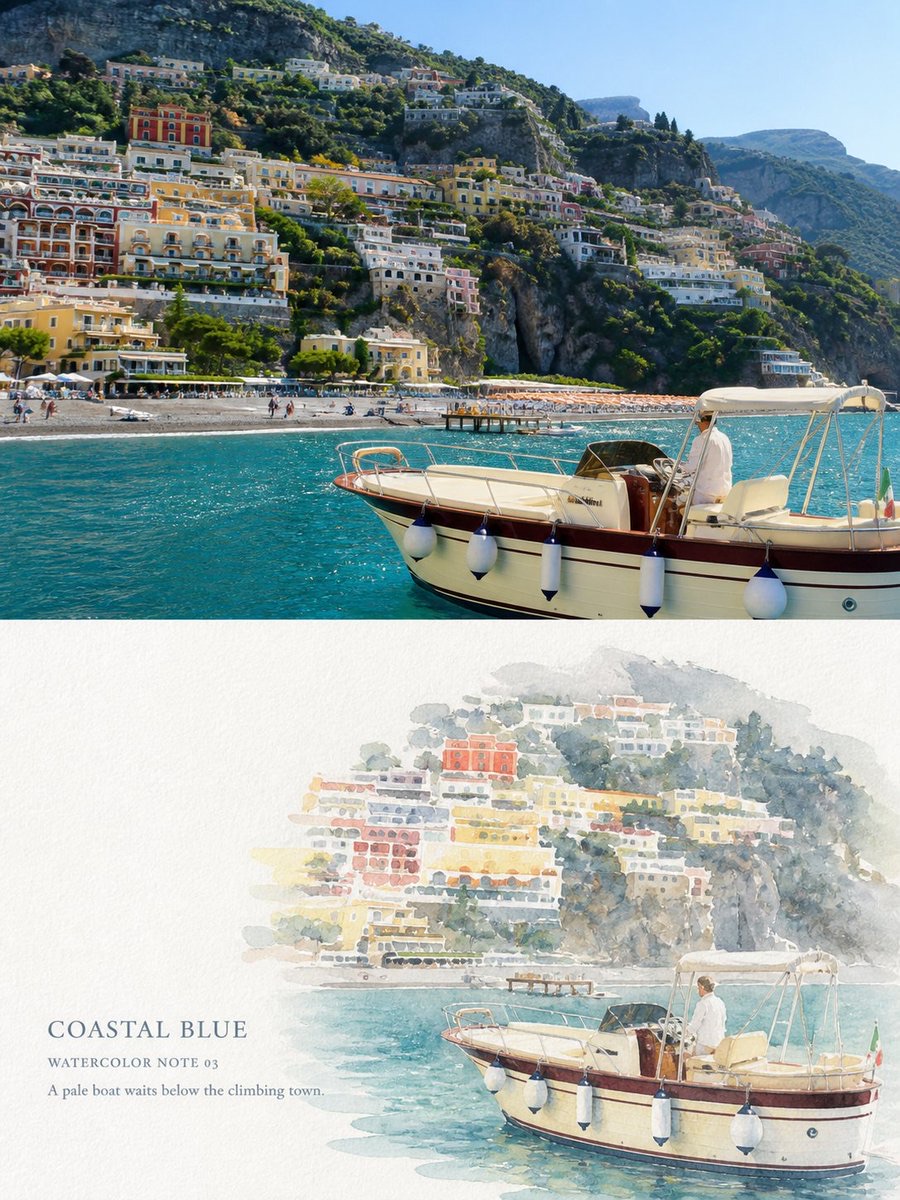
Clear White-Paper Travel Watercolor Editorial Poster
-
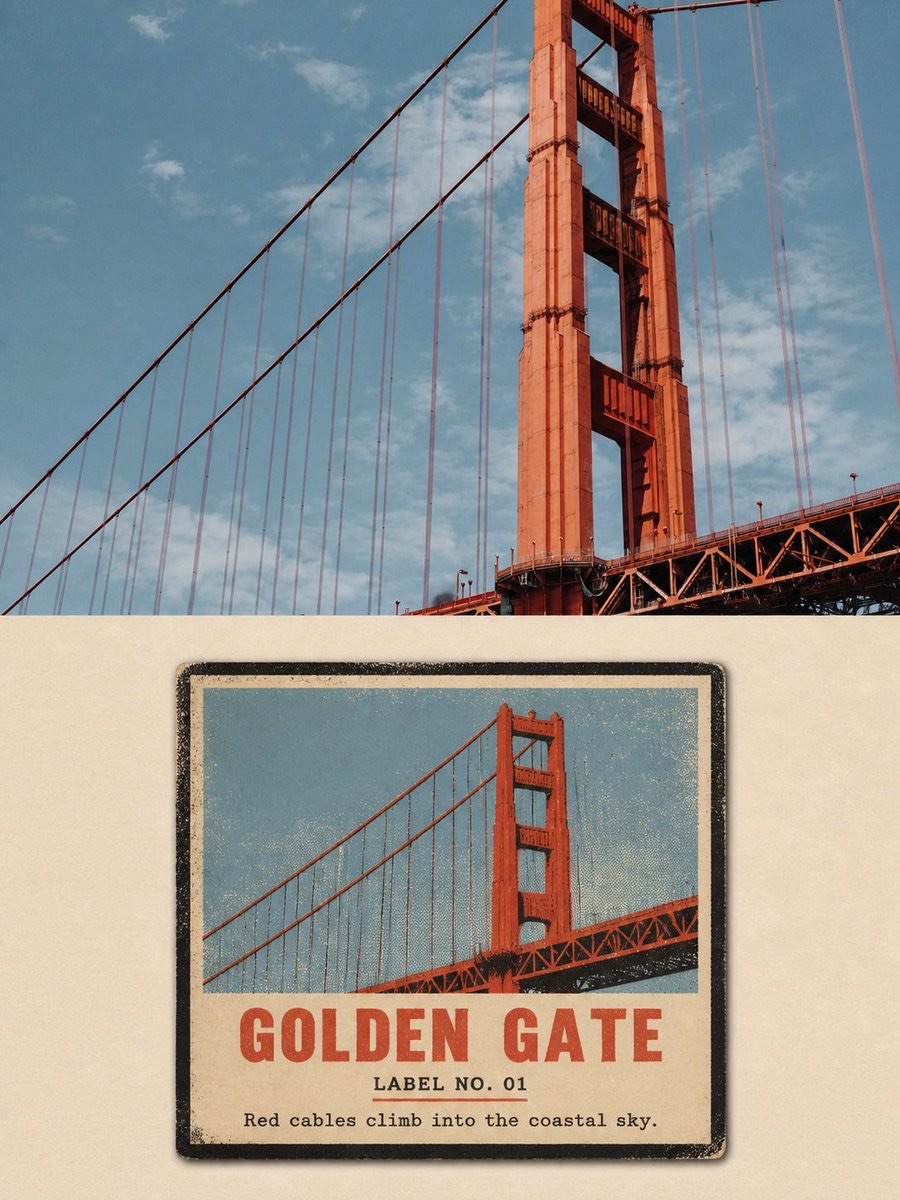
Vintage Matchbox Travel Label Poster
-
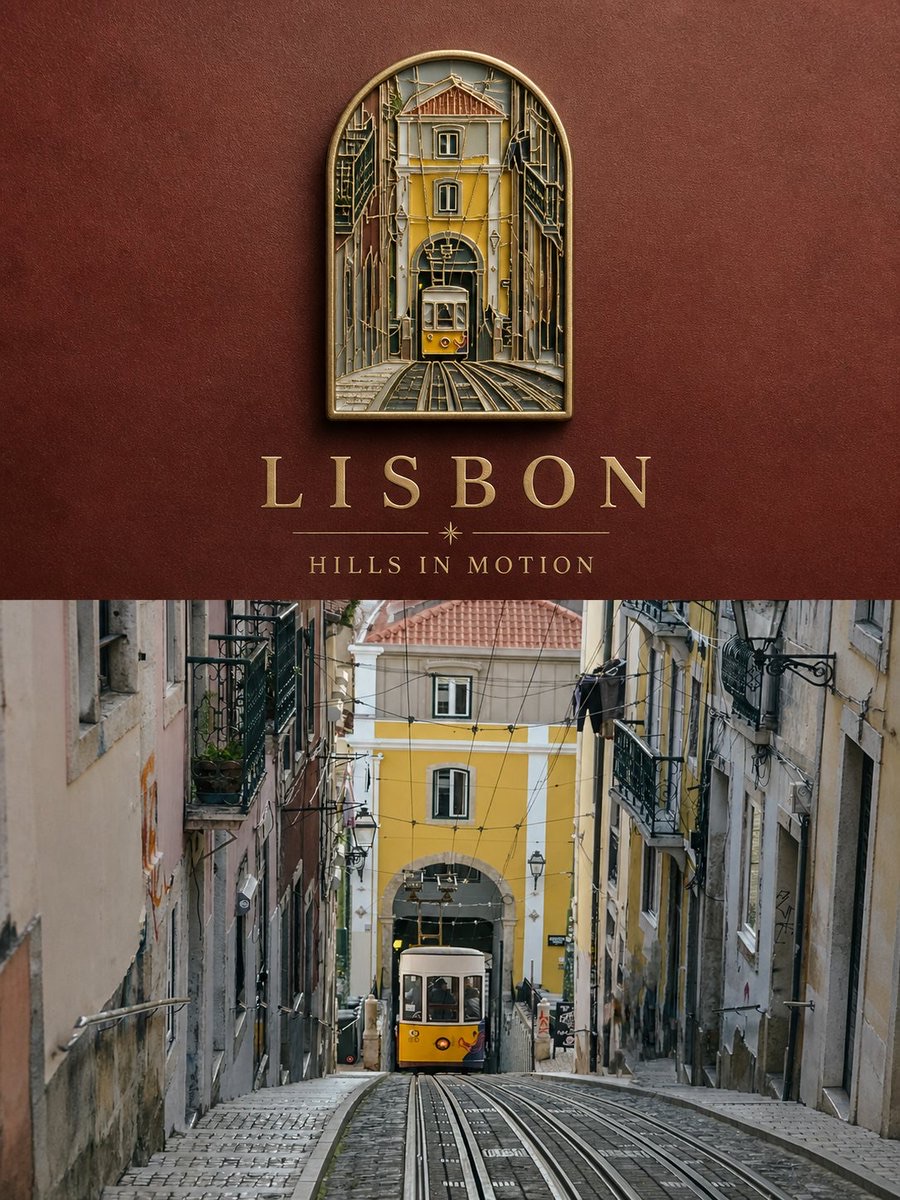
Travel Enamel Fridge Magnet Souvenir Poster
-
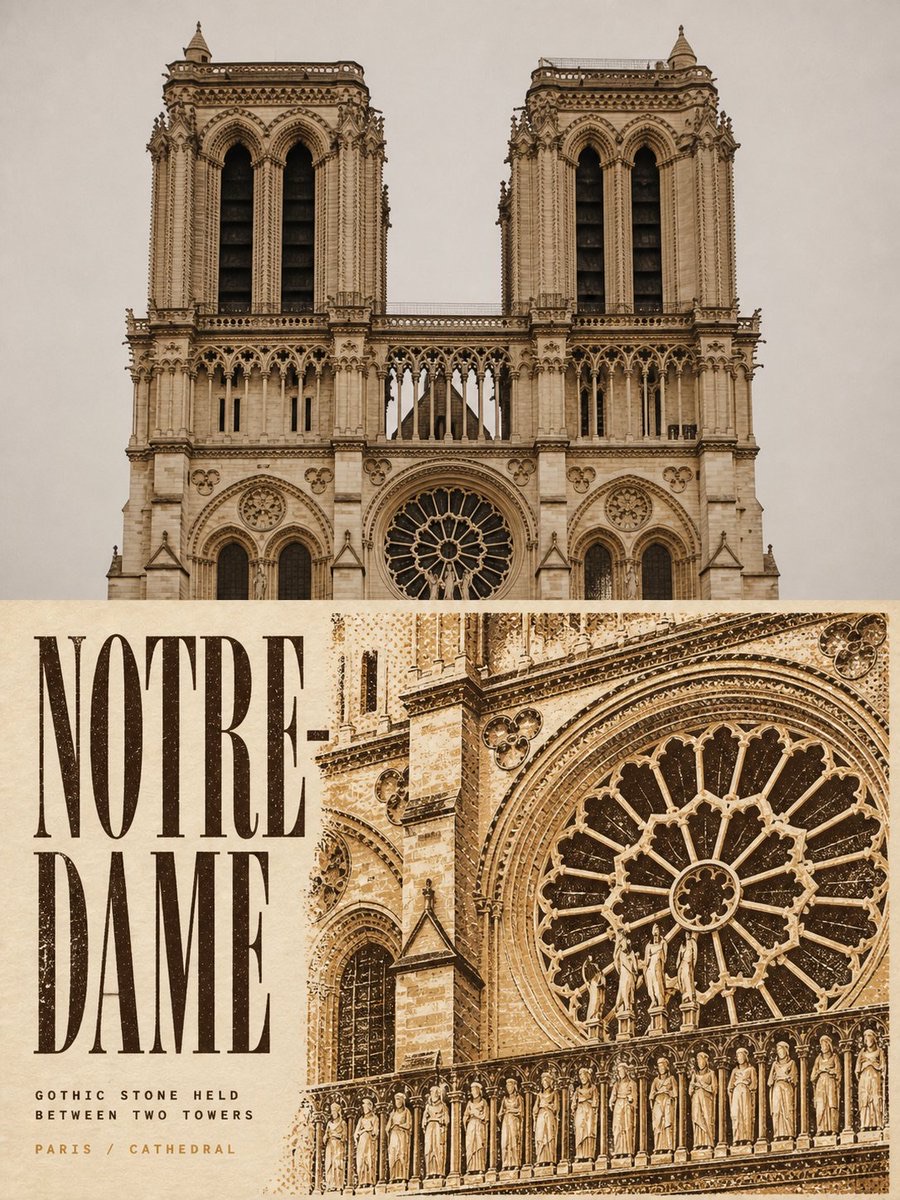
Two-Color Cultural Landmark Editorial Poster
-
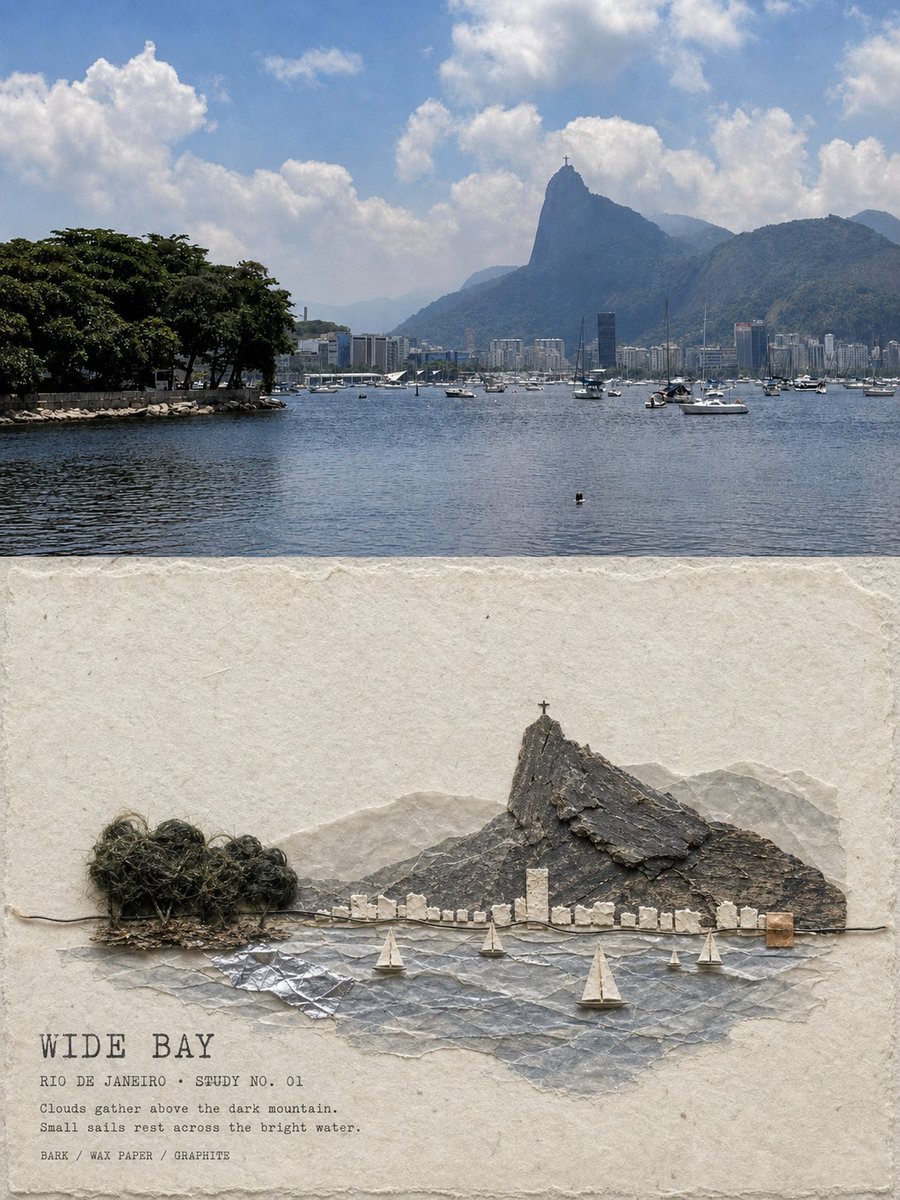
Material Assemblage Contrast Poster from a Travel Photo