Image
Travel Photo and Edo Woodblock Print Comparison Poster
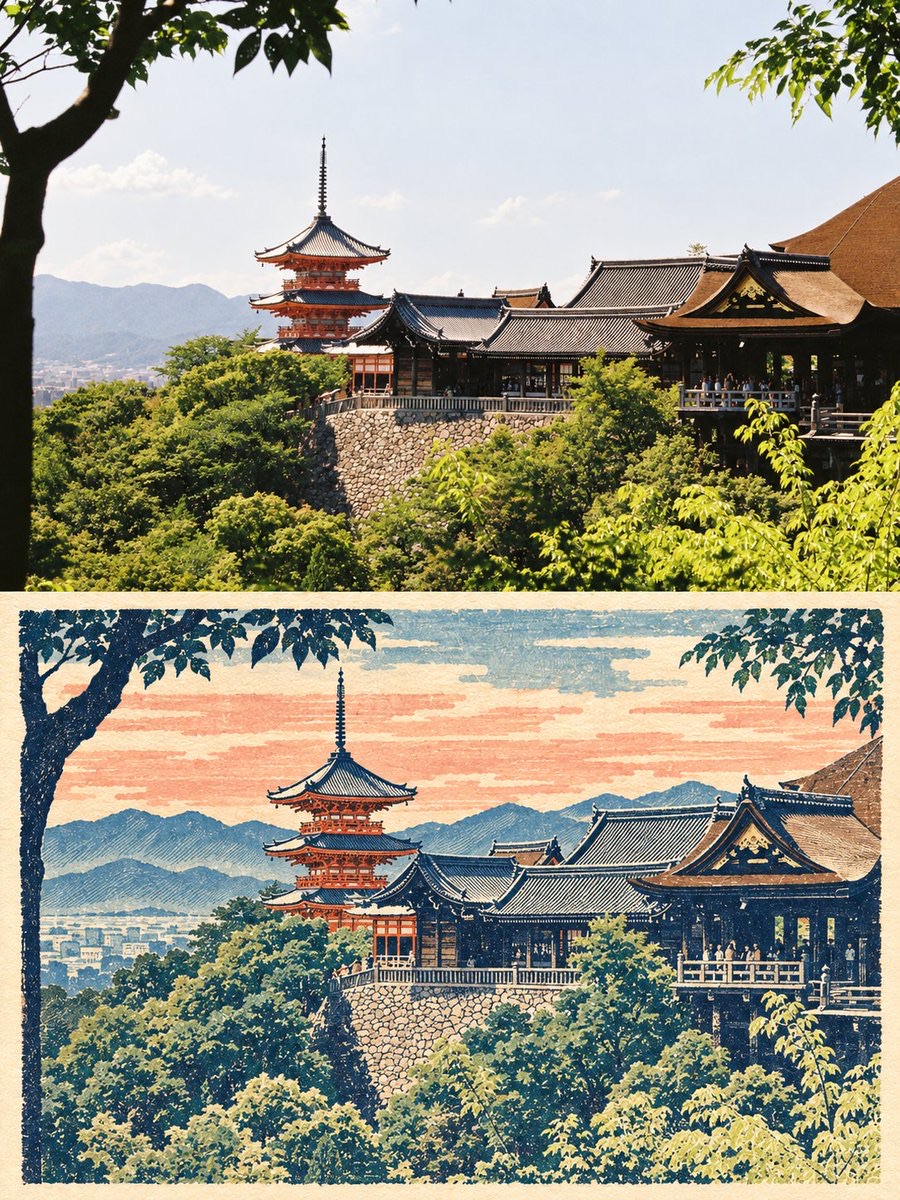
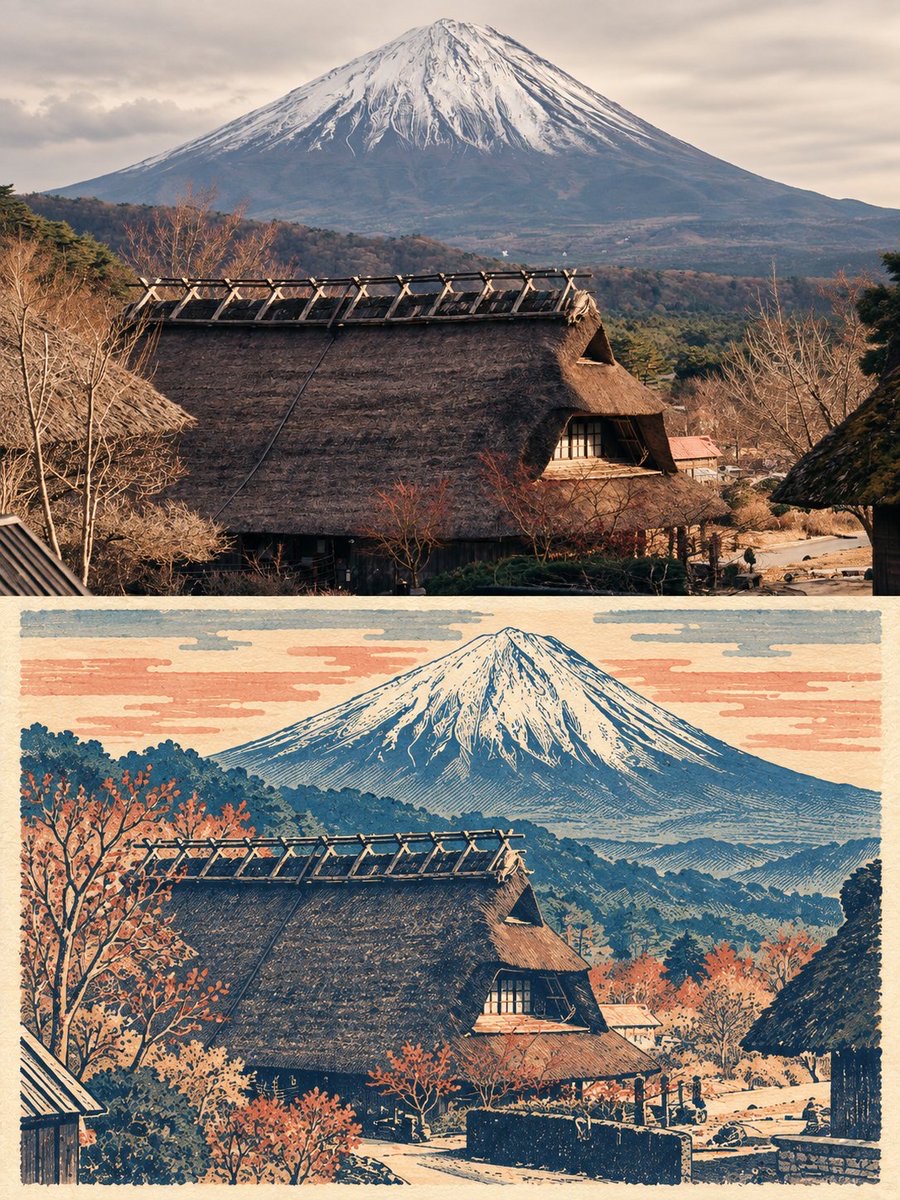
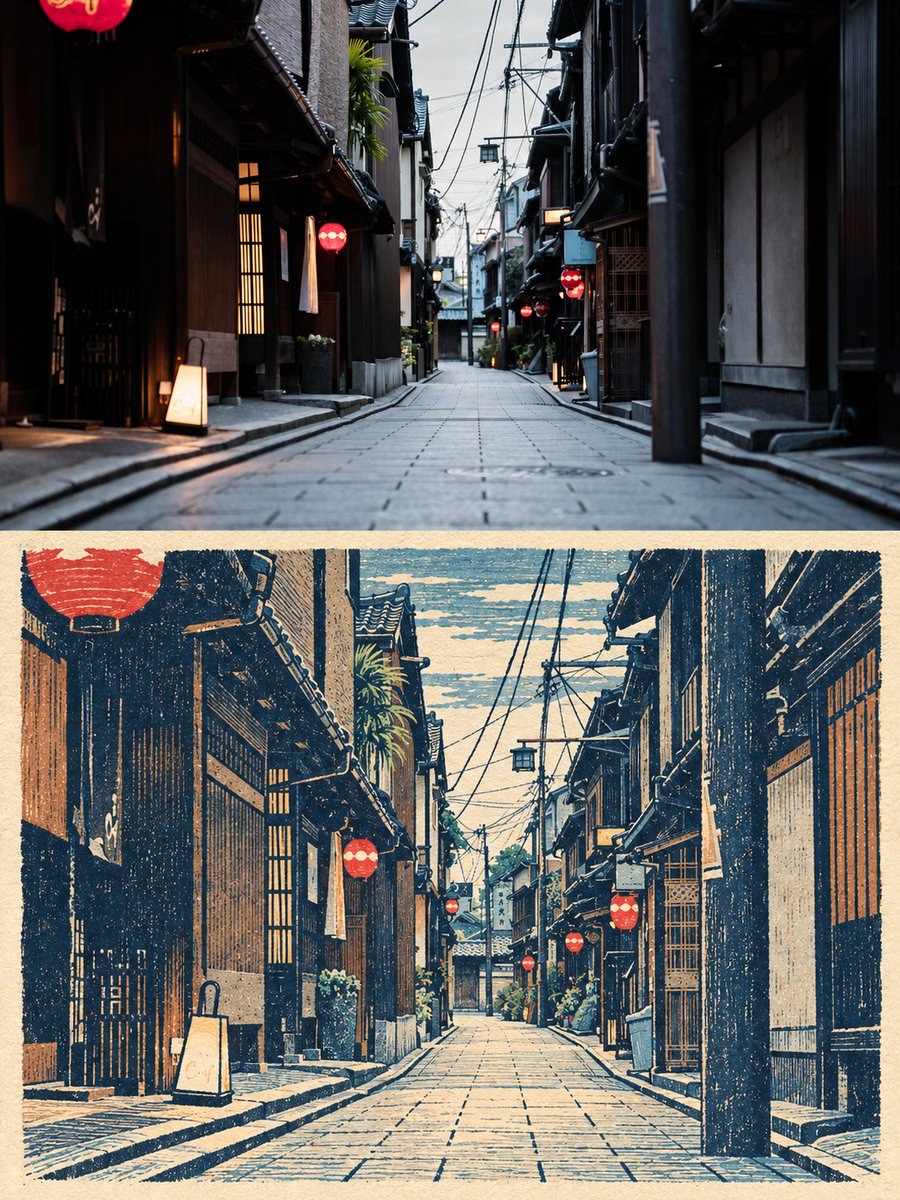
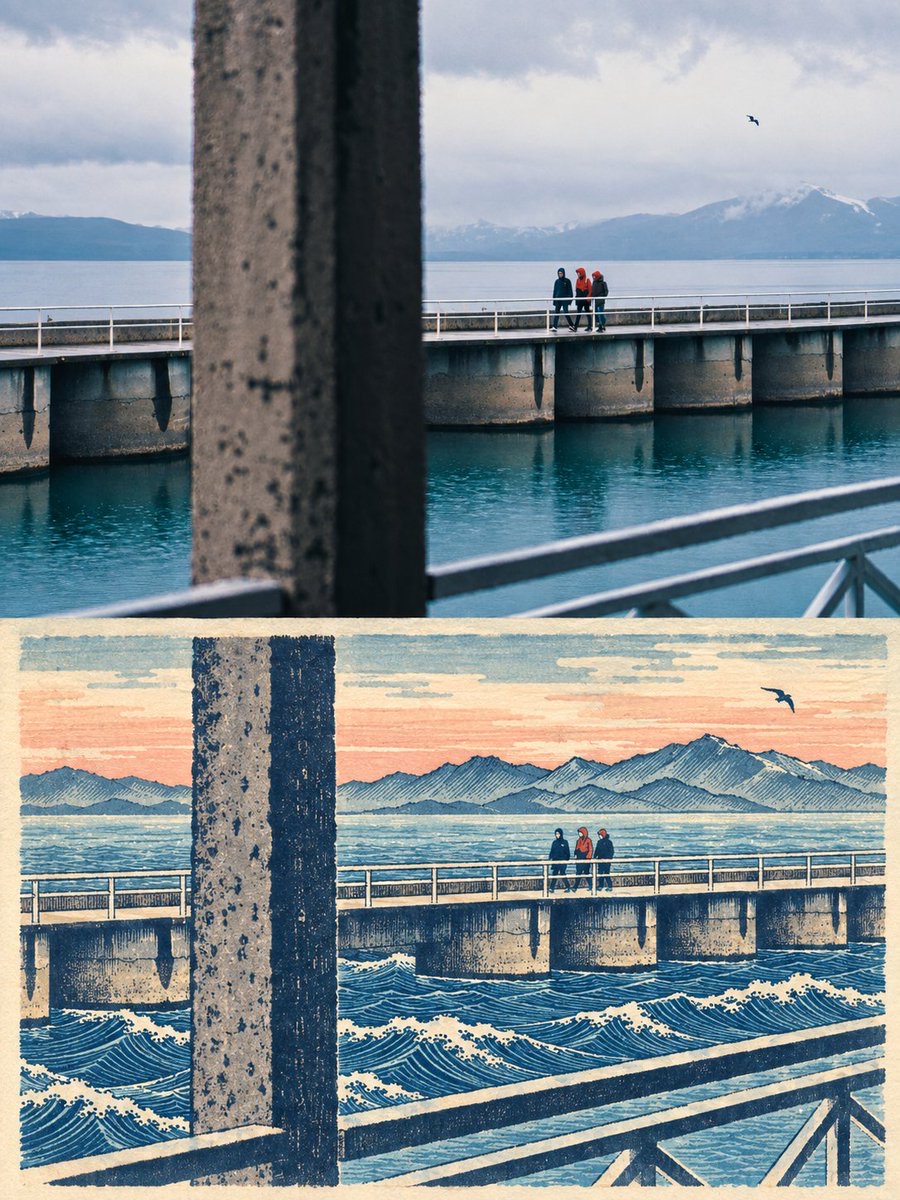
Turn a travel photo into a 3:4 vertical top-and-bottom comparison poster: the upper half keeps the real photograph, and the lower half reinterprets the same scene using the plate-making logic of Edo-period ukiyo-e woodblock prints.
 蛋黄堡@Hamburgerai
Prompt
Turn the input travel photo into a standalone 3:4 vertical top-and-bottom comparison poster. The upper half fully preserves the original real photograph, keeping the subject's identity, number, composition, perspective, key architectural or natural silhouettes, original lighting and environmental relationships, with only a slight publication-style color grade. A clean, restrained off-white horizontal divider line runs across the middle.

The lower half reorganizes the same scene into a true Edo-period Japanese ukiyo-e woodblock print, retaining the most recognizable subject and spatial relationships from the photo, but actively changing the information density, color areas and compositional focus rather than applying an isomorphic photo filter.

Use an off-white and paper-fiber base, deep indigo and ink-black carved outlines, vermilion, ochre, blue-cyan and grey-green in a limited number of overprinted colors, flat color blocks, diagonal hatching, short carved marks, layered contours, slight ink starvation, dry-brush flying-white, ink seeping into paper fibers, and slight misregistration between color plates. Clouds, leaves, roof tiles, ridges, roads, lanterns, buildings and other environmental elements are distilled from the input photo into rhythmic woodcut patterns. The lower half does not replicate the photo's full framing; instead, through enlarging or shrinking the subject, compressing the background and continuous washi-paper negative space, it creates the breathing room of an Edo-style print. Colors are extracted from and compressed from the original photo, without applying a fixed sea-blue template; if the original photo is not a seascape, do not add waves or coastline.

Only use real, visible elements from the original photo; do not invent landmarks, people, animals, vehicles or cultural symbols. The upper half must remain real photography, and the lower half must be a woodblock translation of the same location and the same subject. Do not generate ordinary filters, modern flat vector graphics, flat cartoons, realistic oil paintings, 3D renders, glossy plastic gradients, a whole-photo blue tint, or altered building structures or mountain silhouettes. No text, titles, captions, fake Chinese-style characters, seals, logos, watermarks, original-photo or AI-image corner marks, or decorative borders.
将输入的旅行照片制作成一张独立的 3:4 竖版上下对比海报。上半部分完整保留原始真实照片,保持主体身份、数量、构图、透视、关键建筑或自然轮廓、原始光线和环境关系,只做轻微出版物调色;中间使用一条干净、克制的米白色水平分隔线。下半部分将同一场景重新组织为真正的江户时期日本浮世绘木版画,保留照片中最有辨识度的主体和空间关系,但主动改变信息密度、色彩面积和构图重心,不做同构图照片滤镜。
使用米白色和纸纤维底、深靛蓝与墨黑雕版轮廓、朱红、赭石、青蓝、灰绿有限套色、平涂色块、斜向排线、短刻痕、层叠轮廓、轻微缺墨、干涩飞白、墨色渗入纸纤维和轻微套色错位。云、树叶、屋瓦、山脊、道路、灯笼、建筑与其他环境元素都依据输入照片提炼成有节奏的木刻纹样。下半不复刻照片的完整取景,而是通过主体放大或缩小提炼、背景压缩和连续和纸留白形成江户版画式呼吸空间。颜色从原照片提取并压缩,不套用固定海蓝模板;若原图不是海景,不添加海浪或海岸。
只使用原照片中真实可见的元素,不发明地标、人物、动物、交通工具或文化符号。上半必须保持真实摄影,下半必须是同一地点同一主体的木版画转译。不要生成普通滤镜、现代扁平矢量、平面卡通、写实油画、3D 渲染、渐变塑料质感、整张照片蓝色化、改变建筑结构或山体轮廓。不要文字、标题、字幕、假汉字、印章、logo、水印、原图/AI 图角标或装饰边框。
How to use
Usage tip: upload a travel photo with a clear subject and architectural or natural silhouette. Suitable for location memories, travel portfolios or art-style comparison posters.
Details
More from 蛋黄堡
-
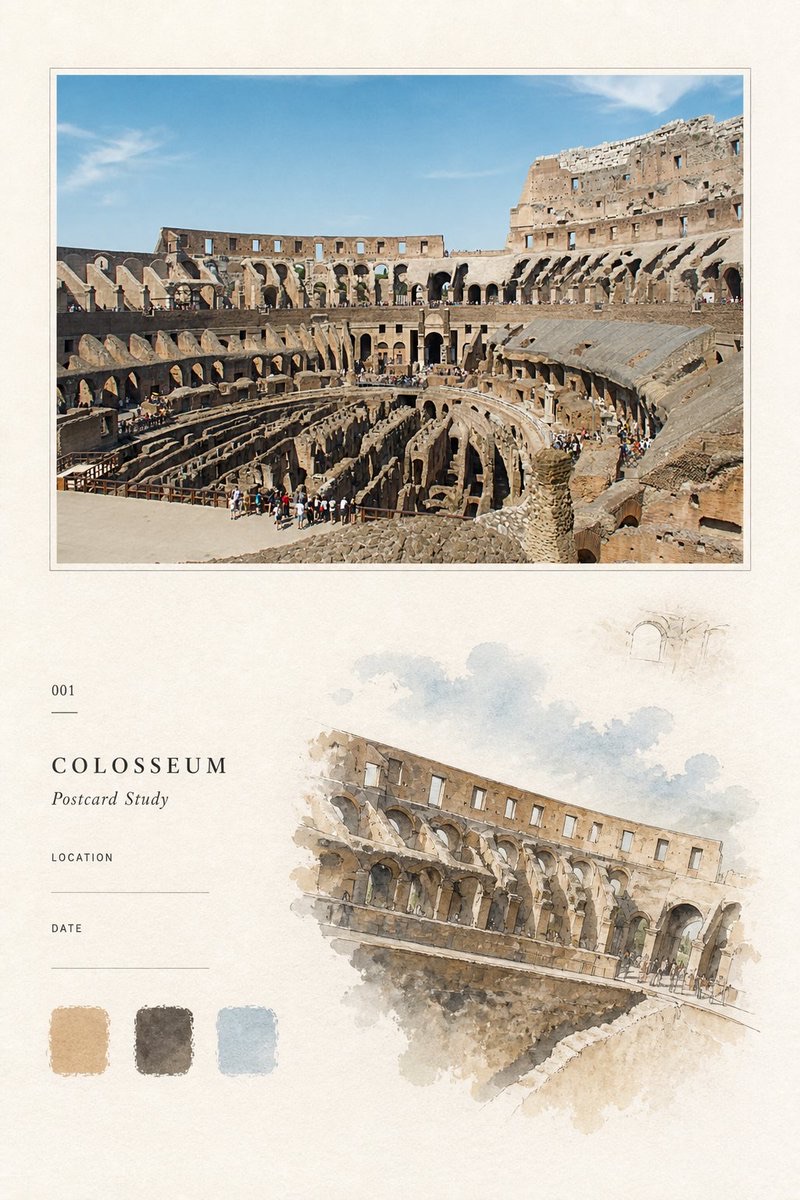
Travel Palette Watercolor Study Poster
-
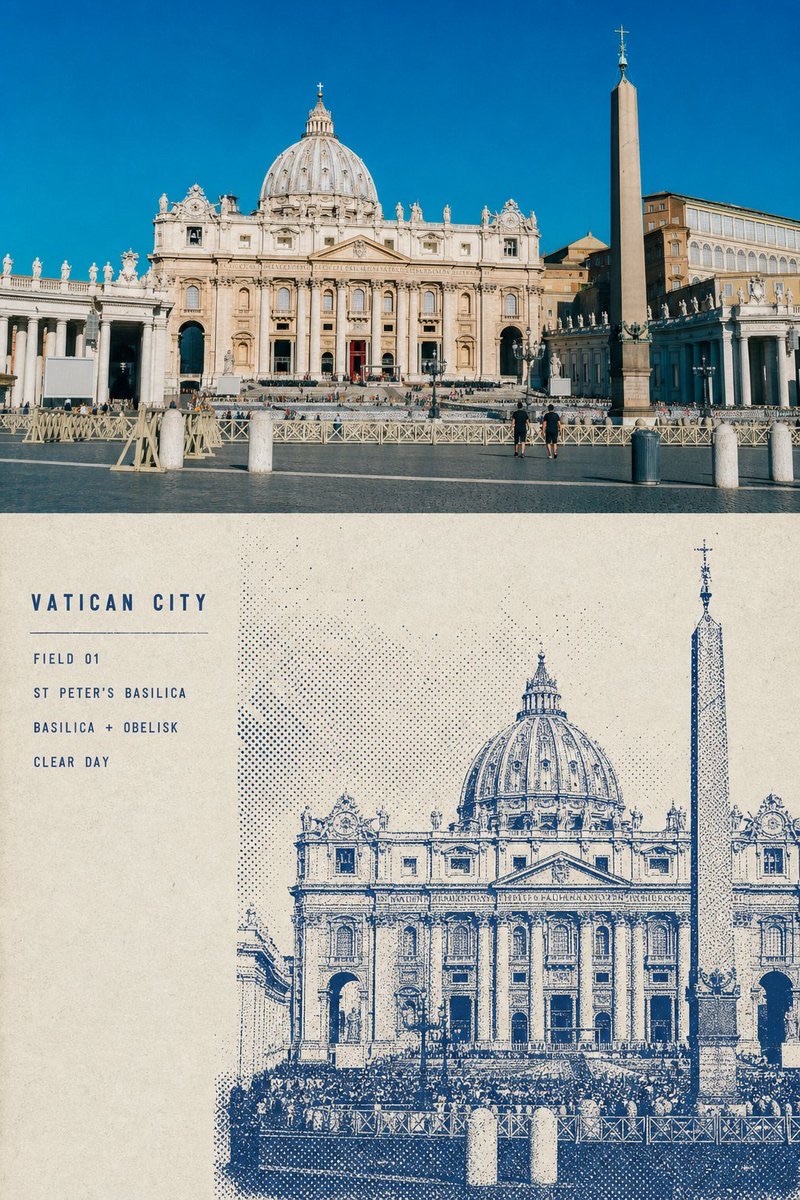
Blue Halftone City Archive
-
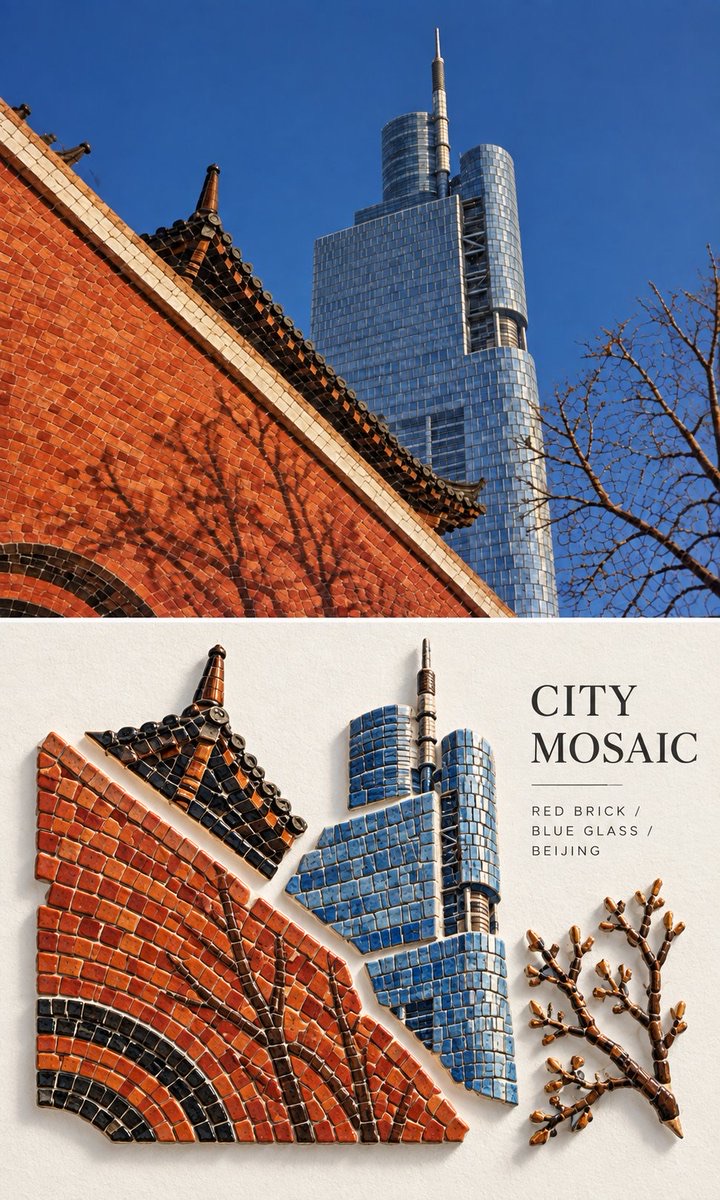
Travel Photo to Glazed Mosaic Relief Poster
-
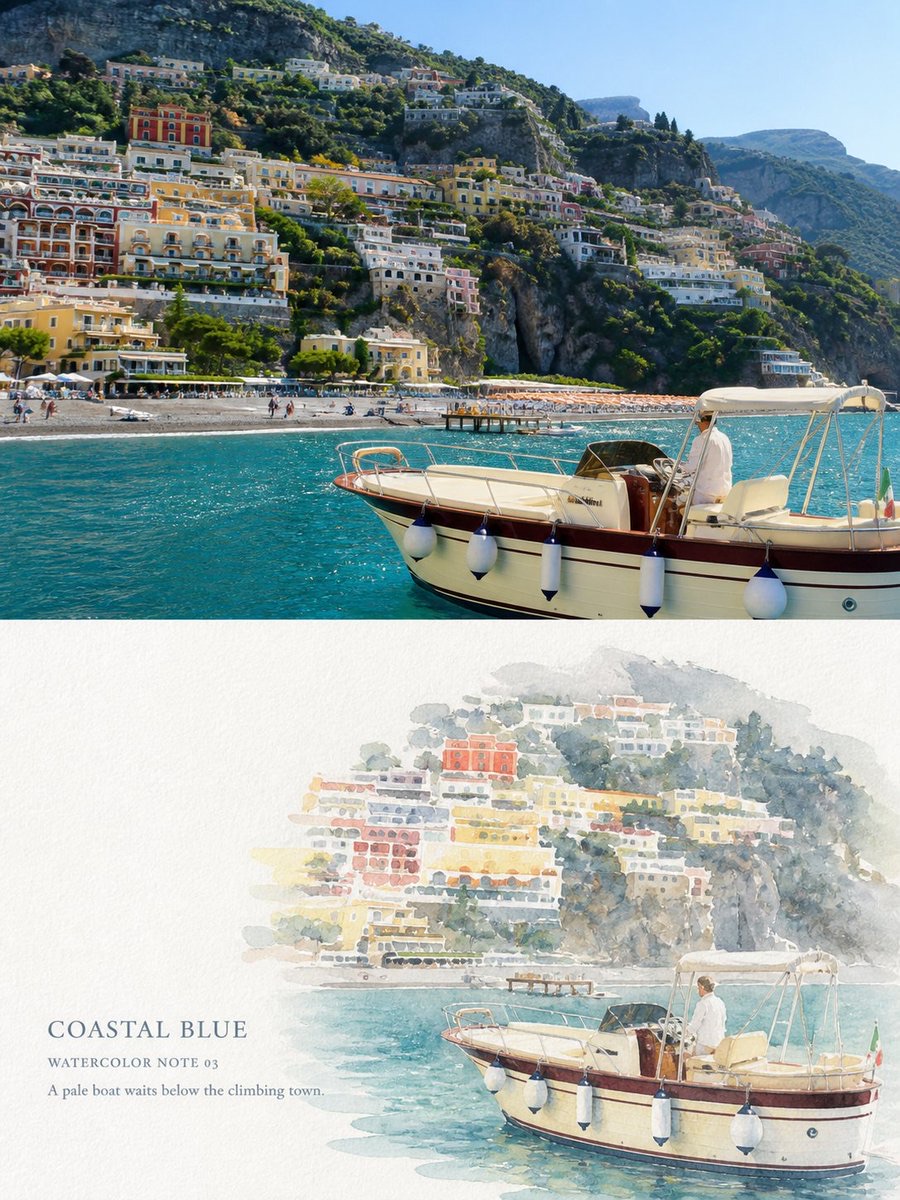
Clear White-Paper Travel Watercolor Editorial Poster
-
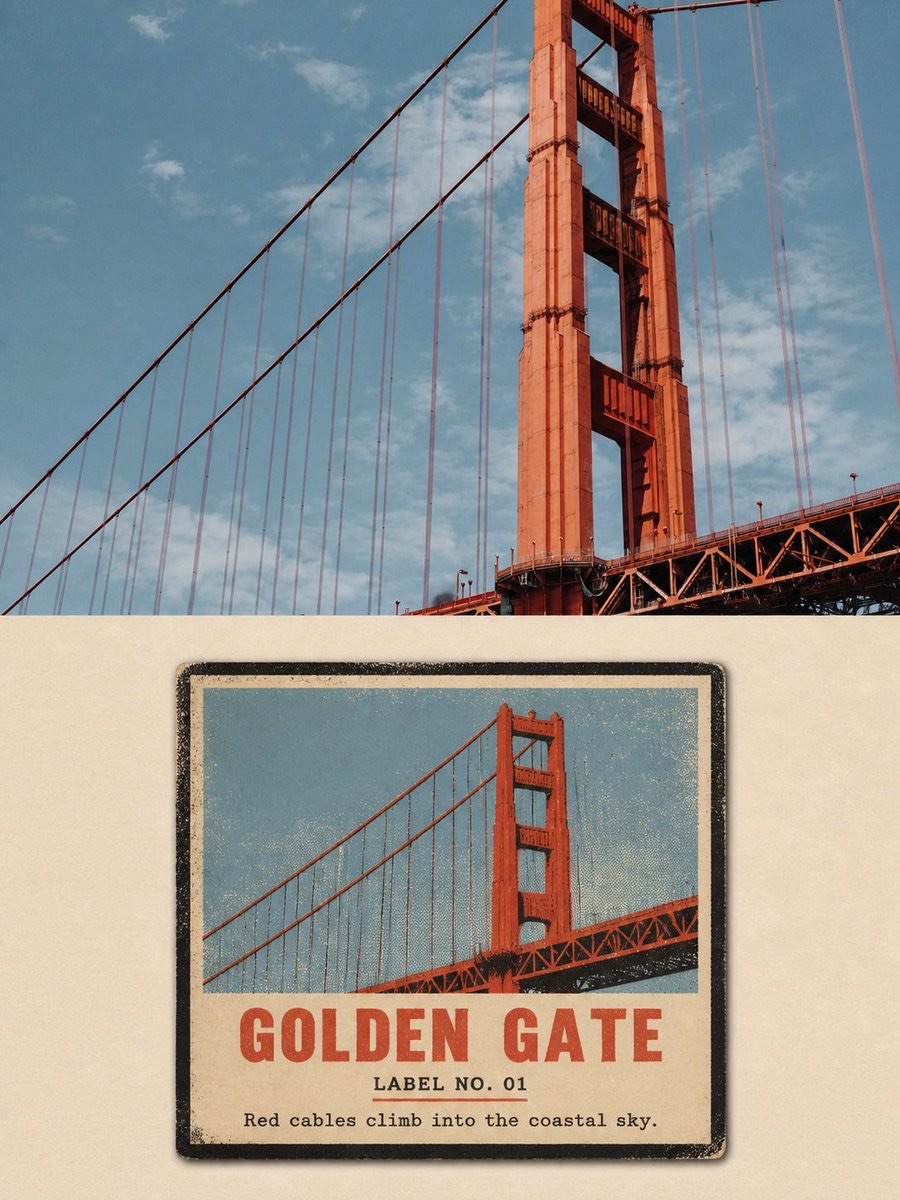
Vintage Matchbox Travel Label Poster
-
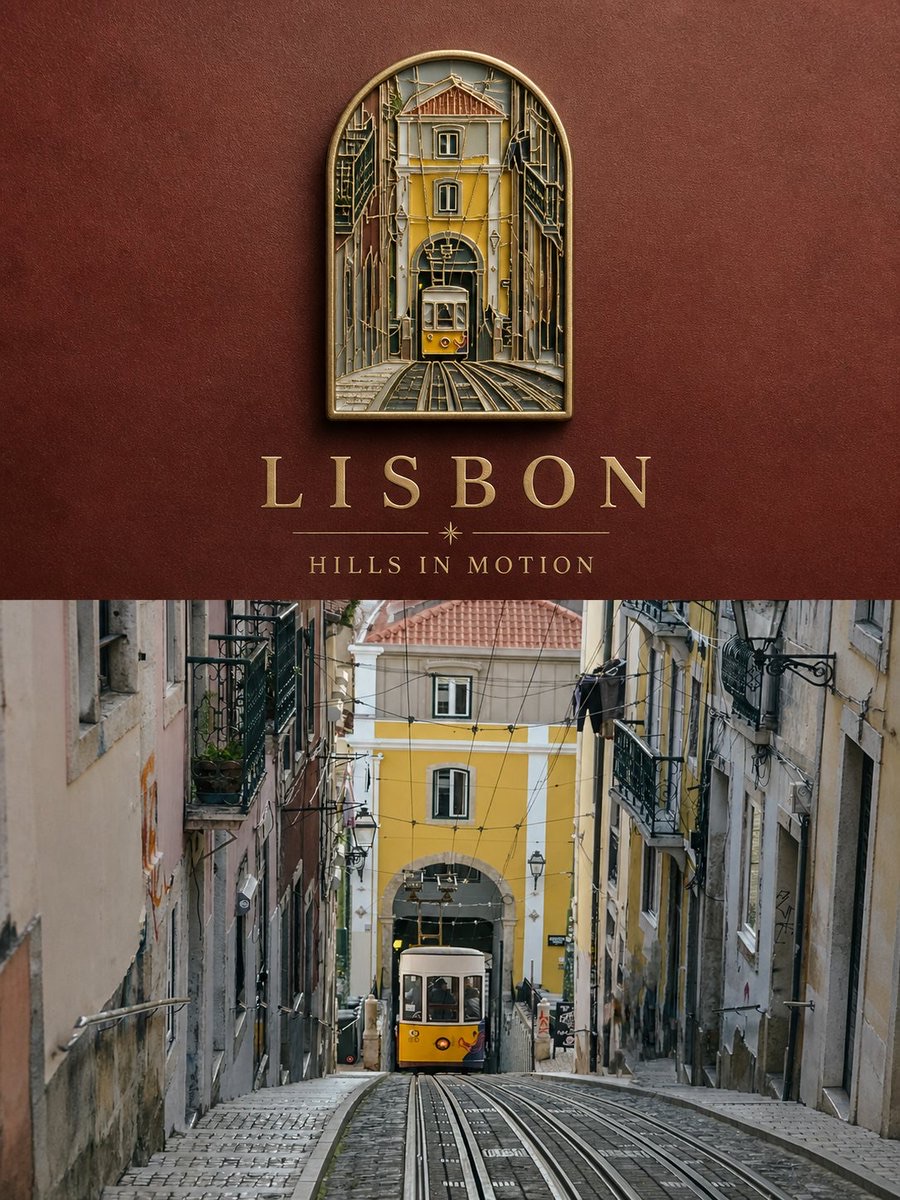
Travel Enamel Fridge Magnet Souvenir Poster
-
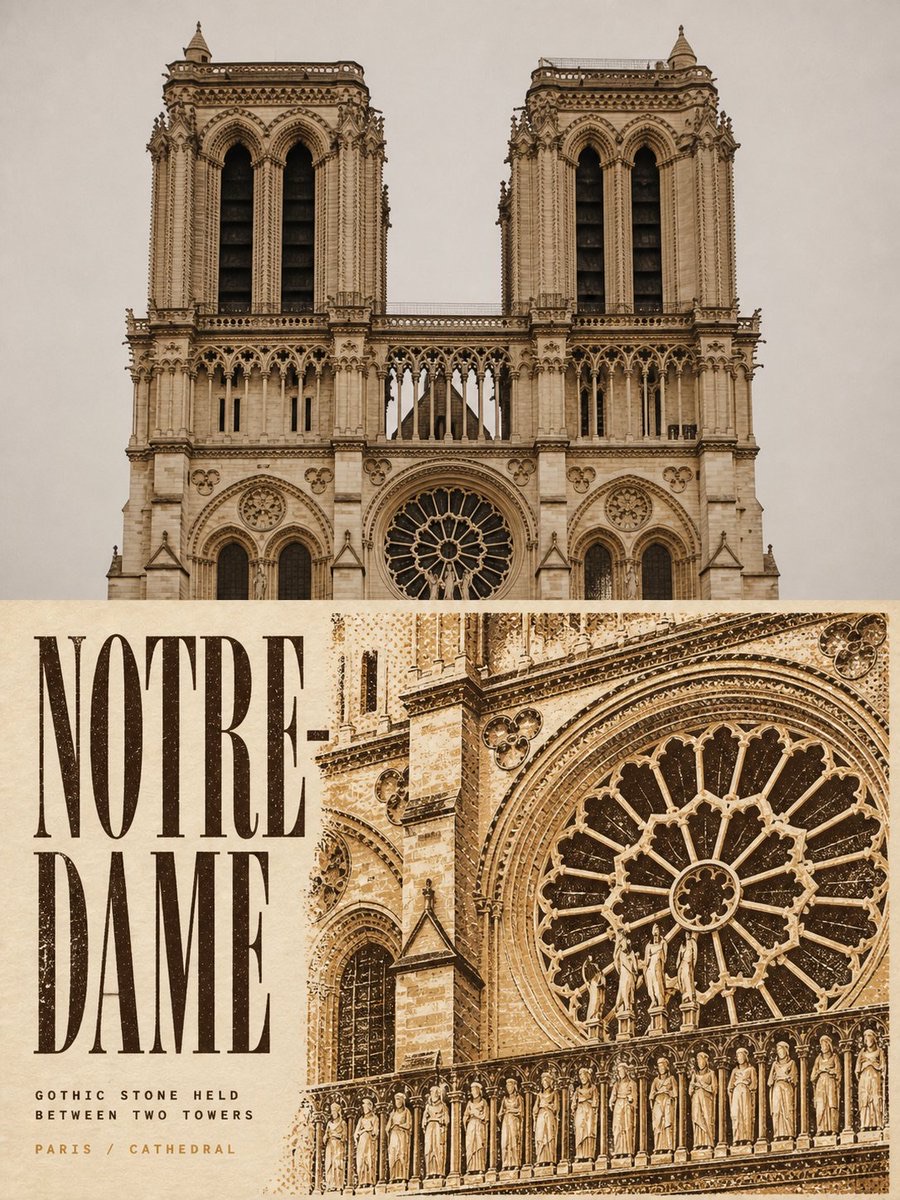
Two-Color Cultural Landmark Editorial Poster
-
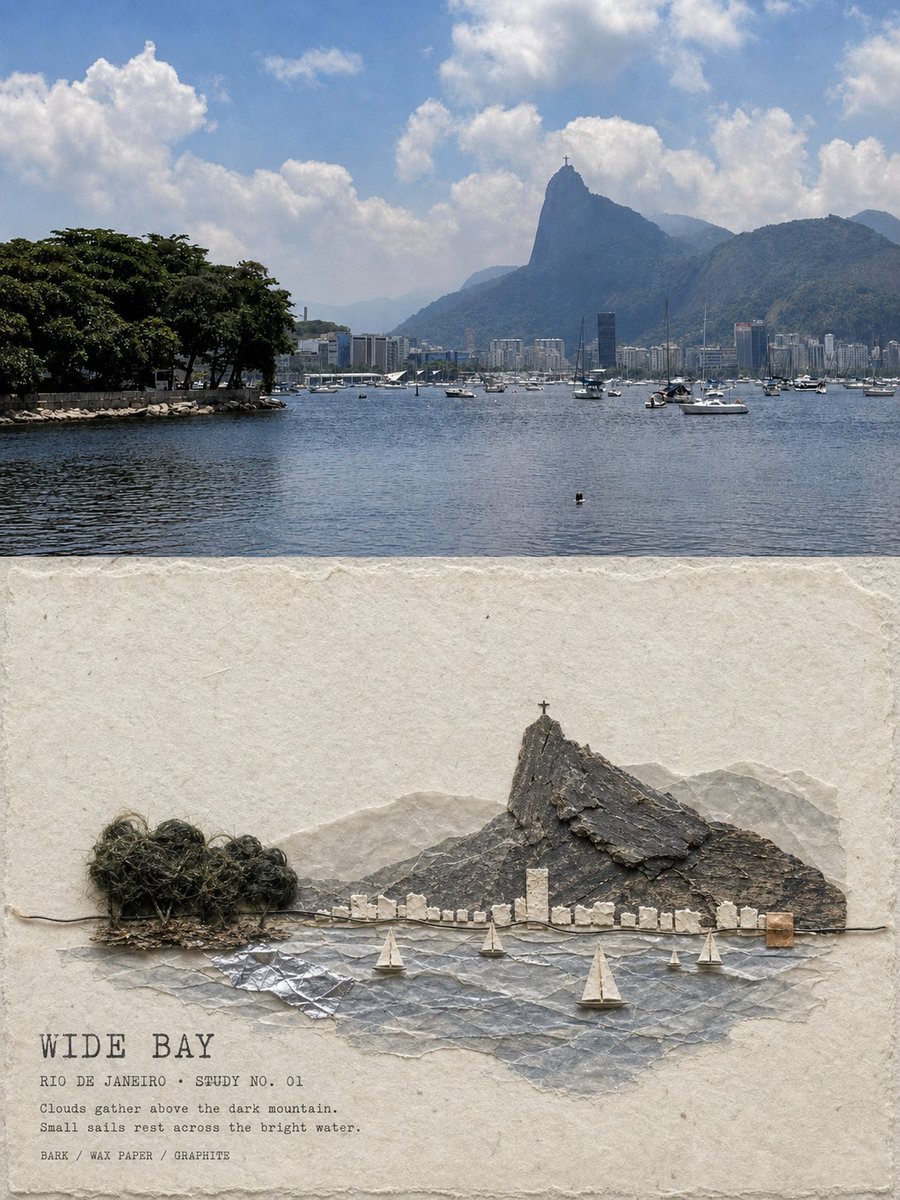
Material Assemblage Contrast Poster from a Travel Photo