Image
ASCII and Halftone Travel Collage Portrait Poster
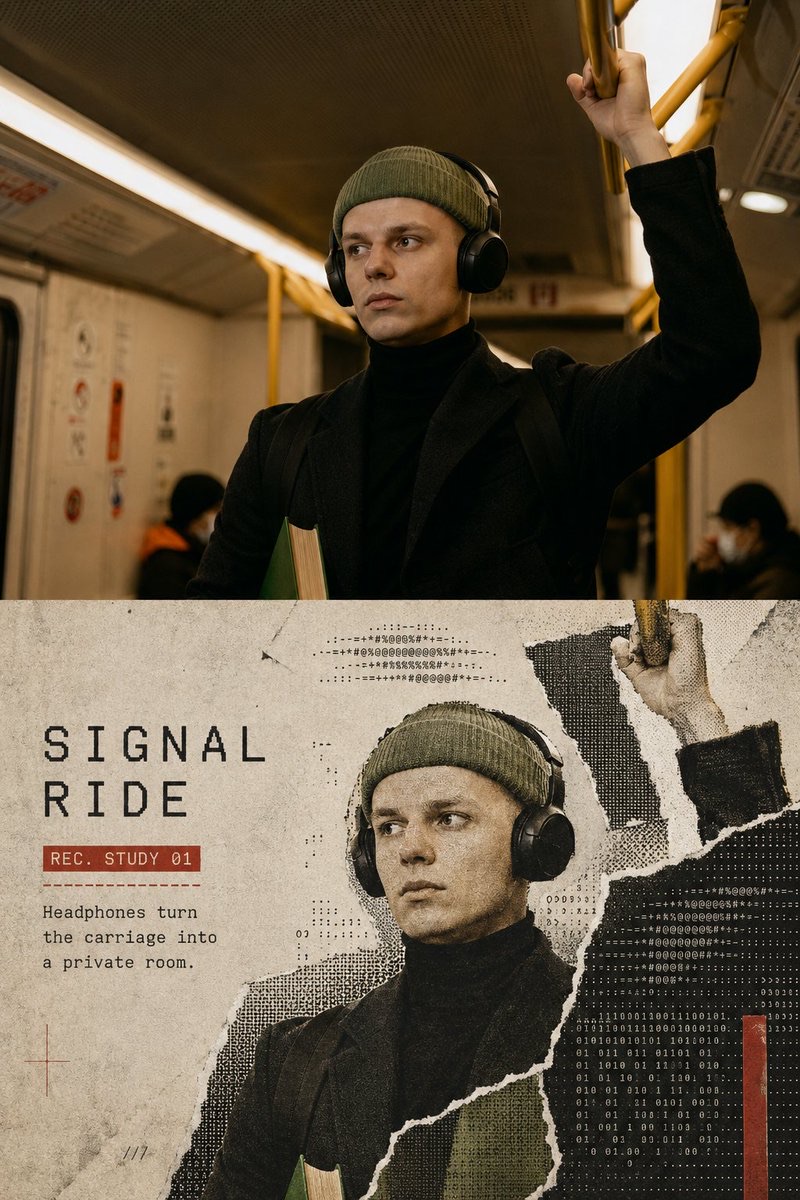
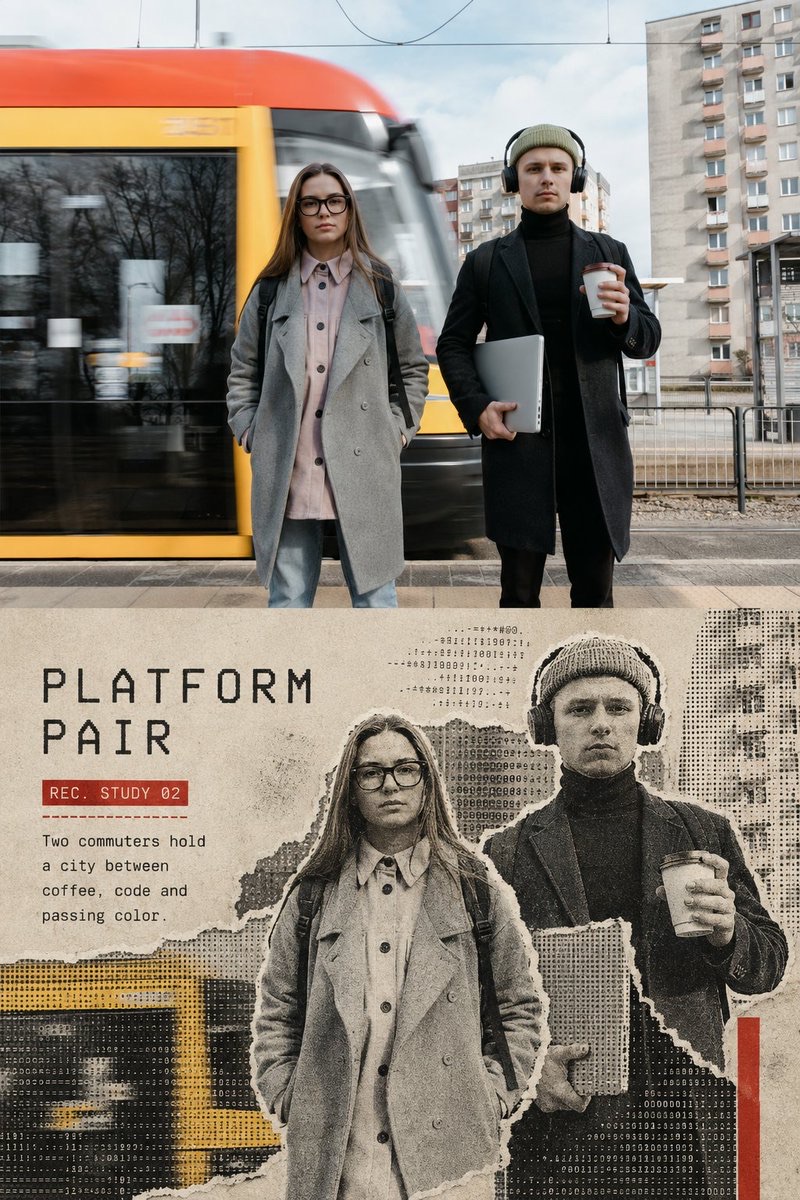
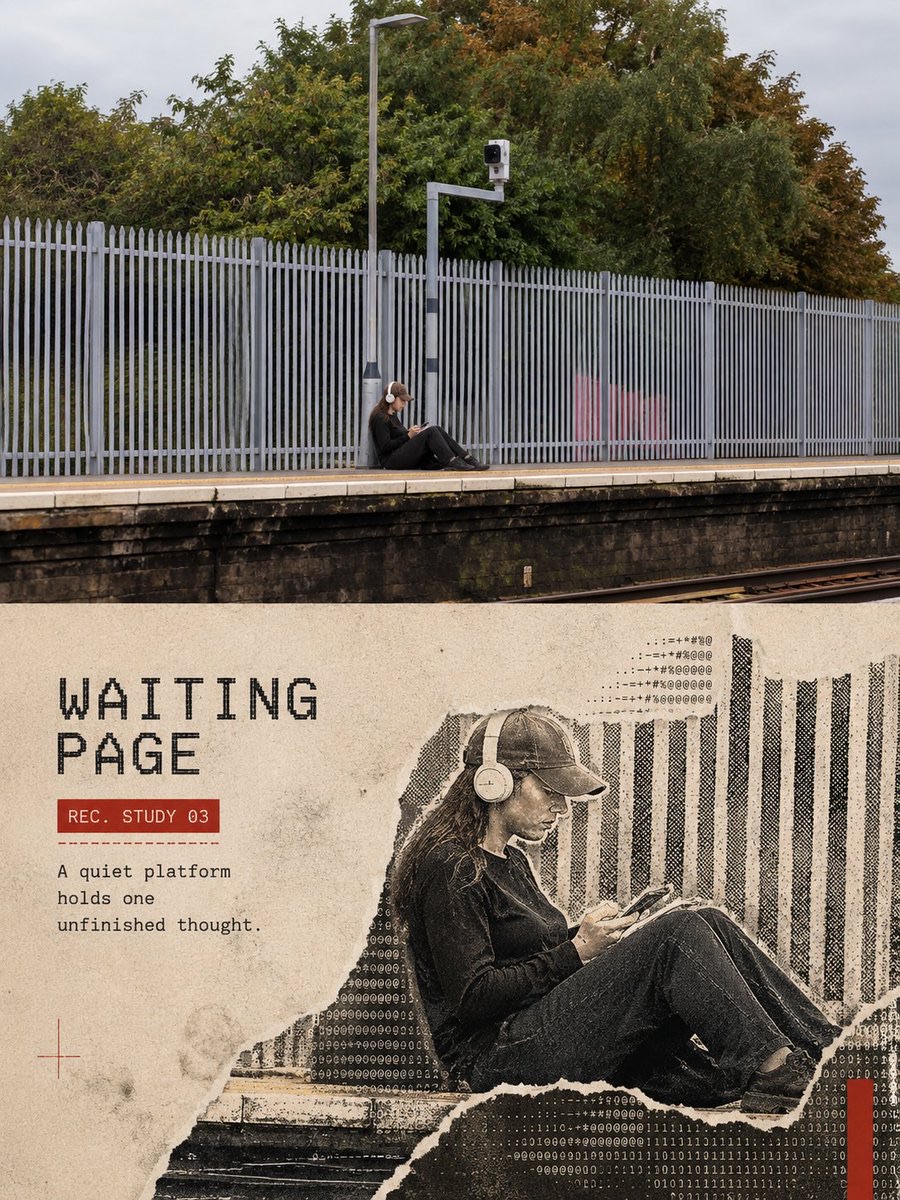
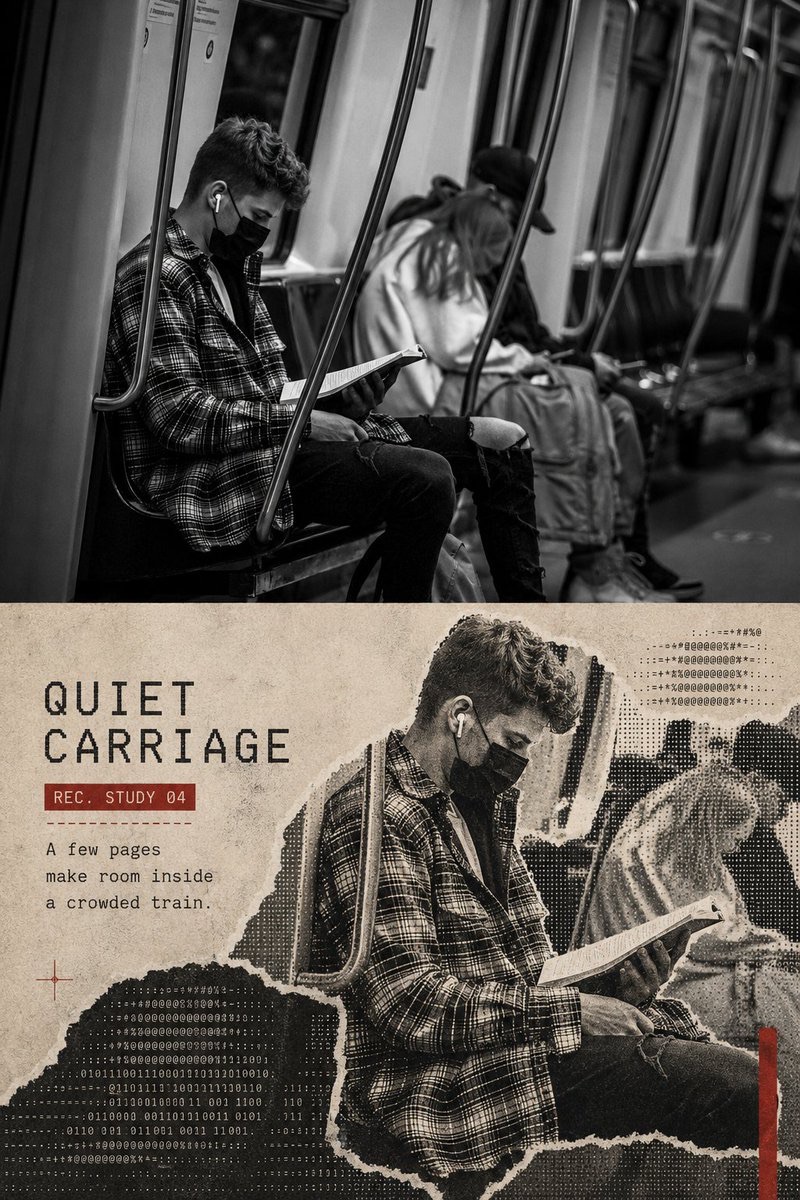
Turn each portrait uploaded by the user into an experimental travel poster divided into upper and lower sections, combining photography, an ASCII character field and photocopy halftone dots, while preserving the person's identity and key objects.
 蛋黄堡@Hamburgerai
Prompt
Please turn each portrait photo I upload into a separate premium ASCII-and-halftone travel collage poster. Output each photo individually; do not stitch multiple images together.

Use an overall 3:4 vertical composition with a clear upper-lower contrast area. The upper and lower areas should be roughly balanced, separated by a clean, clear horizontal boundary; do not stretch, distort or move the people in the original photo to fit the ratio.

The upper half faithfully preserves the original photo, accurately maintaining the person's identity, facial features, expression, pose, hands, clothing layers, headphones, books, equipment, personal items, environmental structure, natural lighting and the original color mood. Apply only light premium photographic color grading and extremely thin film grain; do not redraw the person.

The lower half, on a warm gray aged paper background, reconstructs the same person as a simulated print collage composed of photographic slices, an ASCII character field and photocopy halftone dots.

Keep the person's face, hands, hairstyle, headphones, layered clothing and one key object, so the person's identity remains clearly recognizable. Use real photographic slices with torn edges to show the face and key structures, letting parts of the clothing, shadows and environment gradually dissolve into monospaced ASCII characters, black photocopy dots and broken print grain.

Add rough white paper fiber edges, slight misregistration, aged paper stains, a few cut lines and one restrained red registration bar. Keep the original photo colors, toned down; do not make it fully monochrome. Overall, the main elements are warm gray aged paper, black ink, the photo's original colors and one registration red.

The main subject in the lower half should occupy about 60%–88% of the frame width; the person's scale may be adjusted based on the original image to make the composition more impactful than the original photo. Still retain about 22%–38% of continuous unprinted paper surface, avoiding a dense computer terminal interface.

Based on the visual theme, generate a readable monospaced English title, paired with “REC. STUDY 01” and one short observational sentence. A few ASCII symbols may enter the edges of the person as texture, but garbled text must not pass as body copy, and device parameters must not be fabricated.

Overall, the texture overlaps early digital systems, analog photocopying, underground publications and modern travel editorial design. The person gradually develops between photography, characters and dots, restrained, calm, with an archival feel and print experimentality.

Avoid all-black computer interfaces, dense terminal code, cyberpunk neon, fully covering the face, random cultural symbols, fake technical data, garbled text, author names, brand logos, QR codes and watermarks.
请将我上传的每一张肖像照片分别制作成一张独立的高级字符网点旅行拼贴海报,每张照片单独输出,不得多图拼接。
整体采用3:4竖版构图,设置清晰的上下对比区域。上下区域大致均衡,以干净明确的水平边界分隔,不得为了比例拉伸、扭曲或移动原照片中的人物。
上半部分忠实保留原始照片,准确维持人物身份、面部五官、表情、姿态、手部、服装层次、耳机、书本、设备、随身物件、环境结构、自然光影和原有色彩氛围。仅进行轻微高级摄影调色和极薄胶片颗粒处理,不得重新绘制人物。
下半部分在暖灰色旧纸背景上,将相同人物重构为摄影切片、ASCII字符场与复印网点共同组成的模拟印刷拼贴。
保留人物的脸、手、发型、耳机、服装层叠和一件关键物件,使人物身份保持清晰可辨。使用带有撕裂边缘的真实摄影切片表现面部与关键结构,让部分衣料、阴影和环境逐渐溶解成等宽ASCII字符、黑色复印网点和断裂的印刷颗粒。
加入粗糙的白色纸纤维边缘、轻微套印错位、旧纸污迹、少量裁切线和一处克制的红色校准条。保留压低后的原照片色彩,不要完全单色化;整体以暖灰旧纸、黑墨、照片原色和一处校准红为主。
下半部分主体占画面宽度约60%—88%,可以根据原图调整人物尺度,使构图比原始照片更有冲击力。仍需保留约22%—38%的连续未印刷纸面,避免做成密集的电脑终端界面。
根据画面主题生成一个可读的等宽英文标题,搭配“REC. STUDY 01”和一句简短的观察文字。少量ASCII符号可以作为纹理进入人物边缘,但不得使用乱码冒充正文,也不得虚构设备参数。
整体呈现早期数字系统、模拟复印、地下出版物与现代旅行编辑设计交叠的质感。人物像在摄影、字符和网点之间逐层显影,克制、冷静、具有档案感和印刷实验性。
避免全黑电脑界面、密集终端代码、赛博朋克霓虹、完全遮挡面部、随机文化符号、虚假技术数据、乱码、作者名字、品牌标志、二维码和水印。
How to use
Usage tip: Upload one or more portrait photos; generate a separate 3:4 vertical poster for each photo, suitable for waiting for transport, reading or solo travel themes.
Details
More from 蛋黄堡
-
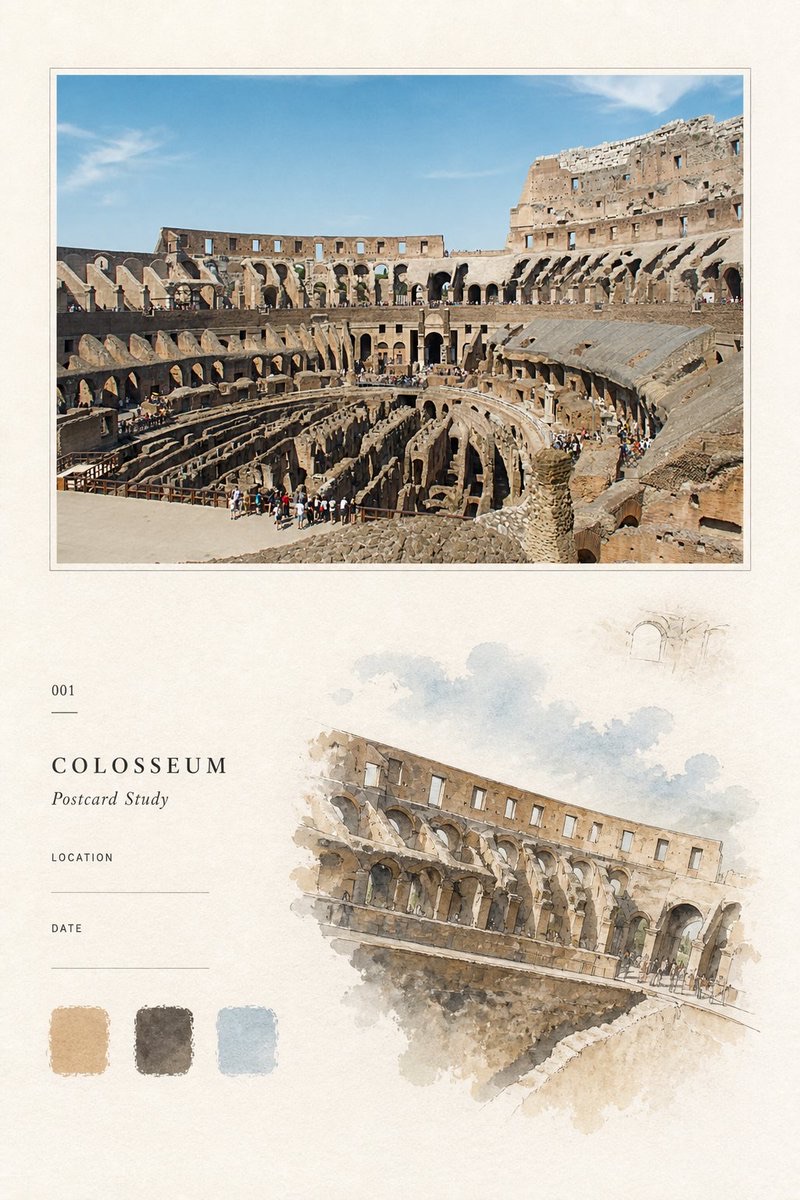
Travel Palette Watercolor Study Poster
-
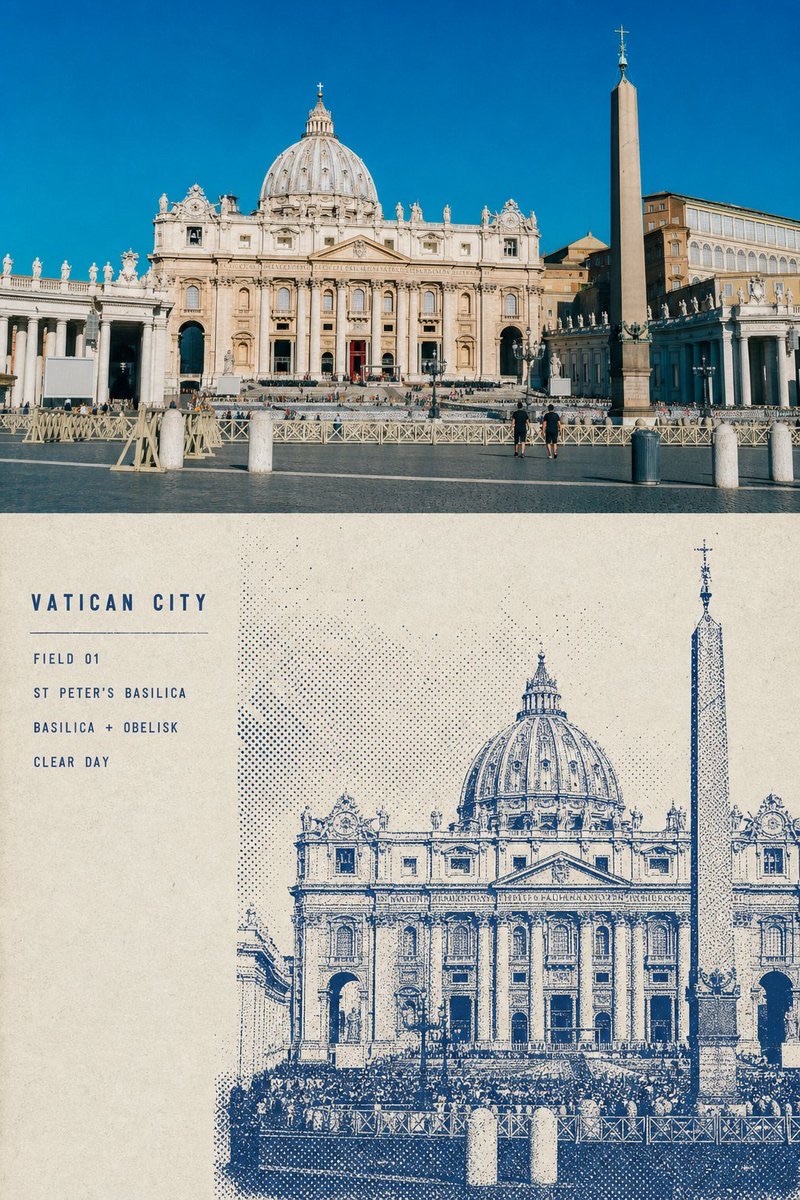
Blue Halftone City Archive
-
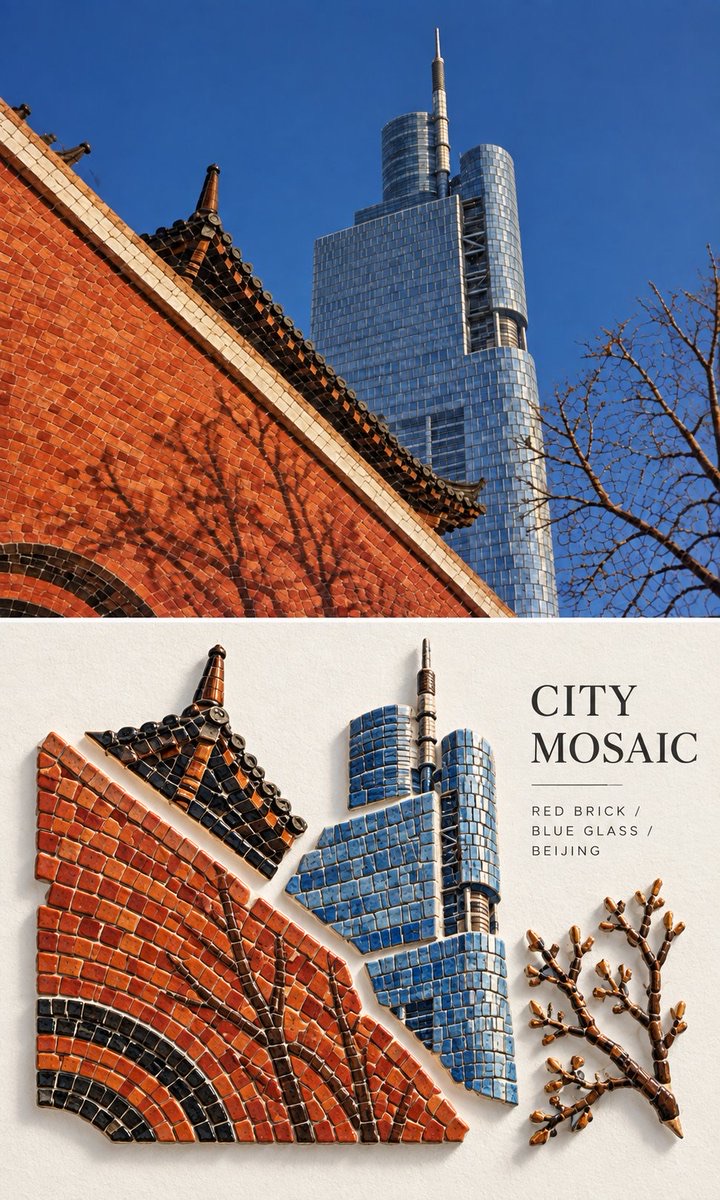
Travel Photo to Glazed Mosaic Relief Poster
-
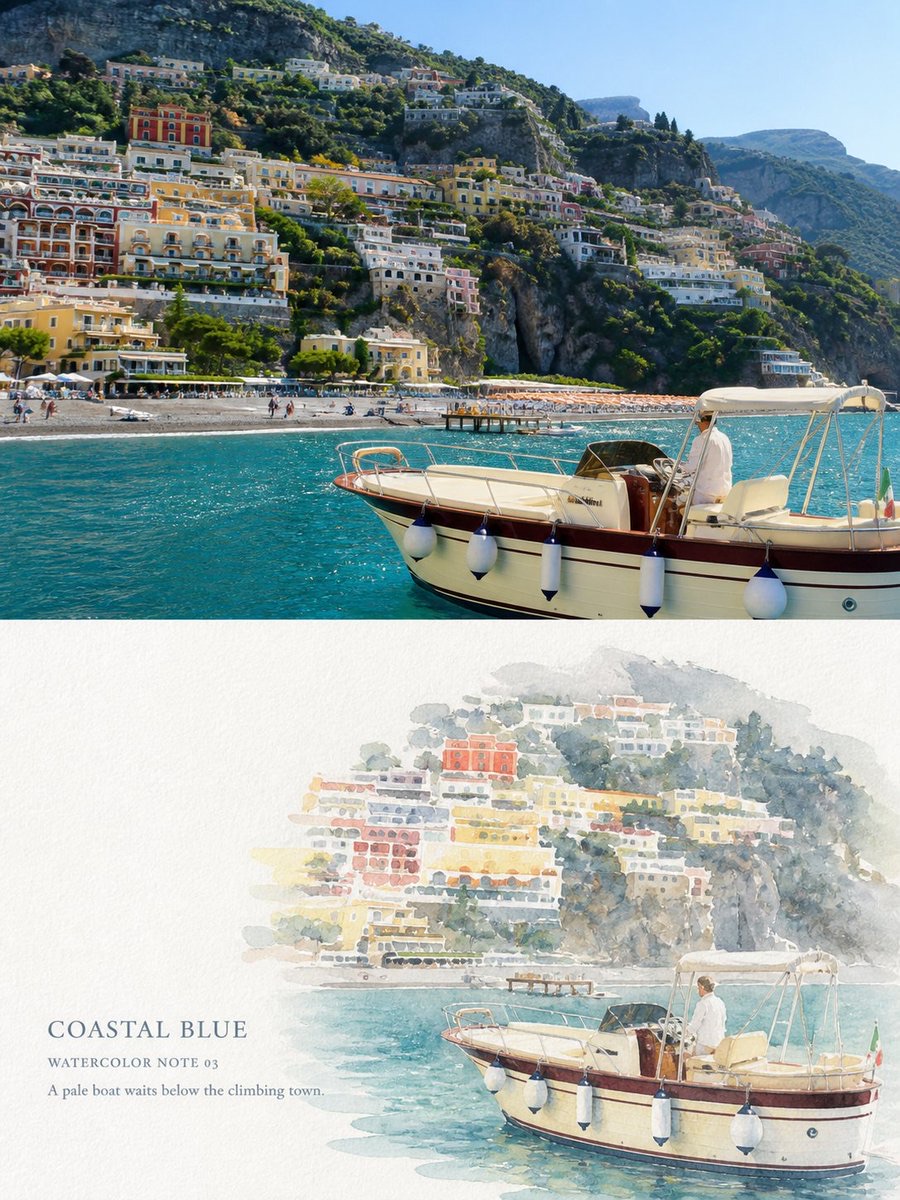
Clear White-Paper Travel Watercolor Editorial Poster
-
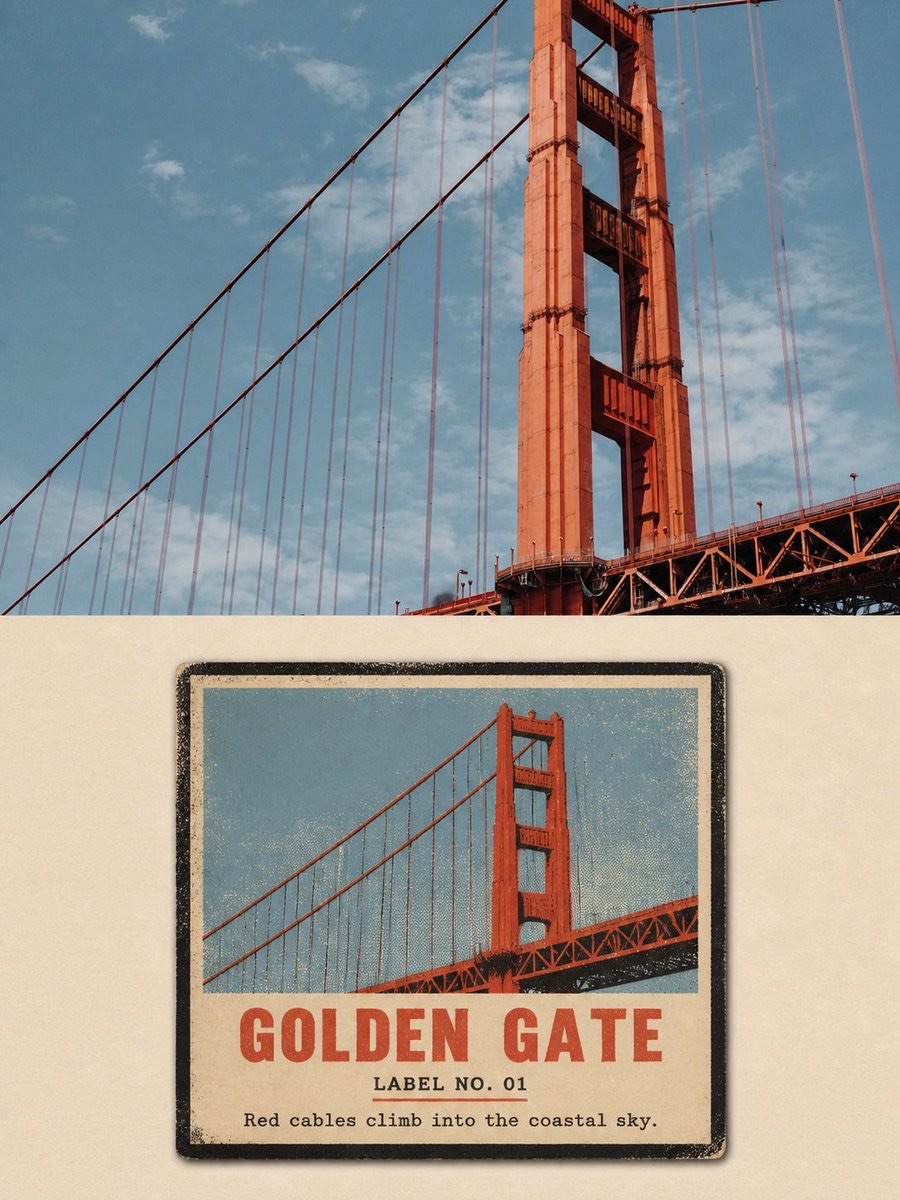
Vintage Matchbox Travel Label Poster
-
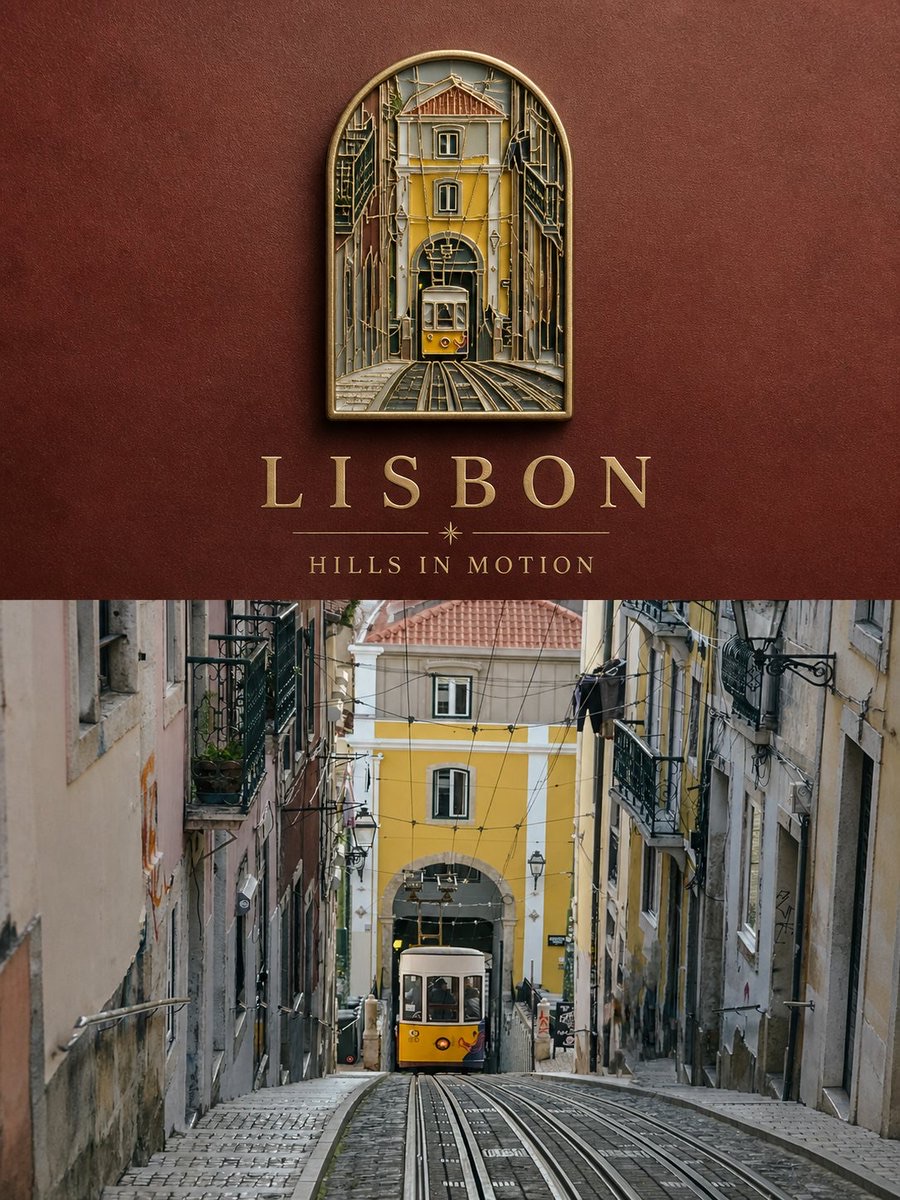
Travel Enamel Fridge Magnet Souvenir Poster
-
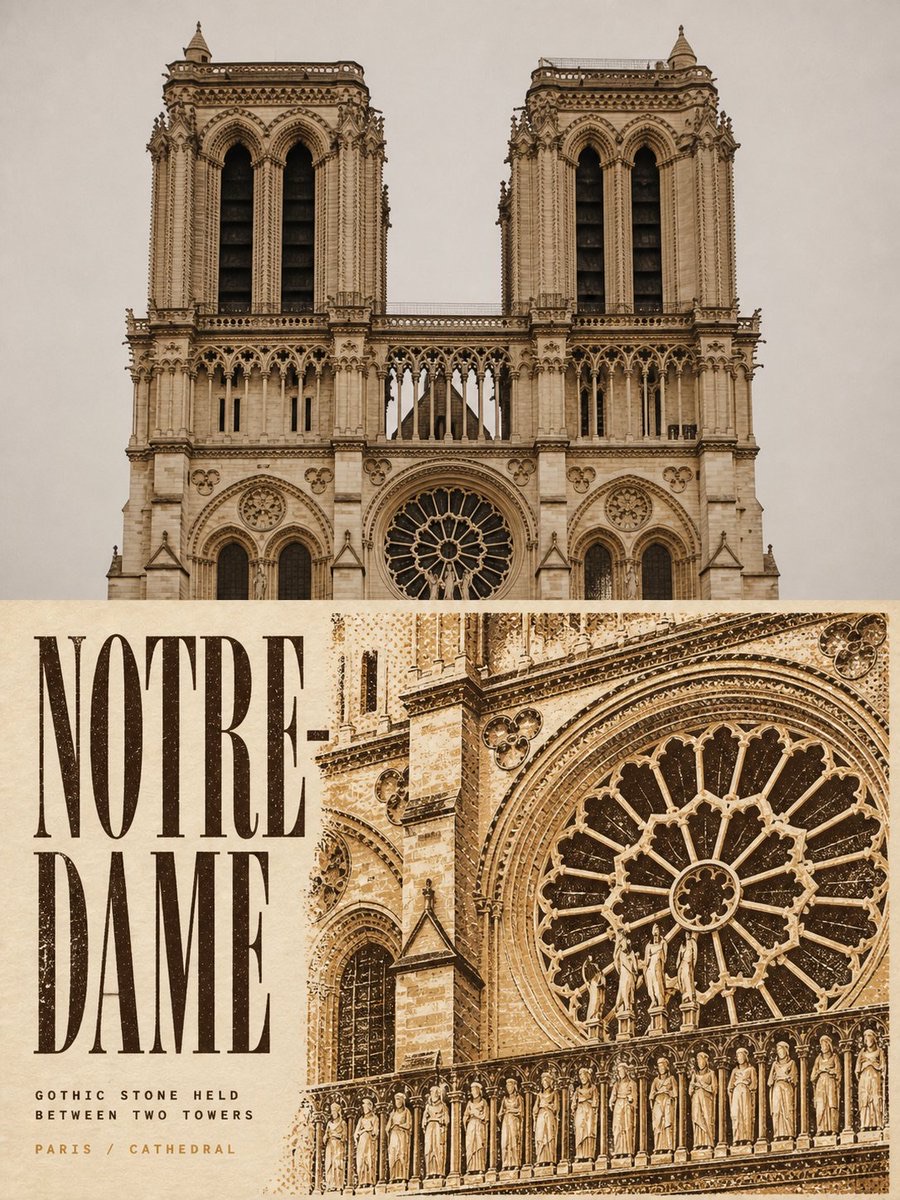
Two-Color Cultural Landmark Editorial Poster
-
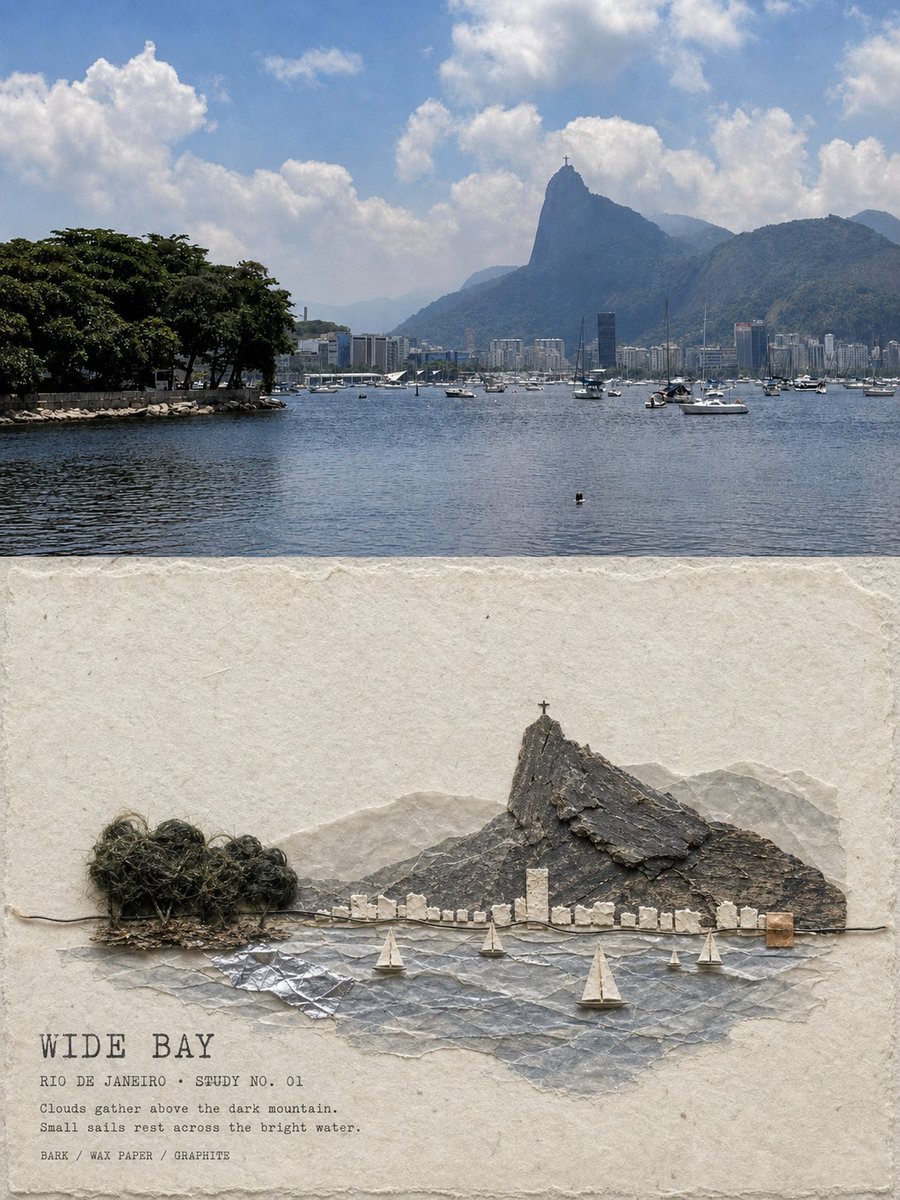
Material Assemblage Contrast Poster from a Travel Photo