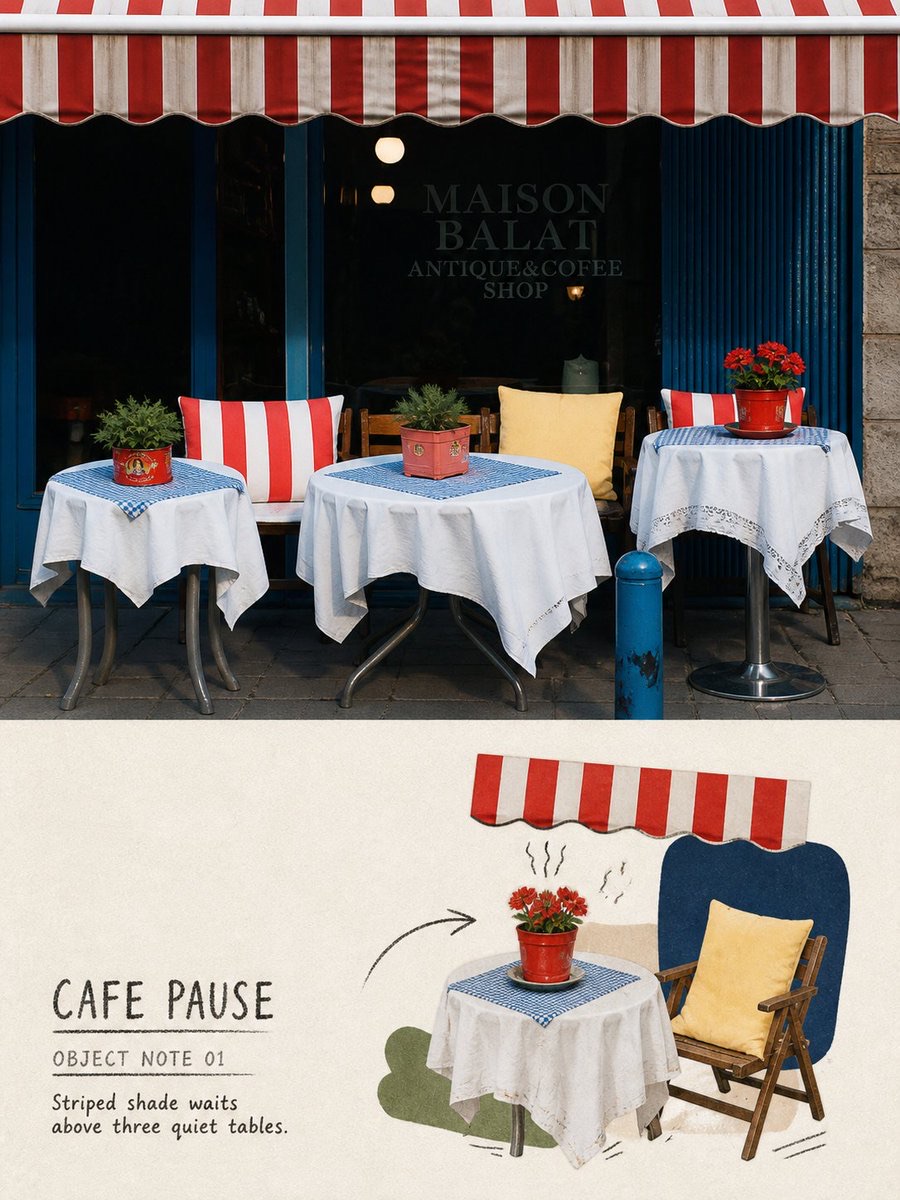
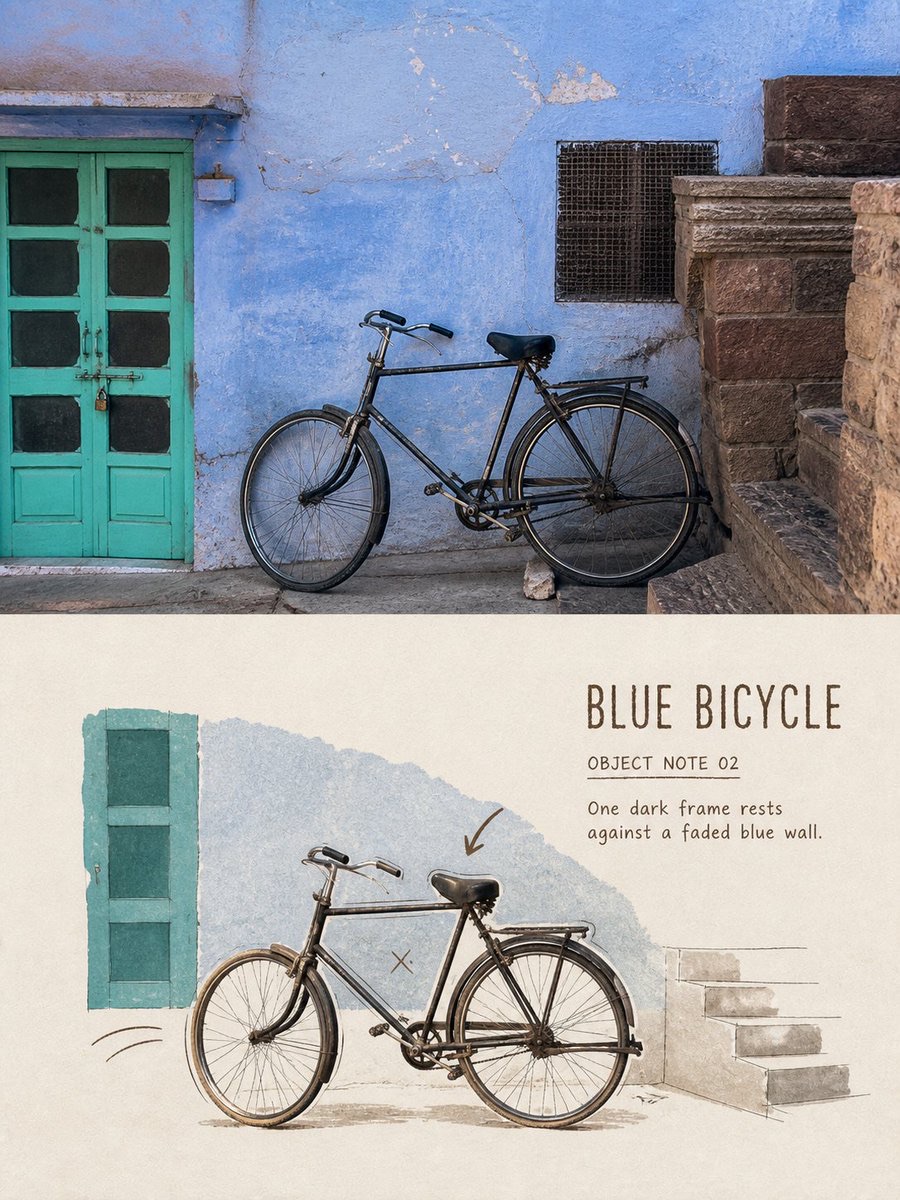
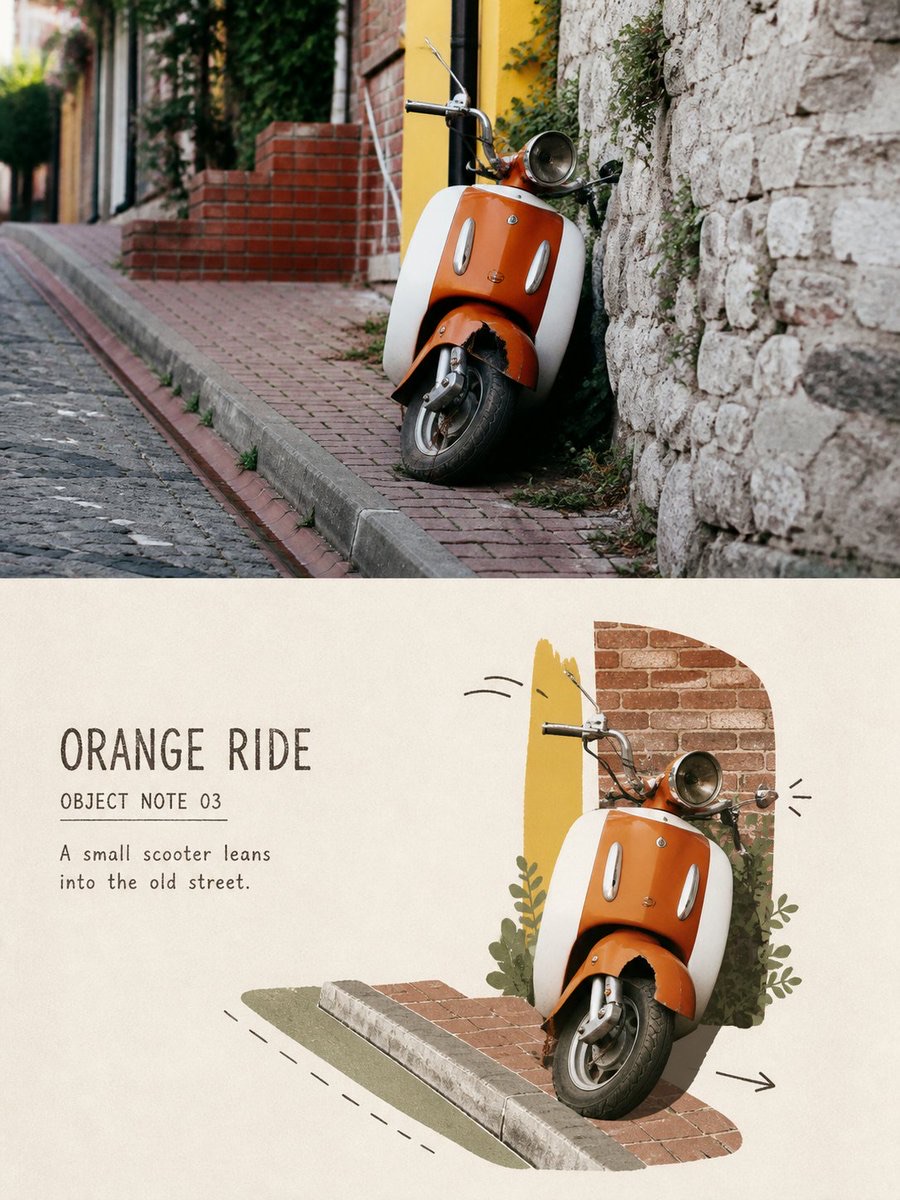
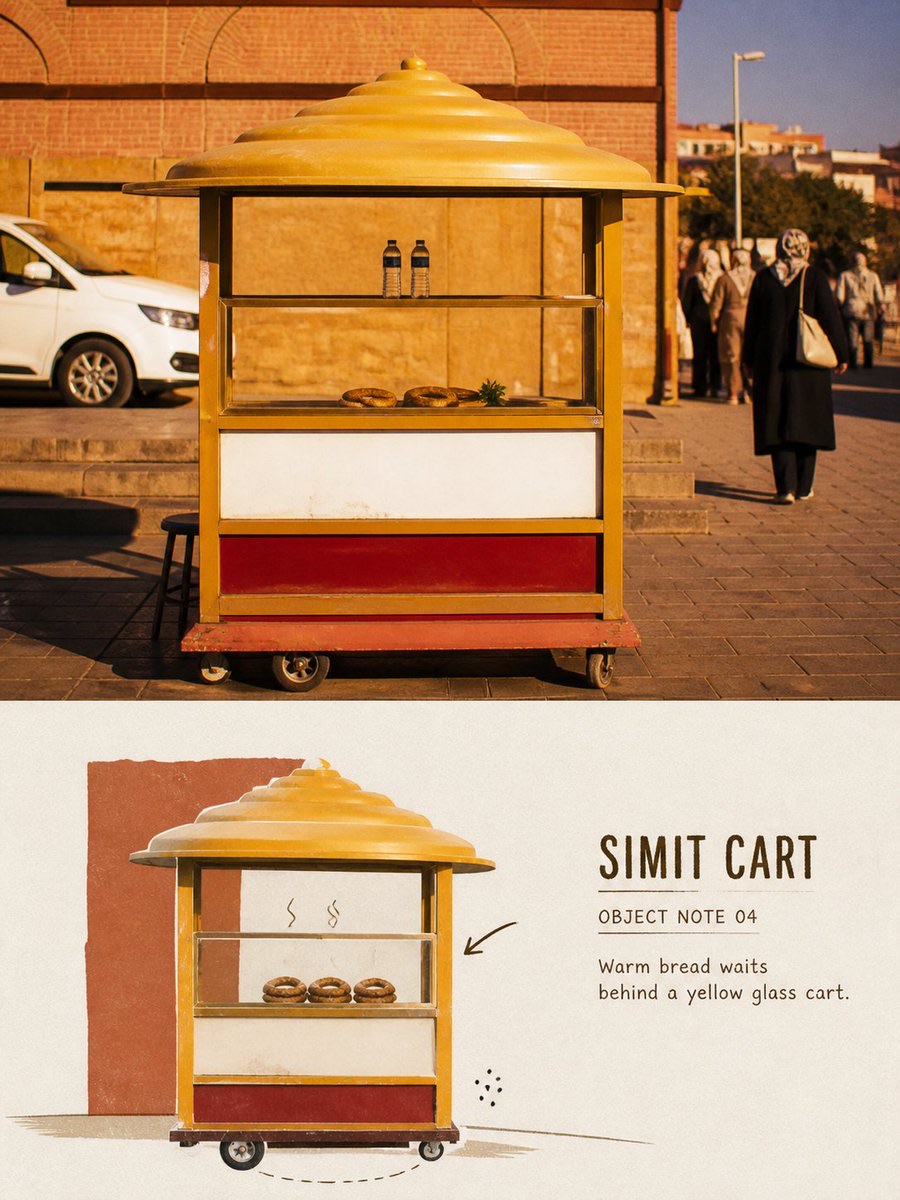
Image
Travel Object Photo-Doodle Poster
Turn each travel photo into a separate 3:4 vertical editorial poster: retain the real photograph in the upper half, and distill one key travel object in the lower half, retelling the scene with photo cutouts, matte color blocks, and restrained doodles.
 蛋黄堡@Hamburgerai
Prompt
Please turn each travel photo I upload into a separate, individually output premium-design poster. Output each photo separately; do not combine multiple photos into one image. The overall composition is vertical 3:4, made up of a clearly visible real photograph and a redraw of a “photo-doodle travel object” from the same scene. Make the upper and lower areas close to 1:1 in height, separated by a clear, straight, restrained horizontal boundary. Do not blur, feather, dissolve, or overlap the images at the boundary.

## Upper Half: Original Photograph

Faithfully preserve the identity, number, pose, and direction of movement of the subjects in the original photograph; the key objects, relationships between people, street or spatial structure, viewing angle, real materials, natural lighting and shadows, and original color atmosphere.

Apply only subtle color grading at the level of a travel magazine, independent publication, or photography exhibition, and add an extremely fine film grain. The upper half must remain a clear, genuine photographic work with substantial area.

Do not redraw the photograph, move people, change the identity or structure of vehicles, food, shops, tables and chairs, boats, or souvenirs, or add cultural symbols or travel objects that do not appear in the photo.

To fit the format, you may naturally extend a small amount of sky, ground, wall, or surrounding environment, but do not stretch, compress, mirror, duplicate, or distort the subject.

## Lower Half: Photo-Doodle Travel Object

Extract from the same photo the one key travel object most worth remembering, for example:

- A vehicle, bicycle, motorcycle, boat, or cart;
- A coffee cup, plate, food, tableware, or tabletop arrangement;
- A chair, suitcase, road sign, umbrella, or souvenir;
- A shopfront, sales window, newsstand, or street stall;
- Another everyday object with a clear silhouette and a strong sense of place.

People may be retained, but only to support the object's action, use, and travel story. They must not take over as the main visual focus.

First identify the most important object's identity, outline, direction, color, and use in the photo. Then actively remove complex backgrounds, unrelated passersby, repeated buildings, advertisements, dense signage, tiny decorations, and photographic noise.

Do not shrink the entire original photo to fit the lower half, or simply outline or cartoonize the whole photo.

## Recomposition

Use an editorial composition that distills the scene. The key object should occupy about 40%–65% of the lower half's width and about 30%–58% of its height, placed in the center, toward the bottom, or to one side. Adjust the subject's scale, crop, and position according to the photo's content so the lower half is clearly distinct from the photo above.

Retain only one key object, with one to three essential scene cues, such as:

- A short stretch of road, track, or tabletop;
- A door, window, or corner of a wall;
- A hand using an object or a small figure;
- A shadow, steam, motion trail, or directional line.

The transformed area must retain about 35%–55% of continuous warm-white paper or light-colored empty space, so the subject has room to breathe. Do not use template-like white sidebars or break up the empty space into many small gaps.

## Photo Cutouts and Matte Color Blocks

The key object must not become an ordinary illustration throughout.

Keep a small amount of real texture from the original photo, using options such as:

- One to three cropped areas with photographic texture;
- The most recognizable real surface of the object;
- Partial photographic textures of car windows, food, fabric, metal, or wood;
- Irregular photo cutouts that follow the object's silhouette.

Blend the photo cutouts naturally into the matte color blocks and hand-drawn lines. Do not use regular photo frames or assemble them into a dense album.

Simplify the remaining structure into 4–6 matte flat-color blocks drawn from the photo. Keep one vivid, most recognizable color as the visual focus and lower the saturation of the other colors moderately.

Allow slight handmade irregularities, pigment gaps, and paper showing through along the edges of the color blocks. Avoid smooth vector shapes and the look of commercial digital illustration.

## Narrative Doodles

Add just a few hand-drawn doodles around the key object that relate to the real scene.

Depending on the photo, you can use:

- Arrows indicating an action or direction of travel;
- Motion trails for vehicles, boats, or people;
- Steam lines above food and drinks;
- Subtle sound symbols, vibration lines, or waiting marks;
- Curves connecting people and objects;
- Dots, underlines, or short observation marks;
- One or two very simple little symbols.

The doodles must explain the object's action, use, or travel mood rather than serve as pure decoration.

Use black, dark brown, or one dark color from the photo, with loose marker, crayon, oil pastel, or pencil lines. Lines may be broken, retraced, slightly overshoot, and have uneven ink marks.

Keep the number of doodles restrained, usually using only 3–7 groups of small lines or symbols. Do not turn the whole image into a child's doodle book, comic storyboard, or dense sticker page.

## Text

Before generating, use the real objects, place, actions, or atmosphere visible in the photo to determine and render the following text accurately:

1. A main title of 1–3 English words;
2. The field: “OBJECT NOTE 01”;
3. One observation sentence of 5–12 English words.

The title can be the object's name or a brief travel impression, for example:

- “YELLOW TRAM”
- “LATE LUNCH”
- “CORNER TABLE”
- “SMALL FERRY”
- “STREET CART”
- “RAINY RIDE”

The observation sentence should describe only colors, actions, positions, and relationships between objects that are actually present in the photo. Do not invent a brand, place, date, or story.

Place the text together in a continuous area of negative space as a clear editorial caption alongside the key object and doodles. The main title must be clearly readable at chat-preview size; supporting text must not shrink into illegible decorative gray lines.

Use loose handwriting, old printed small type, or narrow lettering with a marker-like texture. Letter edges may have slight ink gaps, retracing, and paper friction, as if the artist wrote them on the paper alongside the doodles. Do not use smooth, floating digital typography.

Do not copy advertisements, signs, or brand names from the original photo. No author name, signature, social-media handle, logo, URL, QR code, fake Chinese text, gibberish, or meaningless numbers.

## Overall Mood

Like picking the little thing from a travel photo that you most hate to forget, then preserving it once more with photo scraps, matte colors, and a few quick handwritten notes.

Relaxed, clever, observant, slightly humorous, and full of everyday life, while retaining the restrained layout of an independent travel magazine and art publication.

Strictly avoid: full-photo cartoon filter, same-crop same-scale redraw, complete realistic lower background, dense doodles, childish cartoon page, comic panel, generic travel stickers, copied signage, invented brand, excessive arrows, excessive symbols, multiple competing objects, glossy 3D, smooth vector shapes, digital gradients, oversaturated colors, tiny decorative source photo, missing source-photo comparison, fake text, author signature, watermark.
请将我上传的每一张旅行照片分别制作成一张独立的高级设计海报。每张照片单独输出,禁止多图拼接。 整体采用3:4竖版构图,由清楚可见的真实照片与同场景“照片涂鸦旅行物件”转绘组成。上下区域高度接近1:1,使用清楚、平直、克制的水平分界,不要在分界处进行模糊、羽化、渐融或图像重叠。 ## 上半部分:真实原始照片 忠实保留原始照片中的主体身份、数量、姿态、动作方向、核心物件、人物关系、街道或空间结构、观察角度、真实材质、自然光影和原有色彩氛围。 只进行轻微的旅行杂志、独立出版物或摄影展级调色,并加入极薄的胶片颗粒。上半部分必须仍然是一张清楚、真实、具有实质面积的摄影作品。 不得重新绘制照片,不得移动人物,不得改变车辆、食物、店铺、桌椅、船只或纪念品的身份和结构,不得增添照片中不存在的文化符号与旅行物件。 为适应画幅,可以自然延展少量天空、地面、墙面或周边环境,但不得拉伸、挤压、镜像、复制或扭曲主体。 ## 下半部分:照片涂鸦旅行物件 从同一张照片中提取一个最值得被记住的核心旅行物件,例如: - 车辆、单车、摩托车、船只或推车; - 咖啡杯、餐盘、食物、餐具或桌面组合; - 椅子、行李箱、路牌、雨伞或纪念品; - 店铺门面、售货窗口、报刊亭或街头摊位; - 其他轮廓清楚、具有地点气息的日常物件。 人物可以保留,但只作为物件动作、使用方式和旅行故事的辅助关系,不得抢走主要视觉中心。 首先理解照片中最重要的物件身份、轮廓、方向、颜色和使用关系,然后主动删除复杂背景、无关路人、重复建筑、广告、密集招牌、细小装饰和摄影噪声。 不要把原照片完整缩小后放进下半部分,也不要将整张照片简单描边或卡通化。 ## 二次构图 采用“缩小提炼”的编辑构图。 核心物件占下半部分宽度约40%–65%、高度约30%–58%,放置在中央、偏下或一侧。根据照片内容改变主体尺度、裁切方式和空间位置,使下半部分明显区别于上方照片。 只保留一个核心物件,并搭配一至三条必要的场景线索,例如: - 一小段道路、轨道或桌面; - 一扇门、一个窗口或一角墙面; - 一只使用物件的手或一位缩小人物; - 一道影子、蒸汽、运动轨迹或方向线。 转绘区域必须保留约35%–55%的连续暖白纸面或浅色空场,让主体周围能够呼吸。不要使用模板式白色边栏,也不要把空白切碎成许多小缝隙。 ## 照片切片与哑光色块 核心物件不能完全变成普通插画。 保留少量来自原照片的真实质感,可以使用: - 一至三块经过裁切的照片质感区域; - 物件最有识别度的真实表面; - 车窗、食物、织物、金属或木材的局部摄影纹理; - 与原物轮廓相适应的不规则照片切片。 照片切片应自然嵌入哑光色块和手绘线条中,不要出现规则照片框,不要拼成密集相册。 其余结构使用从照片中提取的4–6种哑光平涂色块重新概括。保留一处最有辨识度的鲜明颜色作为视觉焦点,其余颜色适度降低饱和度。 色块边缘允许轻微手工偏差、颜料缺口和纸张透底,避免光滑矢量形状和商业数字插画质感。 ## 叙事涂鸦 在核心物件周围加入极少量与真实场景有关的手绘涂鸦。 可以根据照片内容选择: - 指示动作或行进方向的箭头; - 车辆、船只或人物的运动轨迹; - 食物与饮品上方的蒸汽线; - 轻微声音符号、震动线或等待标记; - 连接人物与物件的弧线; - 圈点、下划线或简短观察标记; - 一两个非常简单的小型符号。 涂鸦必须解释物件的动作、使用方式或旅行情绪,而不是纯粹装饰。 使用黑色、深褐色或照片中的一种深色,以松动马克笔、蜡笔、油性笔或铅笔线表现。线条可以有断裂、重画、轻微越线和不均匀墨迹。 涂鸦数量保持克制,通常只使用3–7组小型线条或符号。不要让整个画面变成儿童涂鸦本、漫画分镜或密集贴纸页。 ## 文字 在生成前,根据照片中真实可见的物件、地点、动作或气氛,确定并准确渲染以下文字: 1. 一个1–3个英文单词的主标题; 2. 字段:“OBJECT NOTE 01”; 3. 一行5–12个英文单词的观察句。 标题可以是物件名称或简短旅行感受,例如: - “YELLOW TRAM” - “LATE LUNCH” - “CORNER TABLE” - “SMALL FERRY” - “STREET CART” - “RAINY RIDE” 观察句只描述照片中真实存在的颜色、动作、位置和物件关系,不得虚构品牌、地点、日期或故事。 文字集中放置在连续留白区域,与核心物件和涂鸦形成一组明确的编辑题签。主标题在聊天预览尺寸下必须清楚可读,辅助文字不能缩成无法辨认的装饰灰线。 字体使用松动手写体、旧印刷小字或带有马克笔质感的窄体字。文字边缘可以有轻微缺墨、重复描写和纸张摩擦感,像画者与涂鸦一起写在纸面上,不要使用光滑悬浮的数字排版。 禁止复制原照片中的广告、招牌和品牌文字。禁止作者名、签名、社交账号、Logo、网址、二维码、假中文、乱码和无意义编号。 ## 整体气质 像从一张旅行照片里挑出最舍不得忘记的小东西,再用照片残片、哑光颜色和几笔随手画下的注释,把它重新保存一次。 轻松、聪明、有观察感、略带幽默和生活气息,同时保持独立旅行杂志与艺术出版物的克制版式。 强制避免:full-photo cartoon filter, same-crop same-scale redraw, complete realistic lower background, dense doodles, childish cartoon page, comic panel, generic travel stickers, copied signage, invented brand, excessive arrows, excessive symbols, multiple competing objects, glossy 3D, smooth vector shapes, digital gradients, oversaturated colors, tiny decorative source photo, missing source-photo comparison, fake text, author signature, watermark.
How to use
Usage suggestion: Upload one or more travel photos; each will be processed separately. Make sure the key objects, actions, and surroundings in the photos are clearly visible so the tool can generate an accurate English title, observation sentence, and lower-half redraw composition.
Details
More from 蛋黄堡
-
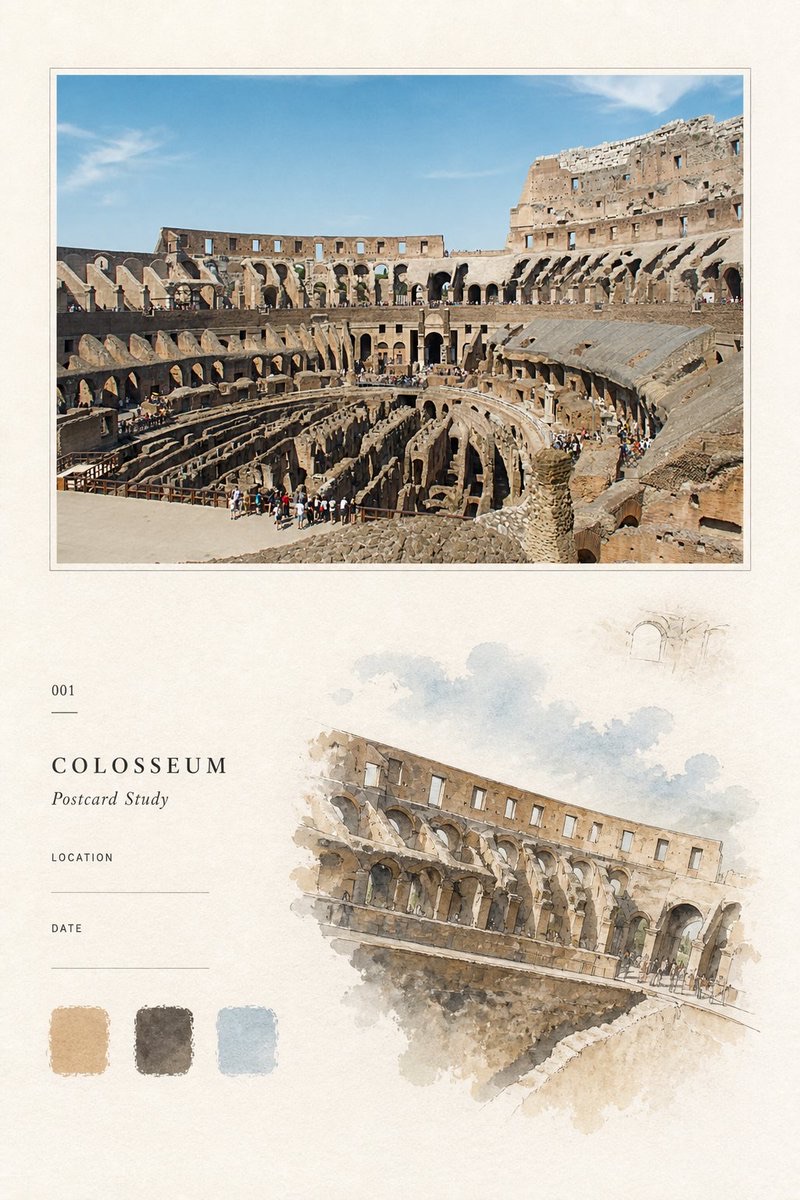
Travel Palette Watercolor Study Poster
-
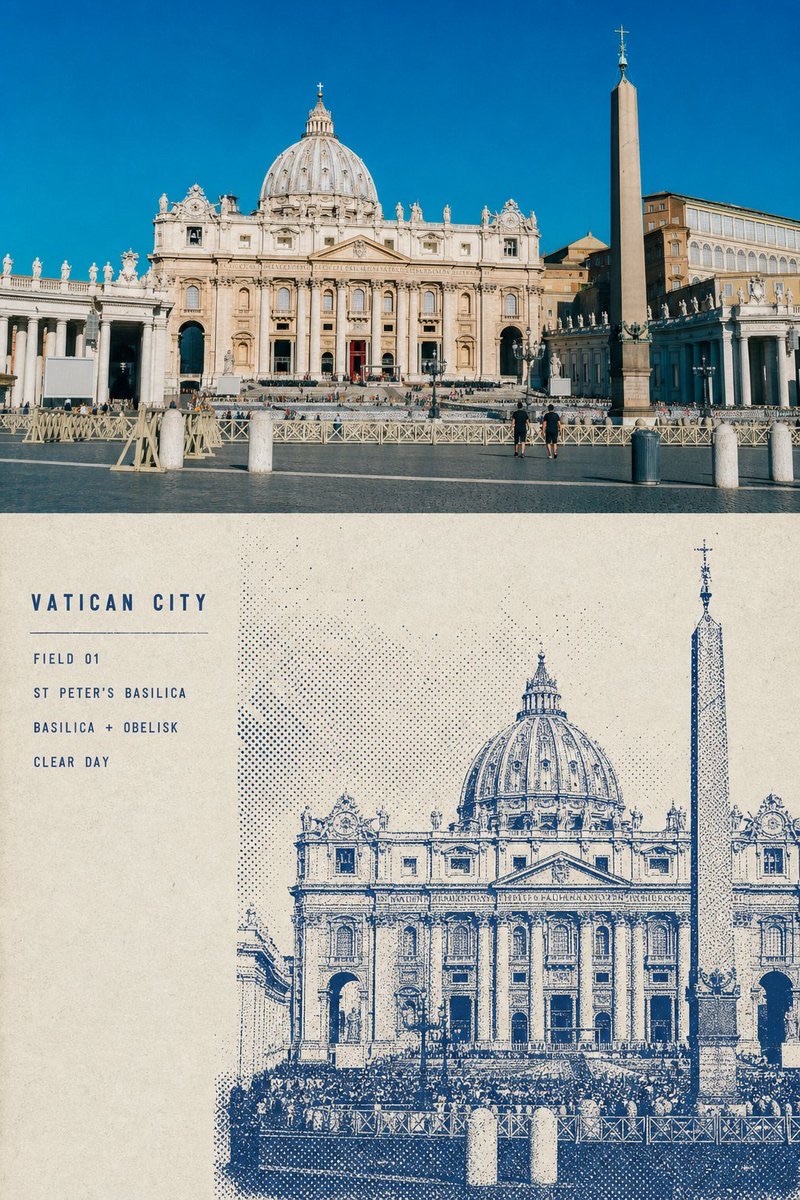
Blue Halftone City Archive
-
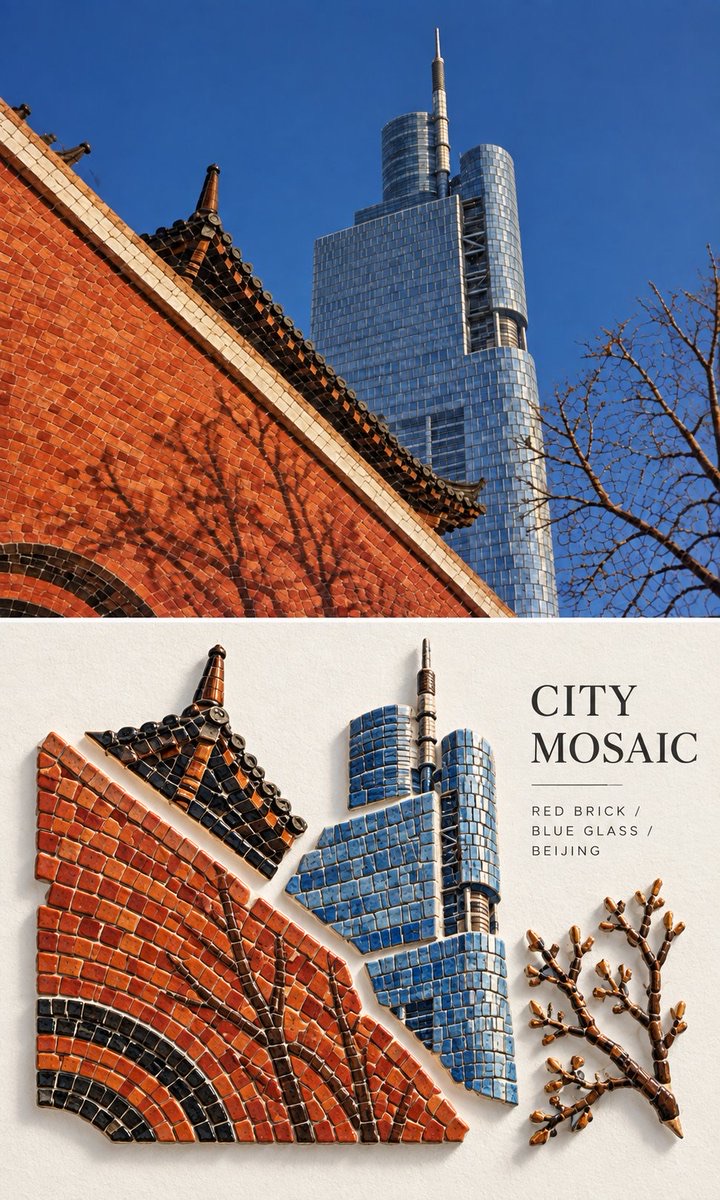
Travel Photo to Glazed Mosaic Relief Poster
-
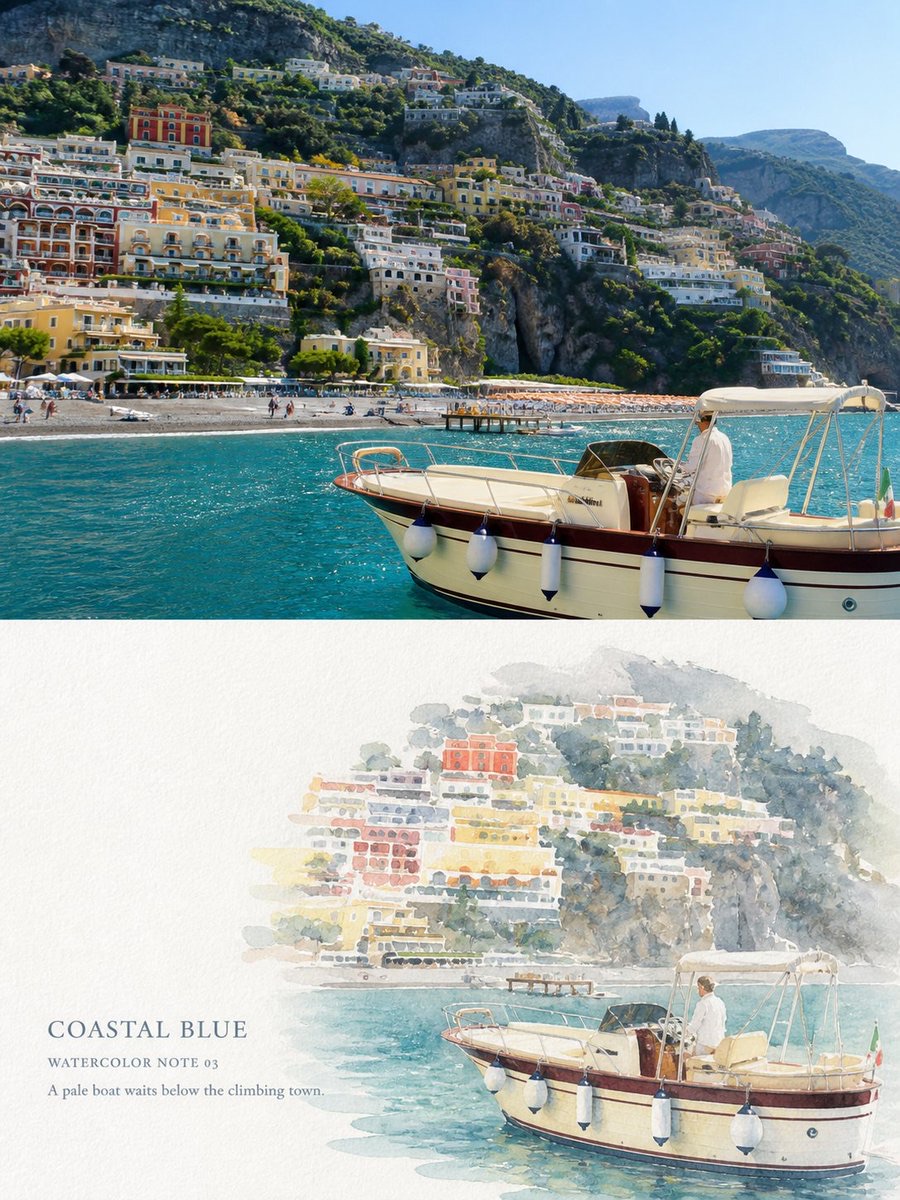
Clear White-Paper Travel Watercolor Editorial Poster
-
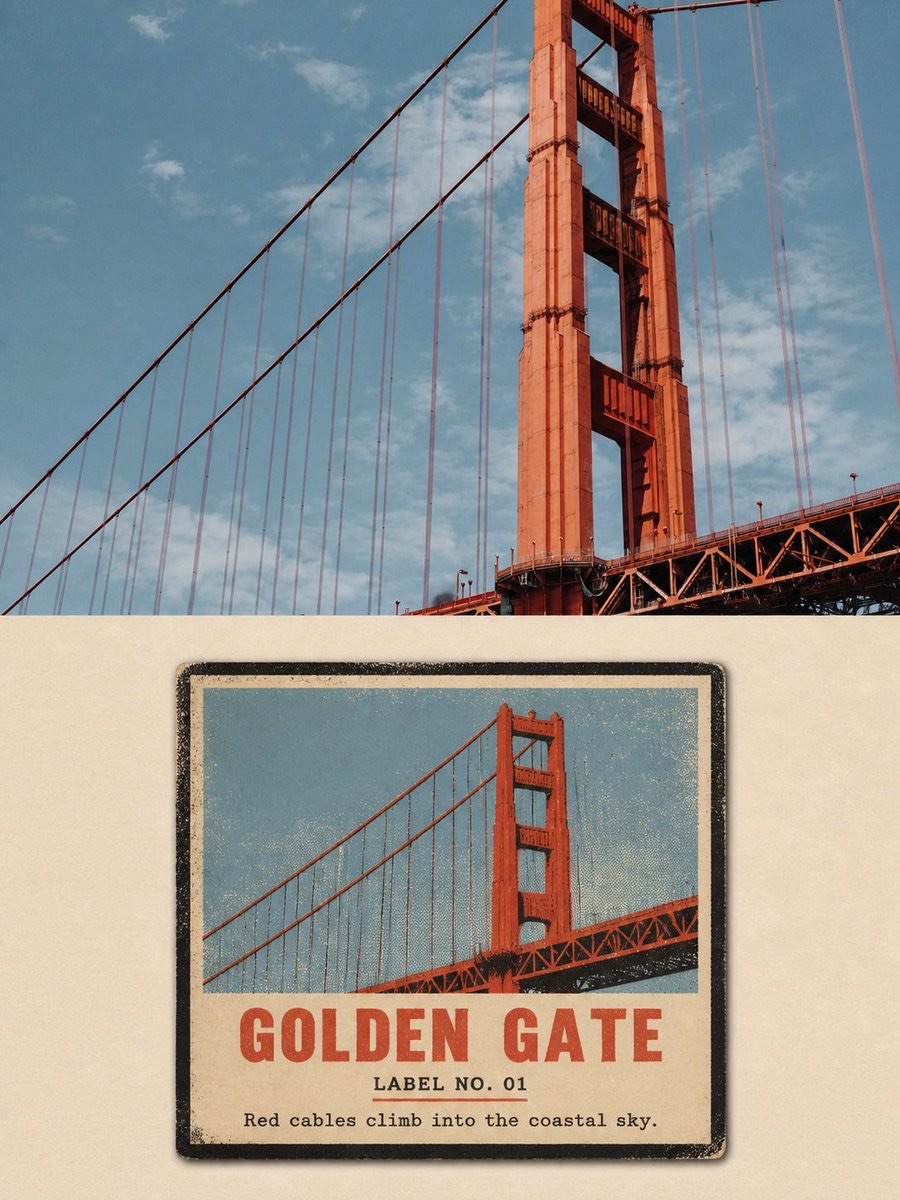
Vintage Matchbox Travel Label Poster
-
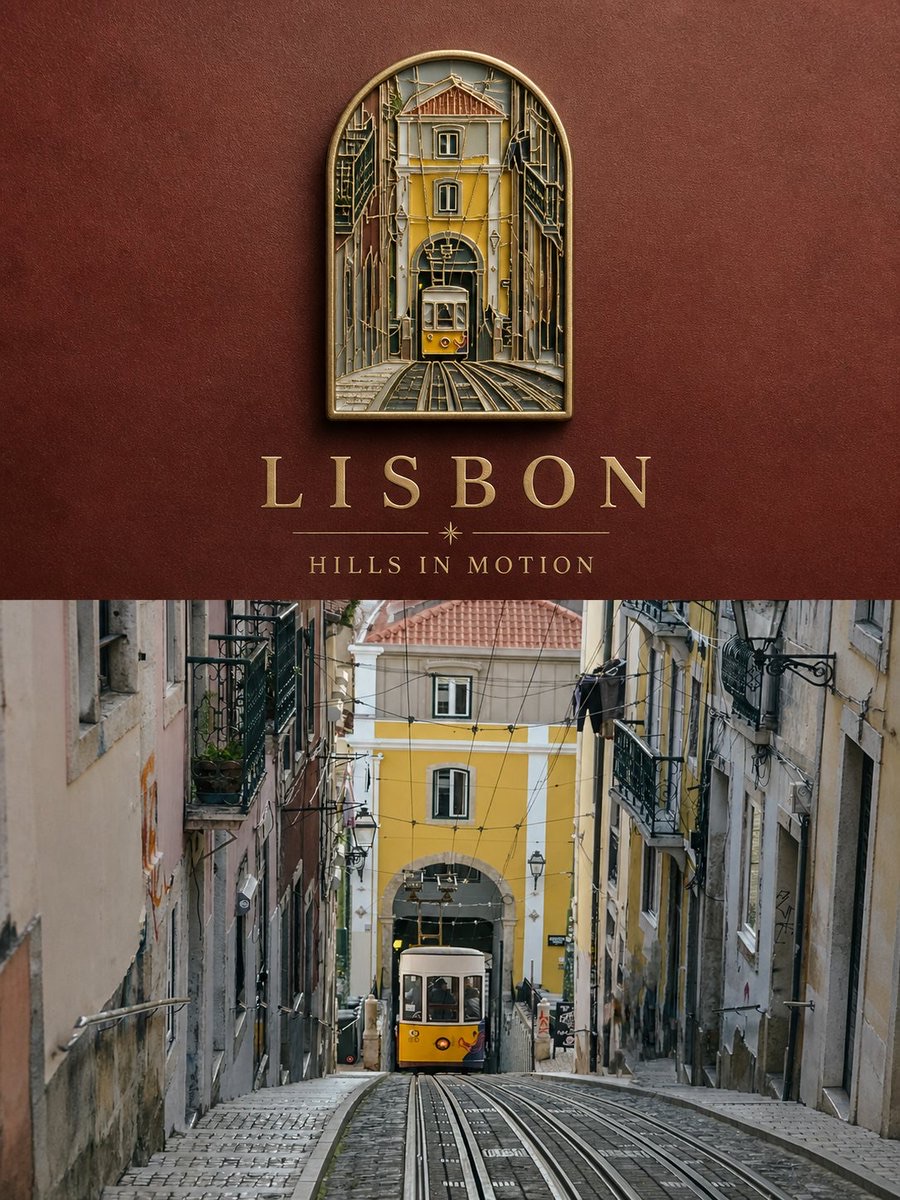
Travel Enamel Fridge Magnet Souvenir Poster
-
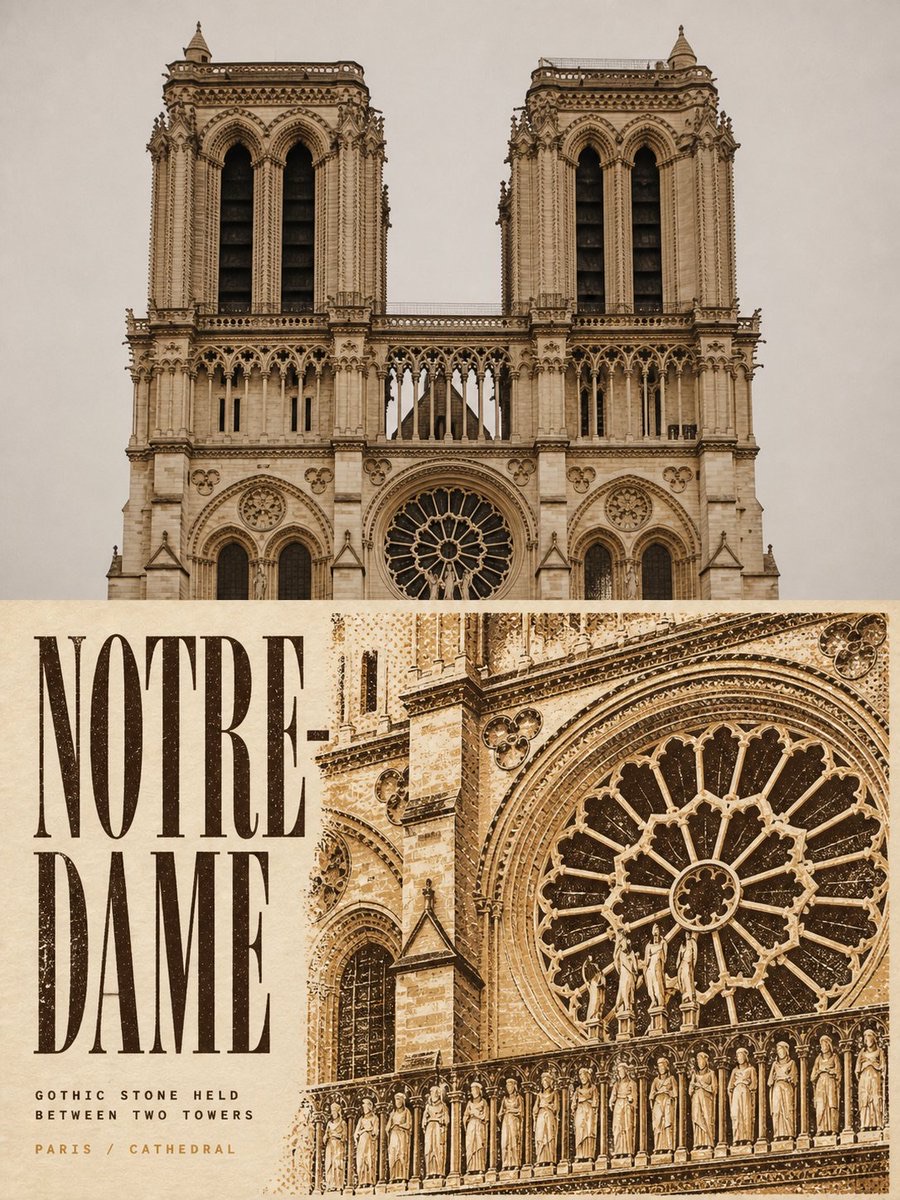
Two-Color Cultural Landmark Editorial Poster
-
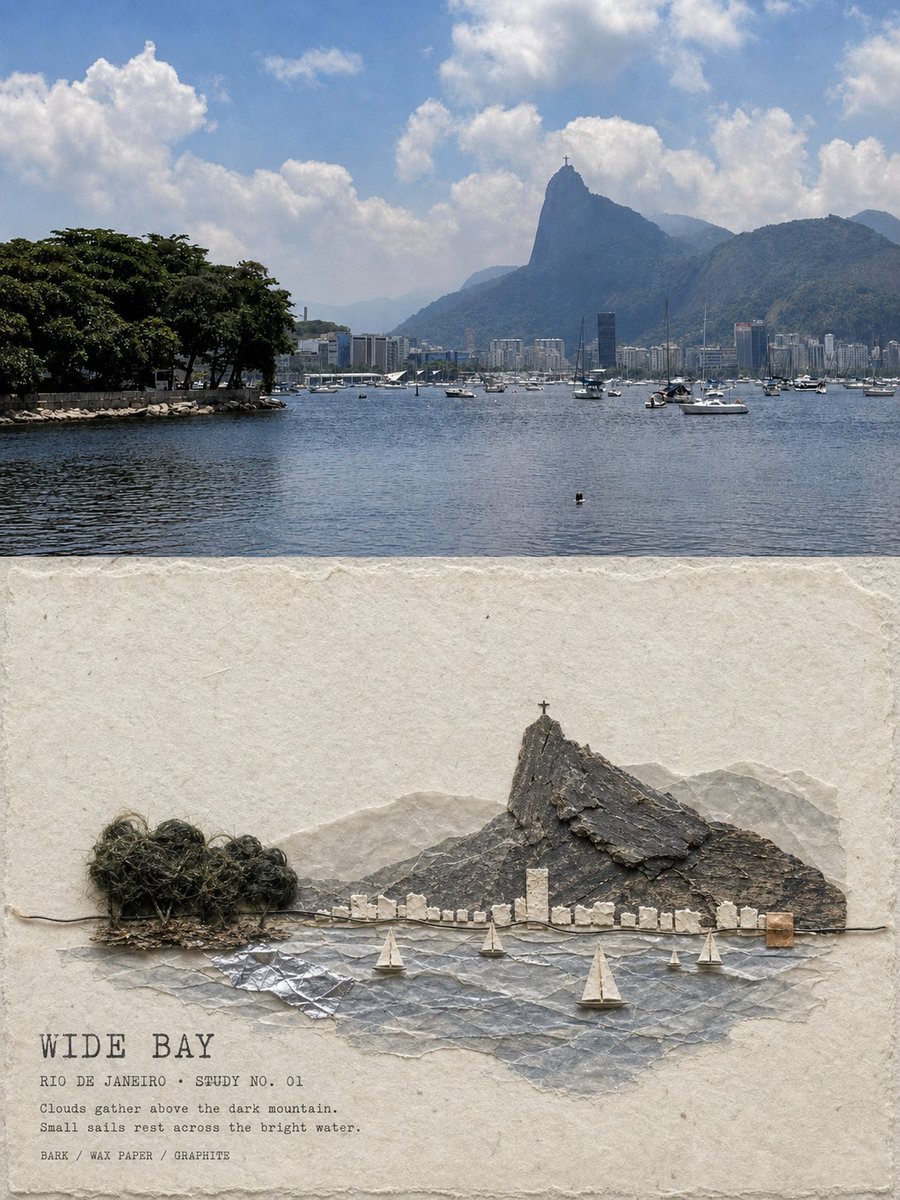
Material Assemblage Contrast Poster from a Travel Photo