Image
Oriental Negative-Space Paper Acrylic Travel Poster
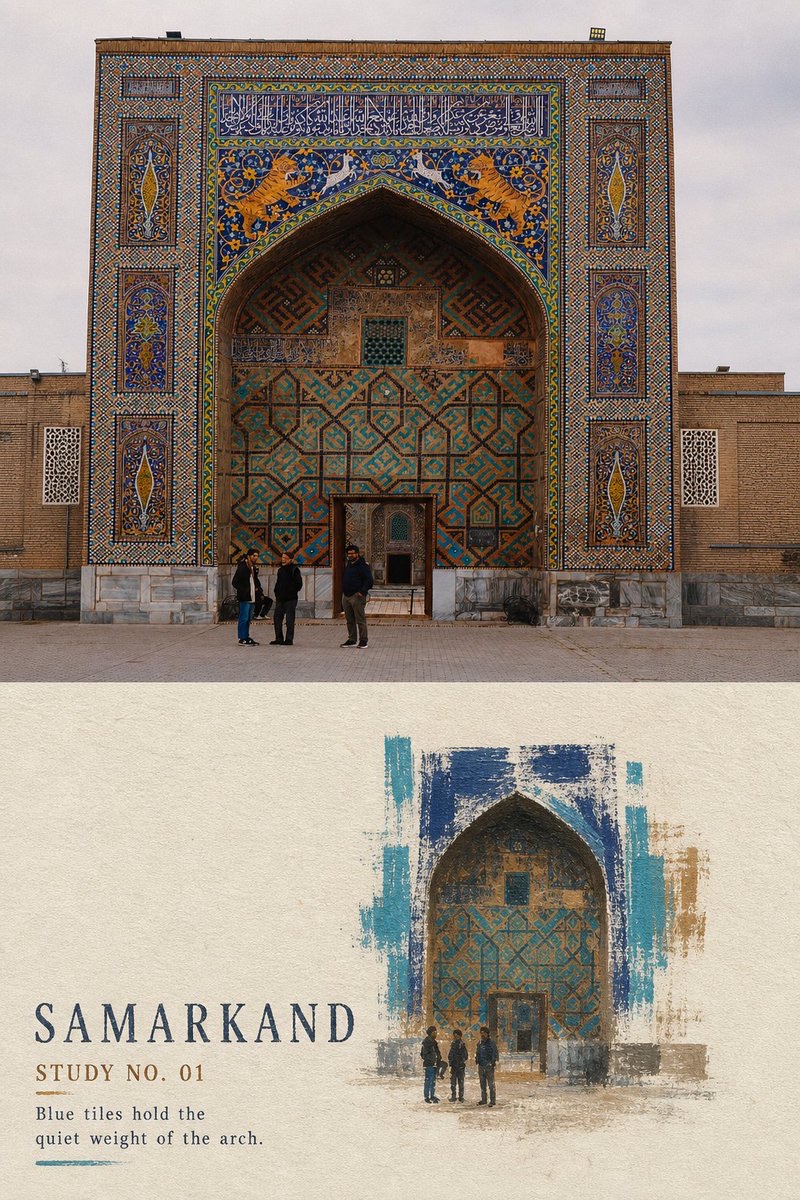
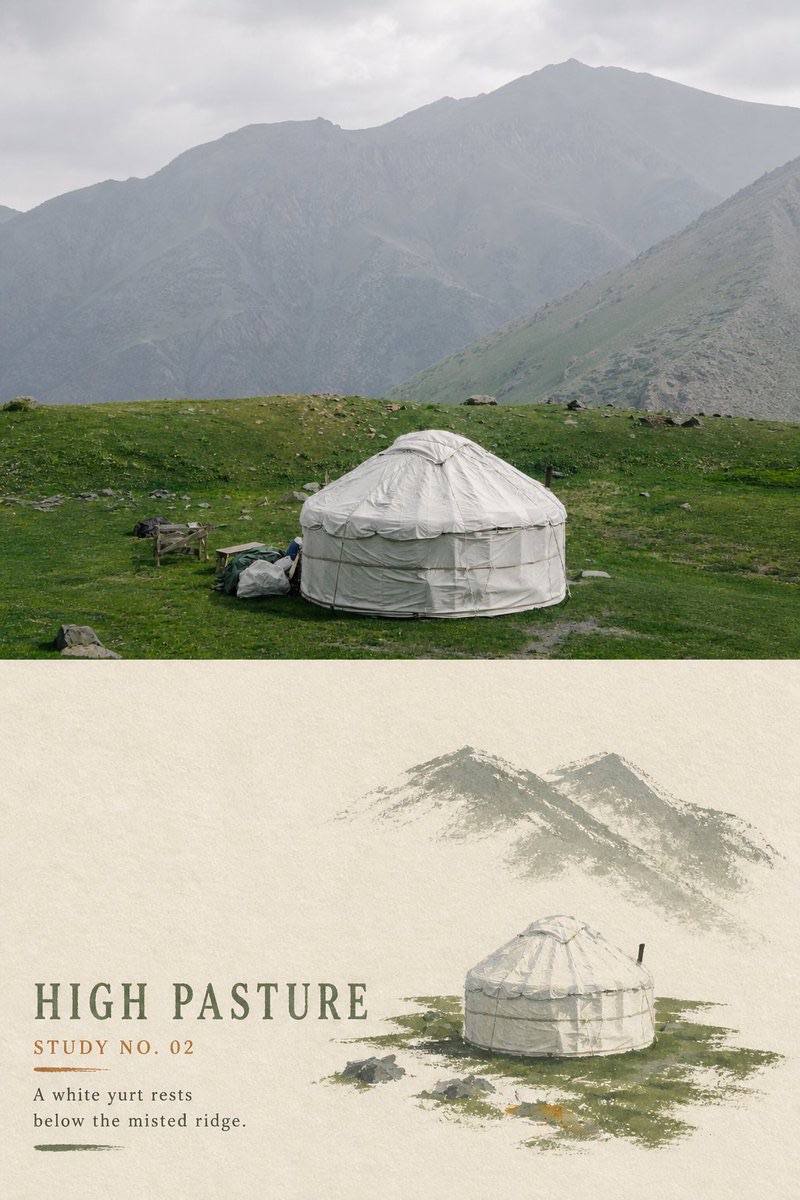
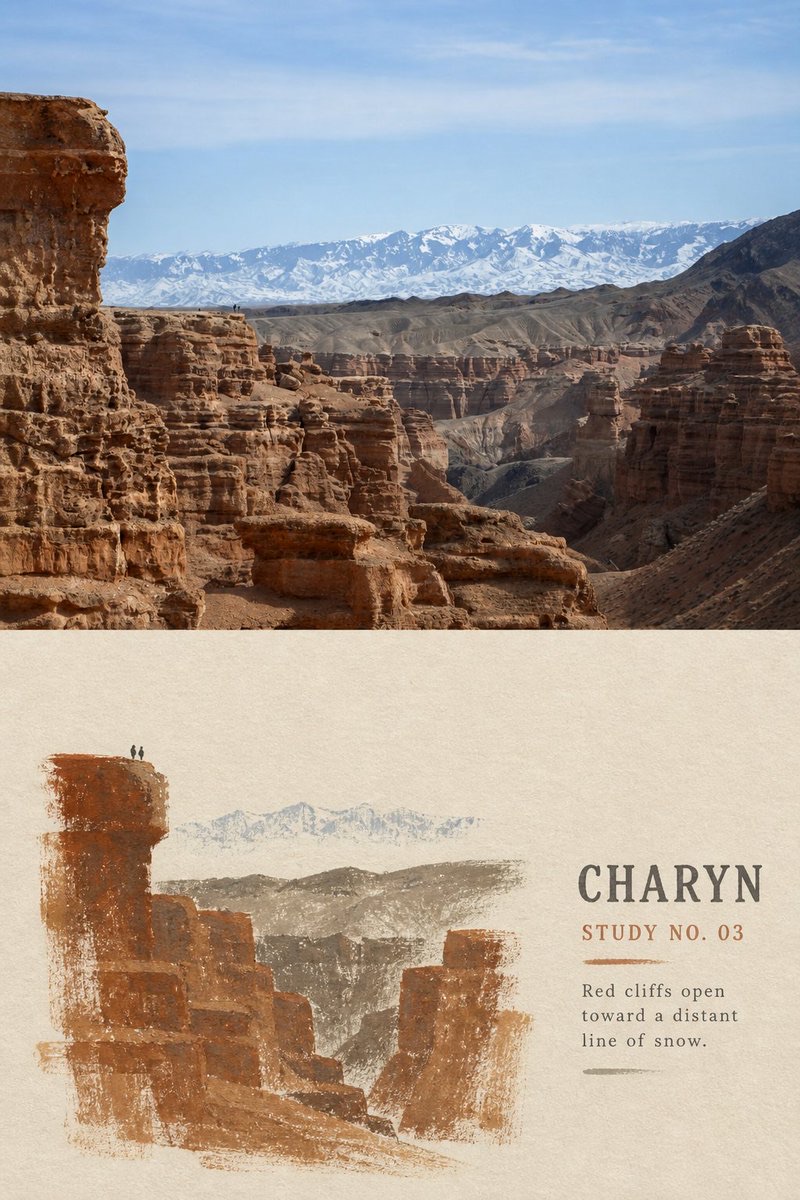
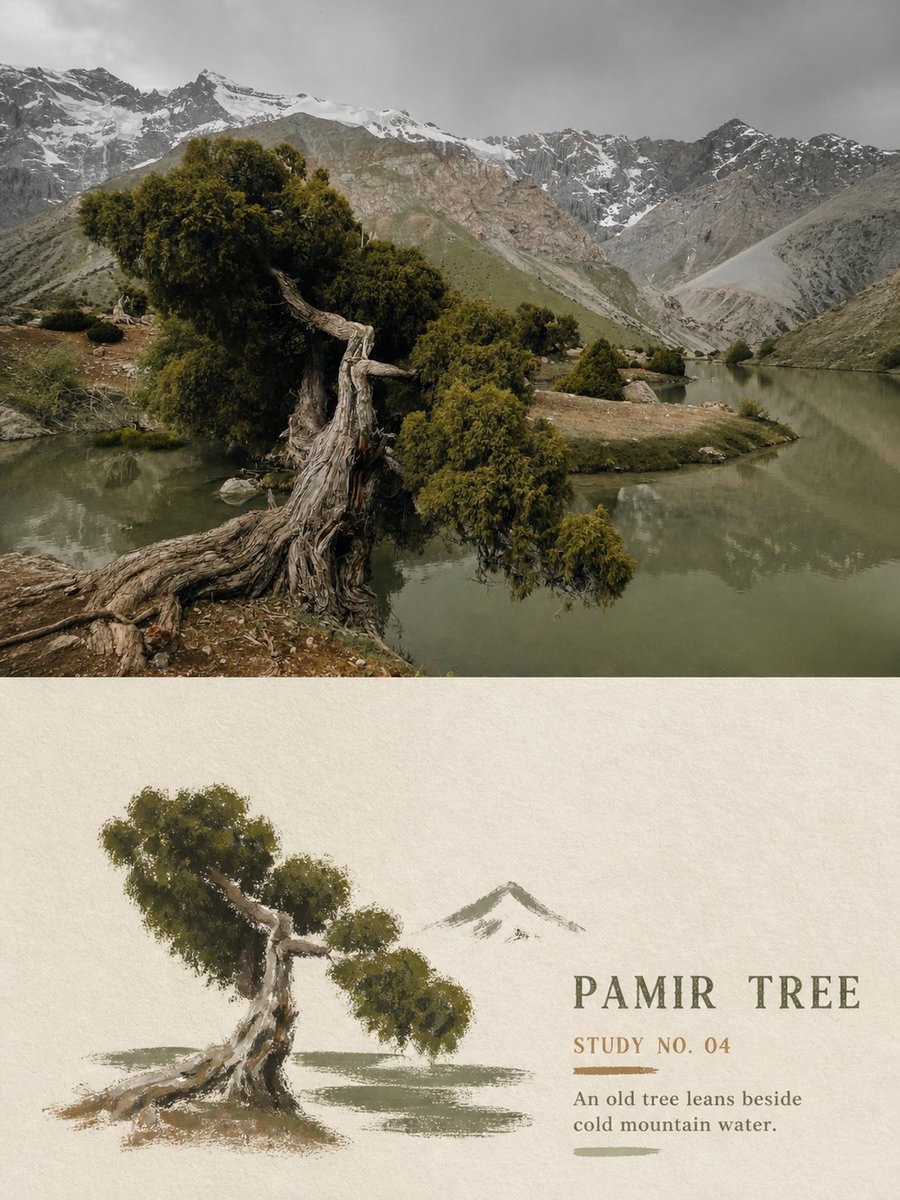
Turn each travel photo into a separate travel poster with top-and-bottom sections: preserve the real photo above, and distill the same scene below using muted acrylic paint, dry brushing, and generous areas of blank paper.
 蛋黄堡@Hamburgerai
Prompt
Turn each travel photo I upload into a separate, premium travel reinterpretation poster. Output each photo separately; do not collage multiple different photos together.

Use a vertical 3:4 composition, consisting of a real-photo section and a reinterpreted section of the same scene. Make the two sections nearly 1:1 in height, separated by a clear, level, restrained boundary. Do not blur, feather, or blend the photo and painting into each other at the dividing line.

Faithfully preserve the original photo in the upper section. Accurately retain the identity and number of subjects, the poses of people or animals, architectural structures, terrain relationships, viewing angle, spatial orientation, real materials, natural light and shadow, and the original color atmosphere. Apply only subtle color grading at the level of a travel magazine, independent publication, or photography exhibition, and add an extremely fine film grain. Do not turn the photo into an illustration, or move, add, remove, mirror, stretch, or reshape any subjects.

In the lower section, reinterpret the same scene as an “Eastern negative-space paper acrylic” illustration. First understand the visual information in the photo that truly defines the location, subjects, and story. Then deliberately remove complex backgrounds, dense vegetation, repeated structures, clutter, fine textures, and photographic noise. Redraw only the fewest elements needed to keep the scene recognizable.

Do not carry over the photo’s full framing and information density into the reinterpretation. Choose a reduced, distilled composition, an off-center composition, or an open composition based on the subject; change the scale of the subject, the amount of background retained, and the spatial arrangement. The subject may be concentrated in the center, lower center, or one side of the image, letting unpainted paper directly represent sky, air, mist, distance, ground, or water.

Use warm off-white natural painting paper, clearly showing the paper grain, fine fibers, and matte, rough surface. Leave at least about 45% of the reinterpretation area as continuous blank paper. The negative space must form a single, complete, quiet, perceptible open area—not scattered white gaps between objects.

Summarize forms using a small number of irregular, opaque acrylic paint shapes and short dry-brush strokes:

- Turn plants into a few clusters of green paint with broken edges;
- Render water as a few discontinuous horizontal brushstrokes;
- Render rocks and mountains as dry-brushed gray-green, gray-brown, or ochre planes;
- Retain only the main outlines, roofs, arches, and proportions of buildings;
- Retain only the number, poses, directions, and main colors of people or animals.

Show opaque acrylic paint, gouache-like opacity, dry brush, broken brush strokes, rough paint edges, visible bristle marks, uneven pigment coverage, partially exposed paper, and subtle layered paint. Give the paint edges a paper-tooth texture, ragged edges, gaps, and natural brush endings. Do not use smooth digital brushes, broad transparent watercolor washes, or heavy oil-paint buildup.

Extract the palette entirely from the original photo, then compress it into low-saturation natural colors. Preserve the warm-cool relationships that most identify the original scene. You may use forest green, moss green, gray-blue, ochre yellow, earth yellow, warm gray, and off-white; allow only one small warm or bright color area to serve as a focal point.

Add three tiers of accurate, legible English text in a continuous area of white paper away from the subject:

1. Create a main title of 1–3 English words, distilled from the actual location or subject;
2. Add a number in the format “STUDY NO. 01”;
3. Add an observation sentence of 5–12 English words describing a subject, color, weather, action, or spatial relationship actually visible in the photo.

Set the main title in a gentle condensed serif or slightly handwritten matte acrylic capitals, with subtle dry-brush gaps and a paper-rubbed feel along the letter edges. Supporting text may be smaller, but must remain clearly legible at normal chat-preview size. Do not generate an author name, seal, calligraphic inscription, fictional brand, URL, QR code, or meaningless gibberish.

The overall mood should be quiet, restrained, light, plain, natural, and poetic, with the spatial sensibility of modern Eastern picture books, independent travel publications, and the Chinese tradition of “treating blankness as form.”

Avoid: missing source-photo comparison, full-poster redraw, same-crop same-scale repainting, photorealistic lower illustration, transparent watercolor dominating, oil painting, impasto, detailed foliage, individual leaves, complete environmental rendering, full background coverage, smooth digital gradients, vector shapes, sharp outlines, anime, HDR, floating digital typography, fake Chinese text, watermark, cheap template aesthetics.
请将我上传的每一张旅行照片分别制作成一张独立的高级旅行转绘海报,每张照片单独输出,不得拼贴多张不同照片。
整体采用3:4竖版构图,由真实照片区与同场景转绘区组成。两个区域高度接近1:1,使用清楚、水平、克制的边界分隔,不要让照片与绘画在分界处雾化、羽化或相互渗透。
上半部分忠实保留原始照片。准确保持主体身份与数量、人物或动物姿态、建筑结构、地形关系、观察角度、空间方向、真实材质、自然光影和原有色彩氛围。仅进行轻微的旅行杂志、独立出版物和摄影展级调色,并加入极薄胶片颗粒。不得将照片插画化,不得移动、增删、镜像、拉伸或重塑主体。
下半部分将同一场景重新诠释为“东方留白纸本丙烯”插画。先理解照片中真正决定地点、主体和故事的视觉信息,再主动删除复杂背景、密集植被、重复结构、杂物、细碎纹理和摄影噪声,只重新绘制维持场景识别所必需的最少元素。
转绘不得沿用照片的完整取景和相同信息密度。根据主体选择缩小提炼、局部偏置或开放式构图,改变主体尺度、背景保留量和空间组织。主体可以集中于中央、中下部或画面一侧,让未绘制的纸张直接代表天空、空气、雾气、距离、地面或水面。
使用温暖米白色天然绘画纸,清楚表现纸张颗粒、细微纤维和哑光粗糙表面。转绘区域至少保留约45%的连续纸面留白。留白必须形成一块完整、安静、可感知的空场,而不是物体之间零碎的白色缝隙。
形体使用少量不规则、不透明的丙烯颜料色块和短促干刷概括:
- 植物变成几团边缘破碎的绿色颜料块;
- 水面变成少量断续水平笔触;
- 山石变成灰绿、灰褐或赭色干笔块面;
- 建筑只保留主要外轮廓、屋顶、拱门和比例关系;
- 人物或动物只保留数量、姿态、方向和主色。
表现 opaque acrylic paint、gouache-like opacity、dry brush、broken brush strokes、rough paint edges、visible bristle marks、uneven pigment coverage、partially exposed paper、subtle layered paint。颜料边缘带有纸齿、毛边、缺口和自然停笔,不使用平滑数字笔刷,不使用透明水彩大面积晕染,也不形成油画式厚重堆积。
配色完全从原照片中提取并压缩为低饱和自然色盘。保留原场景最具识别度的冷暖关系,可使用森林绿、苔藓绿、灰蓝、赭黄、土黄、暖灰和米白,只允许一个小面积暖色或亮色成为焦点。
在远离主体的连续纸白中加入三层准确、可读的英文文字:
1. 根据真实地点或主体提炼一个1–3个英文单词的主标题;
2. 加入“STUDY NO. 01”形式的编号;
3. 加入一行5–12个英文单词的观察句,描述照片里真实可见的主体、颜色、天气、动作或空间关系。
主标题使用温和窄体衬线或略带手写感的哑光丙烯大写,字形边缘带有轻微干刷缺口和纸张摩擦感。辅助文字可以较小,但必须在普通聊天预览尺寸下清楚可读。不要生成作者名、印章、书法题跋、虚构品牌、网址、二维码或无意义乱码。
整体气质安静、克制、轻盈、朴素、自然、诗意,具有现代东方绘本、独立旅行出版物和中国传统“计白当黑”的空间意识。
Avoid: missing source-photo comparison, full-poster redraw, same-crop same-scale repainting, photorealistic lower illustration, transparent watercolor dominating, oil painting, impasto, detailed foliage, individual leaves, complete environmental rendering, full background coverage, smooth digital gradients, vector shapes, sharp outlines, anime, HDR, floating digital typography, fake Chinese text, watermark, cheap template aesthetics.
How to use
Usage suggestion: Upload one travel photo at a time and generate a separate poster for each. Confirm that the location or subject name, English title, and observation sentence are accurate, and check that the text is legible in a small preview.
Details
More from 蛋黄堡
-
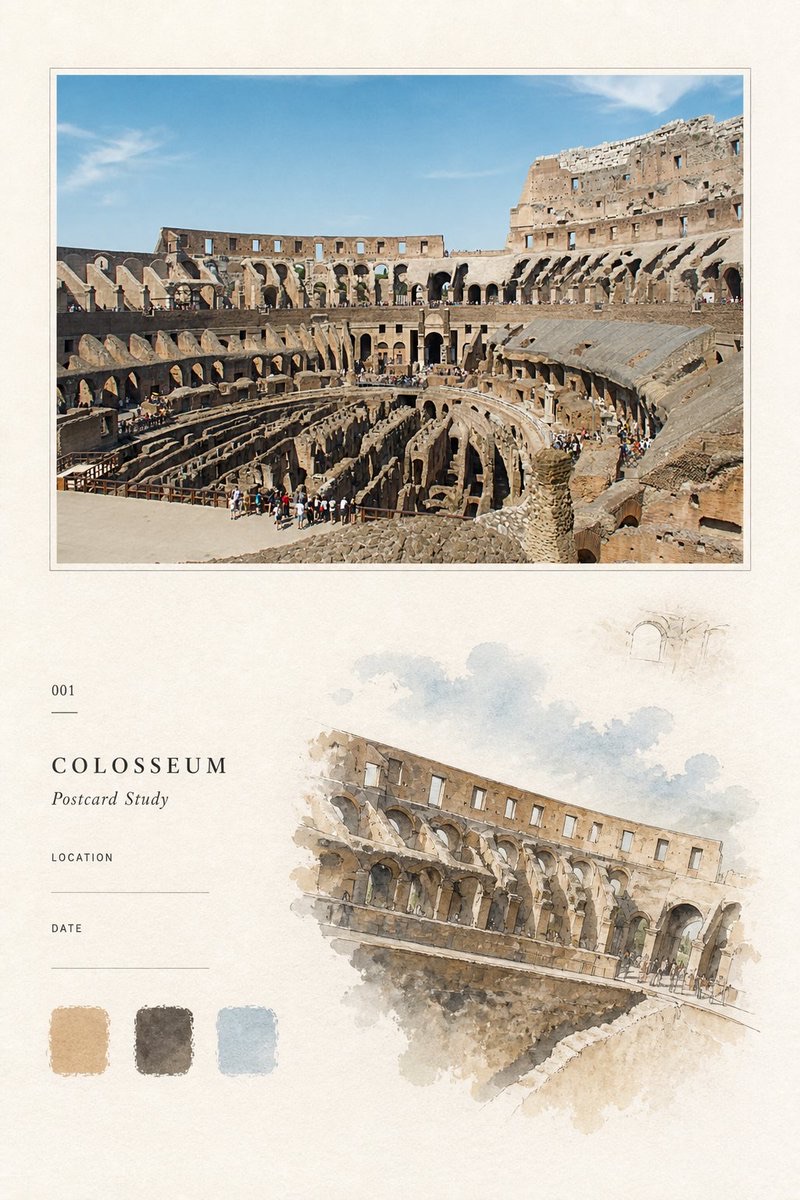
Travel Palette Watercolor Study Poster
-
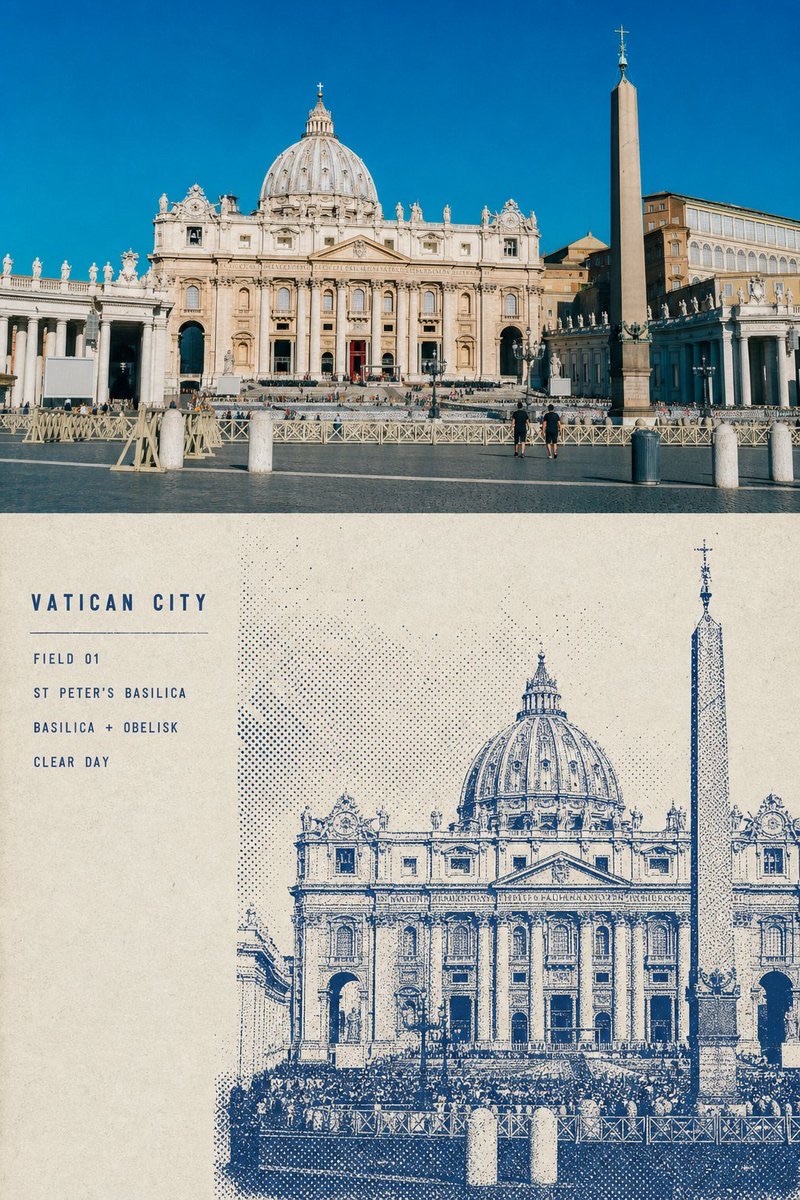
Blue Halftone City Archive
-
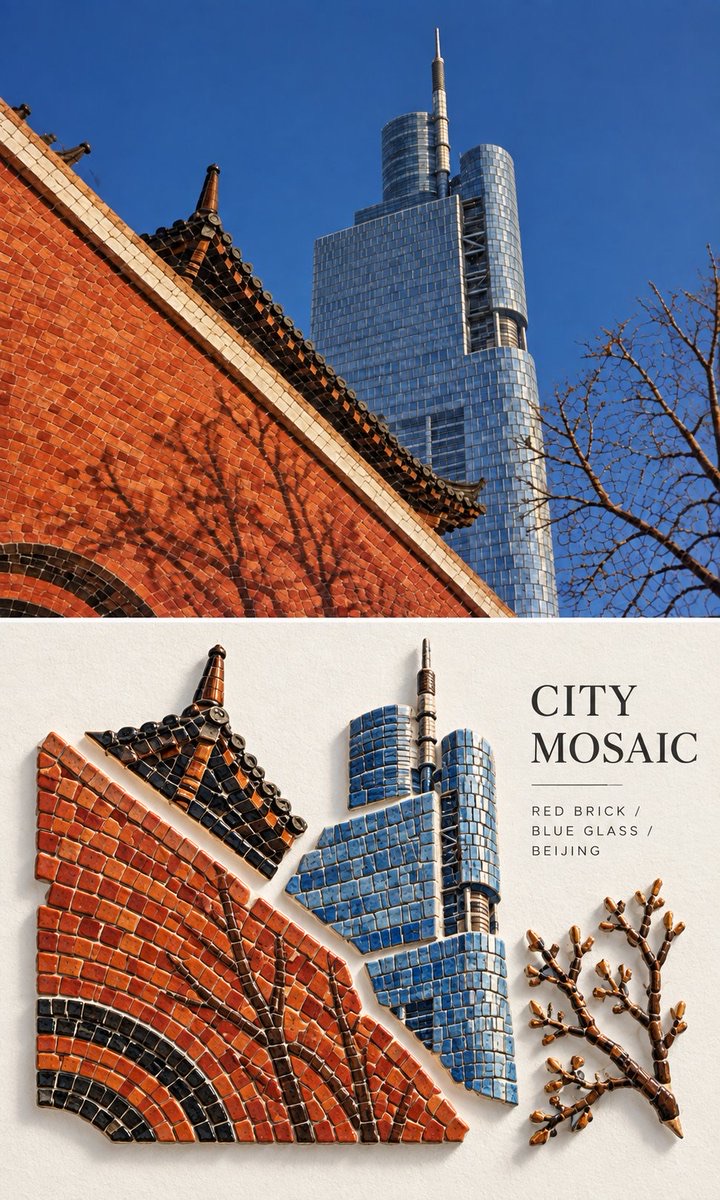
Travel Photo to Glazed Mosaic Relief Poster
-
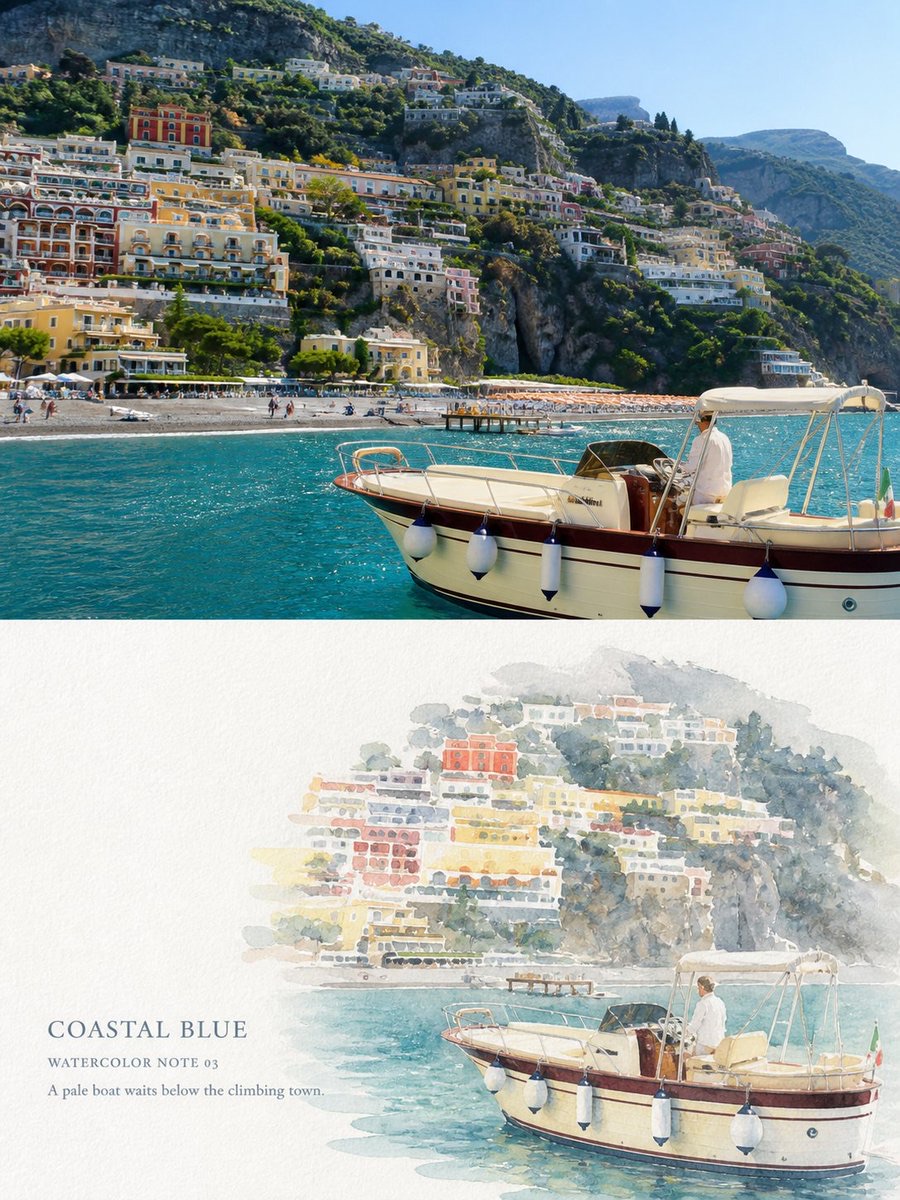
Clear White-Paper Travel Watercolor Editorial Poster
-
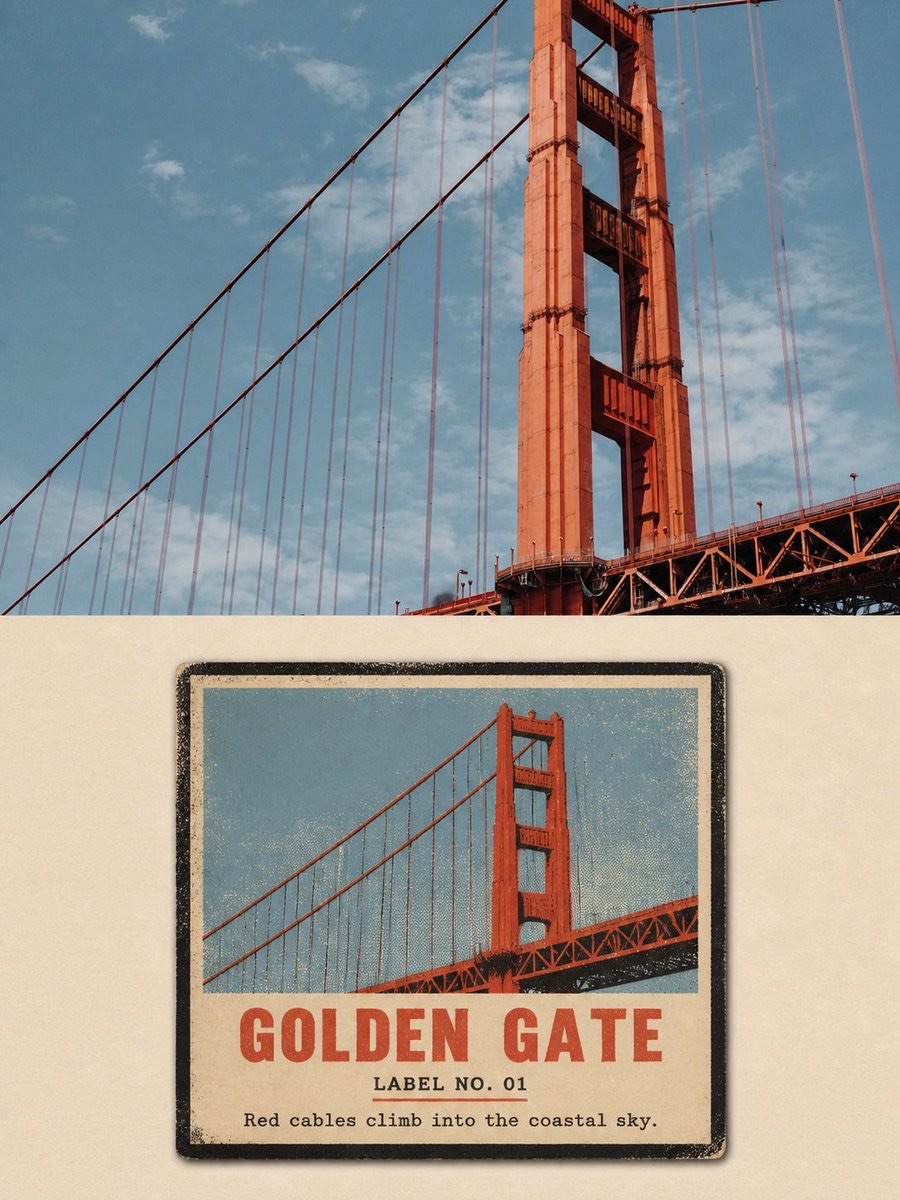
Vintage Matchbox Travel Label Poster
-
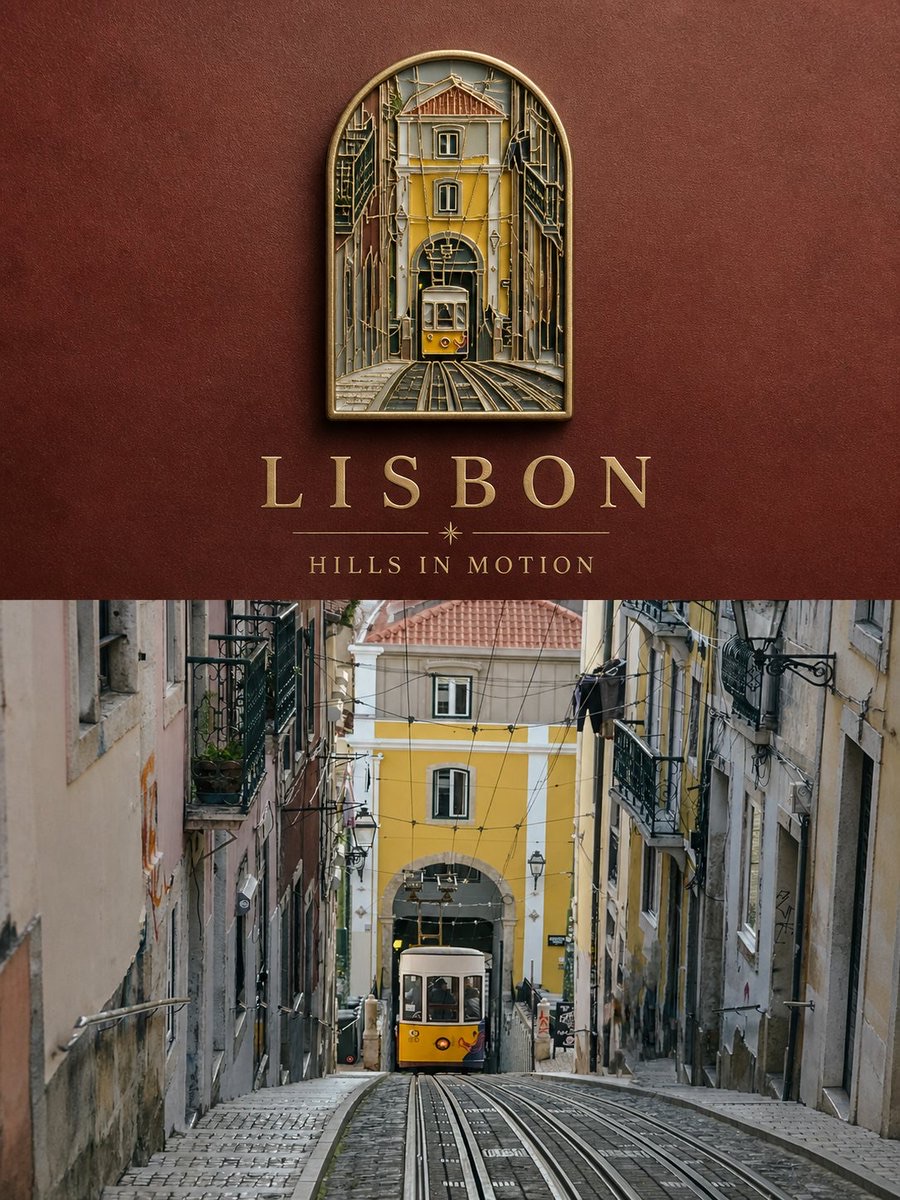
Travel Enamel Fridge Magnet Souvenir Poster
-
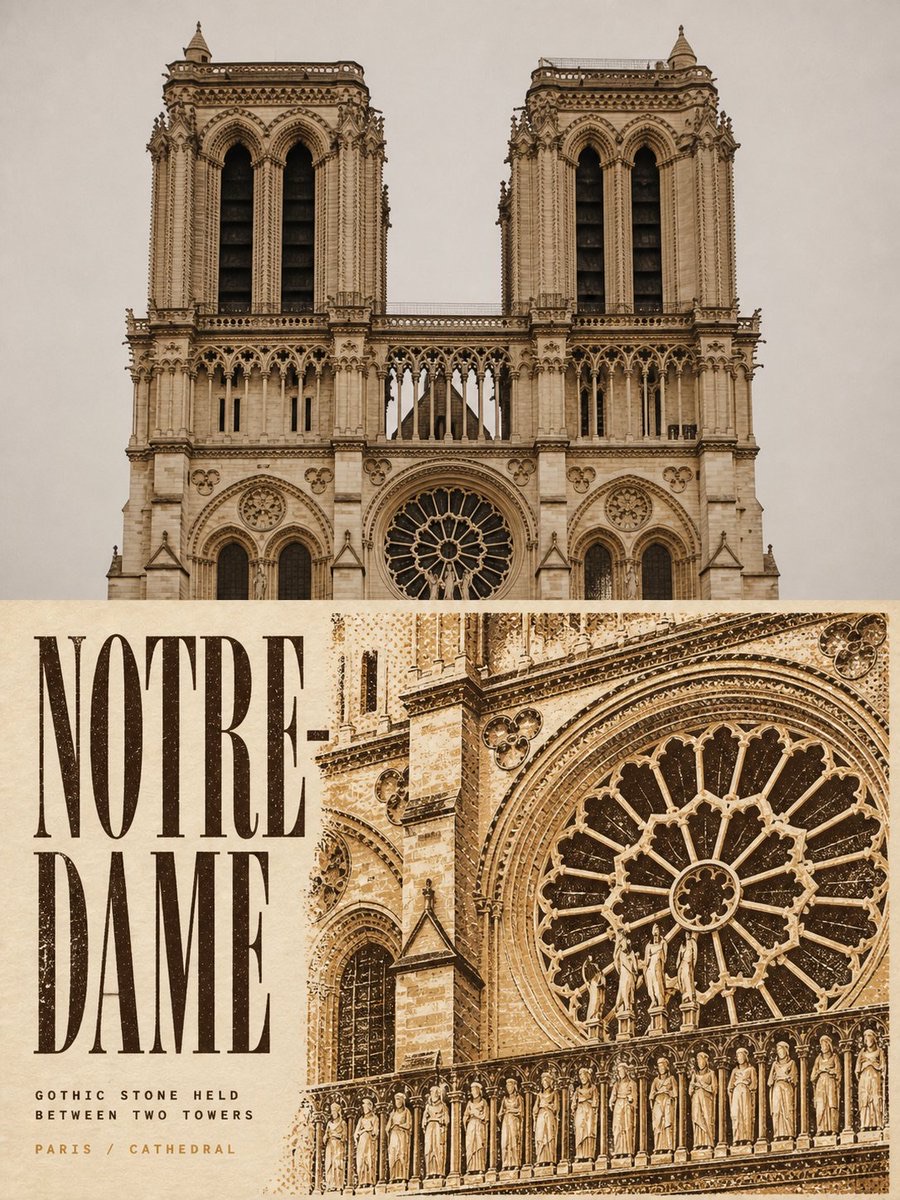
Two-Color Cultural Landmark Editorial Poster
-
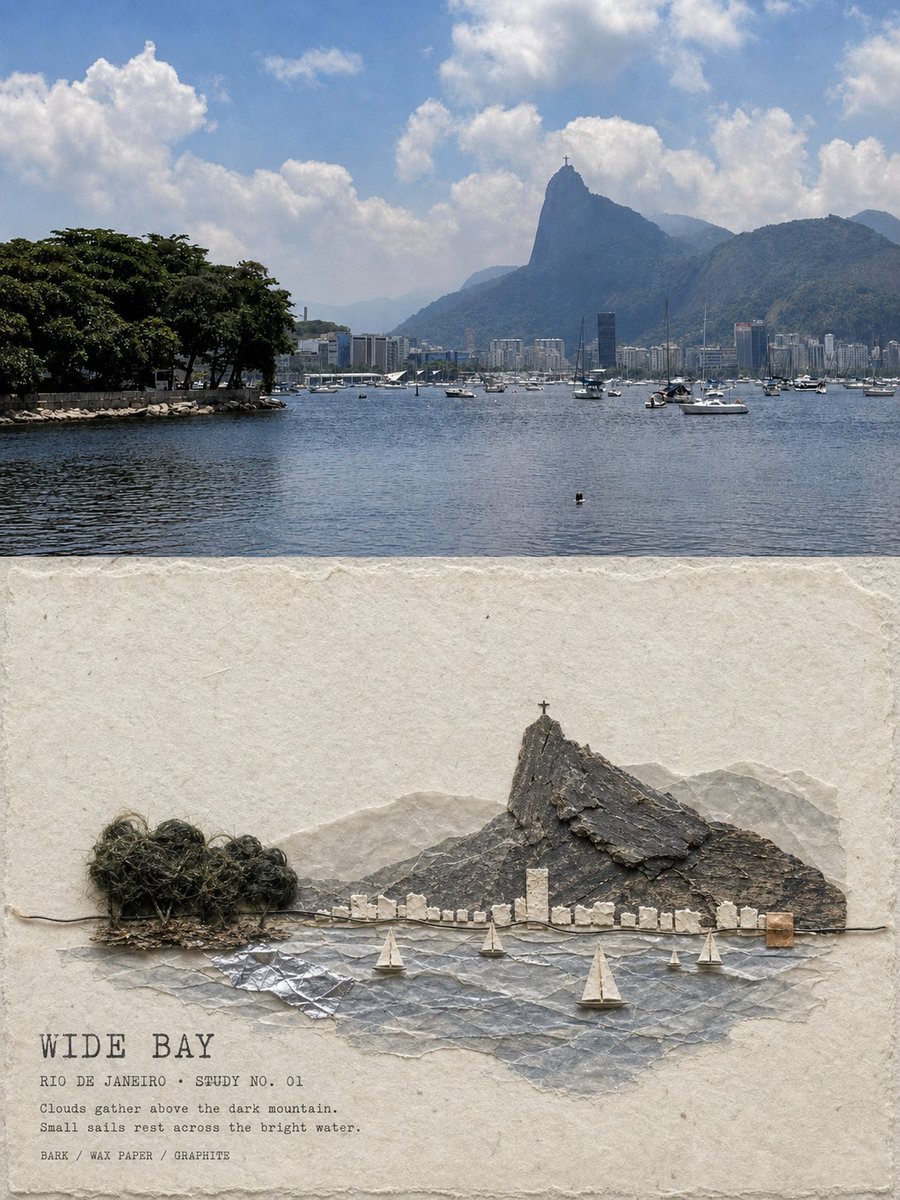
Material Assemblage Contrast Poster from a Travel Photo