Image
A wool-felt woven travel memory poster
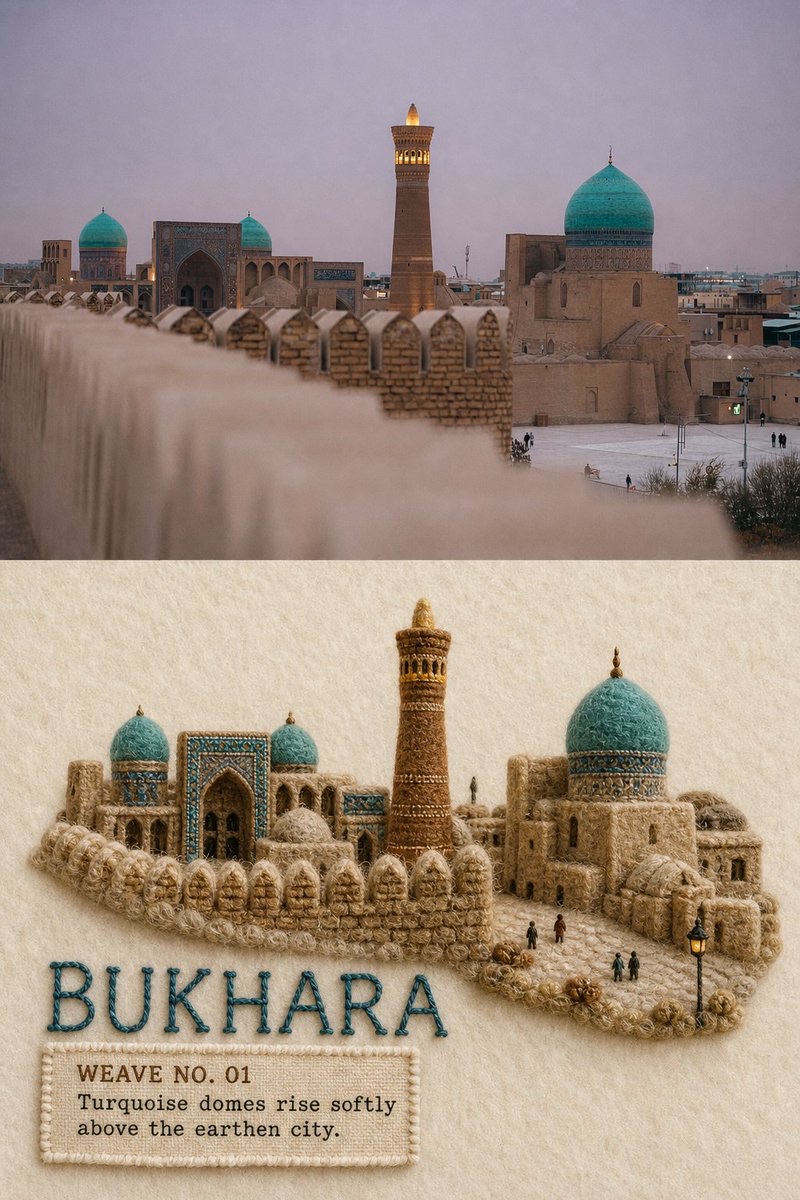
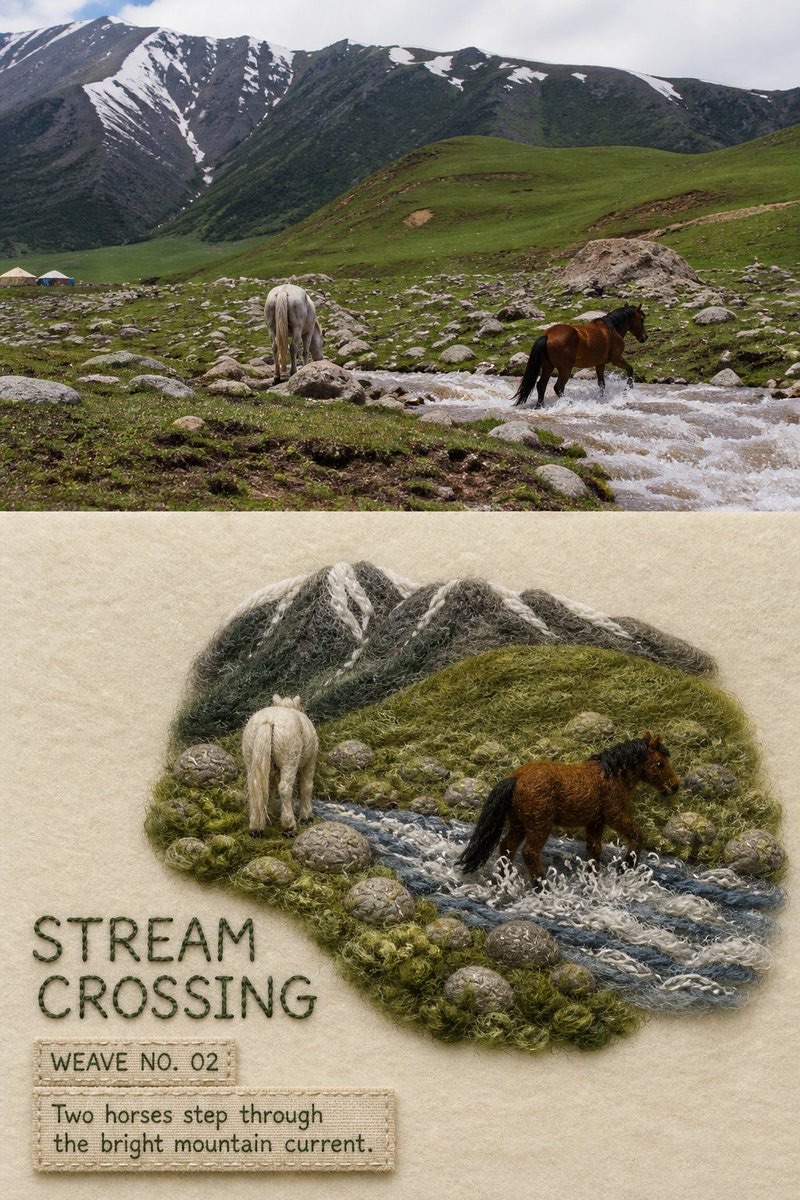
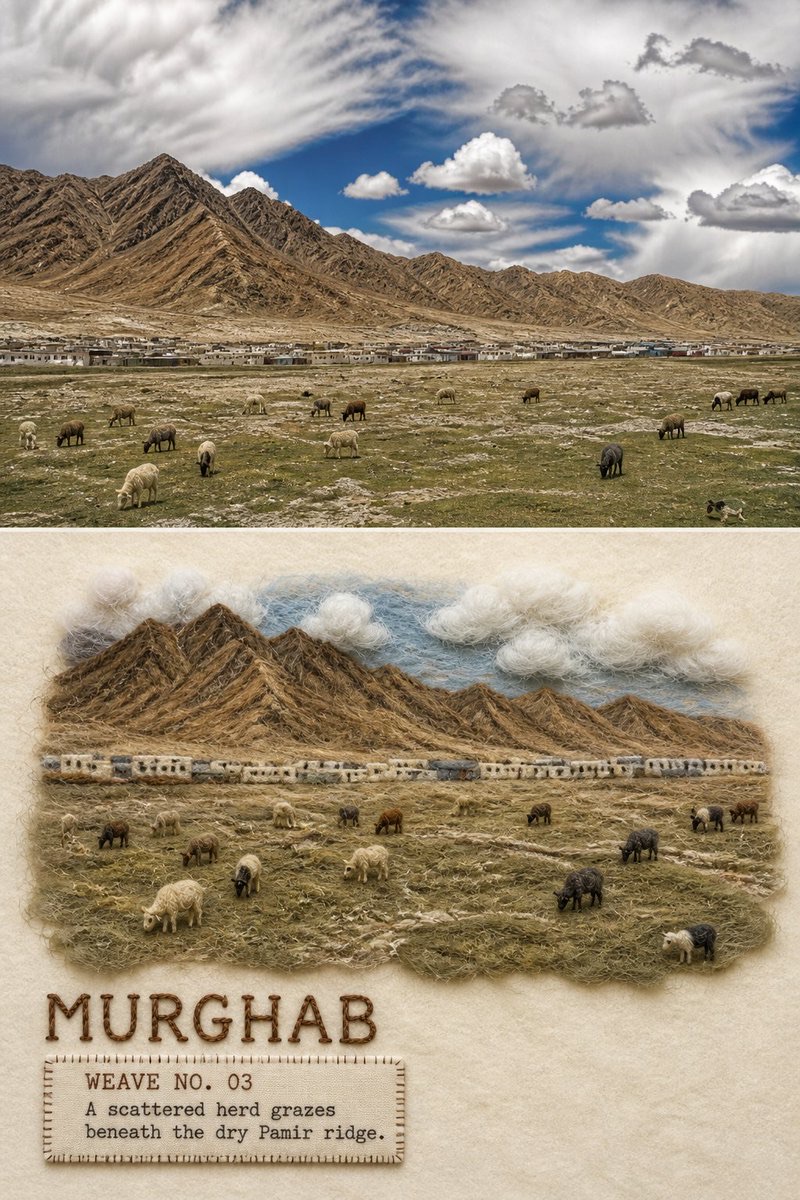
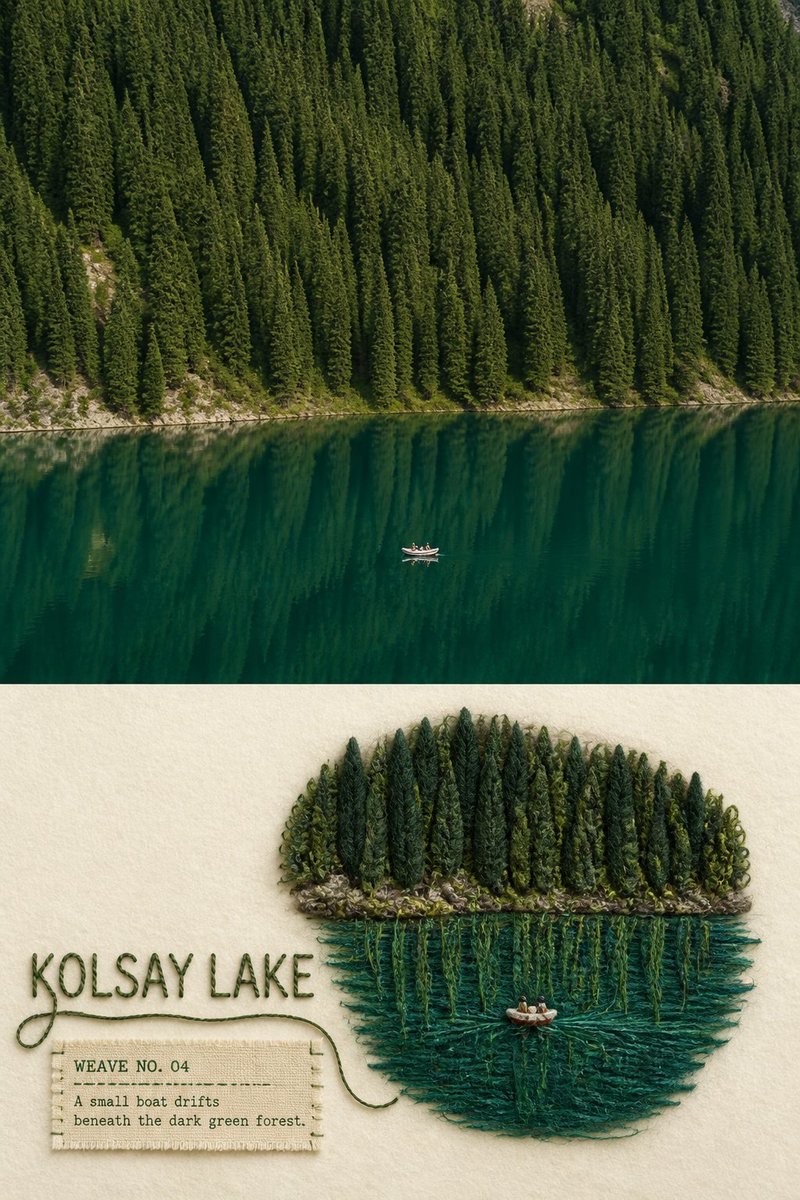
Turn a single travel photo into a premium travel poster divided into upper and lower sections: retain the real photo above, transform the scene below into a miniature wool-felt landscape with tangible volume and fiber detail, and add legible English textile lettering.
 蛋黄堡@Hamburgerai
Prompt
Please turn each travel photo I upload into its own separate, premium travel-art poster. Output each photo separately; do not combine multiple different photos in one image.

Use a 3:4 vertical composition. The upper half is a clearly visible original photograph; the lower half is a “woven wool-felt miniature memory” of the same scene. Make the two sections nearly 1:1 in height, separated by a clear, level, restrained boundary.

Faithfully preserve the original photo in the upper section. Accurately retain the identity and number of subjects, the poses of people or animals, architecture, terrain, key objects, viewing angle, relative positions, real materials, natural lighting and shadows, and original color mood. Apply only subtle premium travel-magazine and exhibition-photography color grading, with a very fine film grain. Do not redraw, stretch, mirror, distort, or alter the subjects in the photo.

In the lower section, extract the most recognizable subjects, outlines, actions, terrain structure, and narrative relationships from the same photo. Recreate the scene as a three-dimensional fiber-art miniature landscape displayed on warm ivory felt paper.

This is not a flat fabric appliqué, nor a photo covered with yarn texture. Reorganize the scene according to real fiber techniques, combining:

needle-felted wool, wool roving, bouclé yarn, crochet loops, embroidery thread, soft twisted fibers, small woven structures, loose wool fibers.

Adapt the materials to the content of the photo:

- Make clouds and fog from fluffy white wool strips with loose edges;
- Make mountains from layers of needle-felted wool with varying density and direction;
- Make vegetation from boucle yarn, crochet knots, short-fiber yarn balls, and loose thread ends;
- Make water from horizontally arranged blue-green yarn, embroidery thread, and curved reflective threads;
- Make buildings from tightly needle-felted forms, miniature woven walls, and embroidered patterns;
- Define roads, shorelines, and terrain boundaries with seams, cords, or lower-pile structures;
- Turn people, animals, boats, and vehicles into miniature fiber models that retain their original poses, directions, numbers, and main colors.

Do not mechanically reproduce every background detail in the photo. Actively remove repetitive buildings, dense vegetation, small stones, and irrelevant clutter. Simplify the scene into one main miniature landscape. Change the scale of the subjects and spatial arrangement so the work feels like a small architectural model, fiber specimen, or collectible handmade memory model placed on paper.

Clearly show fluffy wool, loops of varied sizes, needle-felted texture, yarn twist, embroidery stitches, slight fraying, loose threads, variation in weave density and pile height, real physical thickness, and soft contact shadows. Edges of subjects may be loose and fuzzy, but their silhouettes must remain recognizable at a glance.

Derive the palette from the original photo and soften it into natural wool colors. Preserve the photo's most important warm-cool relationships and signature colors, while reducing color clutter and saturation. Distinguish structures through different fiber shades, loop density, and pile height.

Leave at least about 35% of continuous warm ivory felt space beyond the miniature landscape and text. Keep this space complete and quiet, so it sets off the tangible quality of the miniature. Do not fill it with scattered yarn, decorative icons, or unrelated craft objects.

Add three layers of accurate, legible English text in the felt space:

1. Create a main title of 1–3 English words based on the real location, subject, or action;
2. Add a small number in the format “WEAVE NO. 01”;
3. Add one 5–12-word observation sentence describing colors, actions, architecture, weather, or spatial relationships actually visible in the photo.

Make the main title using laid yarn or hand embroidery, with real yarn thickness, stitches, and slight looseness. Place the number and observation sentence on a small woven label, coarse-fabric tag, or embroidered annotation, and keep them clearly legible. Do not overlay smooth digital type. Do not generate an author name, logo, website, QR code, invented year, or garbled text.

The overall feel should be warm, quiet, delicate, tactile, and collectible, like a travel memory carefully stitched into a keepsake that can be held in your hands.

Avoid: missing source-photo comparison, flat felt appliqué, fabric stickers, flat paper cutout, knitted blanket covering the whole image, plastic toy, clay, resin, glossy CGI, smooth 3D rendering, generic craft template, cartoon proportions, invented landmarks, altered subject count, excessive decoration, tiny unreadable text, floating digital typography, fake logo, watermark.
请将我上传的每一张旅行照片分别制作成一张独立的高级旅行转绘海报,每张照片单独输出,不得将多张不同照片拼接在同一画面中。
整体采用3:4竖版构图。上半部分为清楚可见的真实原始照片,下半部分为同一场景的“羊毛毡编织记忆微缩”。两个区域高度接近1:1,使用清晰、水平、克制的边界分隔。
上半部分忠实保留原照片。准确保持主体身份与数量、人物或动物姿态、建筑结构、地形、核心物体、观察角度、相对位置、真实材质、自然光影和原有色彩氛围。仅进行轻微高级旅行杂志和展览摄影调色,并加入极薄胶片颗粒。不得将照片重绘、拉伸、镜像、扭曲或改变主体。
下半部分从同一张照片中提取最具识别度的主体、轮廓、动作、地形结构和叙事关系,把场景制作成一件陈列在温暖米白毛毡纸上的立体纤维艺术微缩景观。
它不是平面布贴,也不是给照片覆盖毛线纹理。必须依据真实纤维工艺重新组织场景,结合:
needle-felted wool、wool roving、bouclé yarn、crochet loops、embroidery thread、soft twisted fibers、small woven structures、loose wool fibers。
根据照片内容进行材料转换:
- 云雾使用蓬松、边缘松散的白色羊毛条;
- 山体使用不同密度和方向的针毡羊毛层;
- 植被使用圈圈纱、钩针结、短绒线团和零散线头;
- 水面使用横向铺开的蓝绿纱线、刺绣线和弯曲反光线;
- 建筑使用紧密针毡体块、微型编织墙面和刺绣纹样;
- 道路、岸线与地形边界使用缝线、绳线或较低绒高结构;
- 人物、动物、船只和车辆变成保持原姿态、方向、数量与主色的微型纤维模型。
不得机械复刻照片的全部背景。主动删除重复建筑、密集植被、细小石块和无关杂物,将场景压缩为一个主要微缩景观。改变主体尺度和空间组织,使作品像被安放在纸面上的小型建筑沙盘、纤维标本或收藏级手工记忆模型。
必须清楚表现蓬松羊毛、大小不一的线圈、针毡颗粒、纱线捻度、刺绣针脚、轻微脱线、线头、编织密度变化、真实实体厚度和柔和接触阴影。主体边缘可以松散、有绒毛,但身份轮廓必须一眼可辨。
配色从原始照片中提取并柔化为自然羊毛色。保留原照片最重要的冷暖关系与标志性色彩,降低杂色和高饱和度,通过不同纤维色阶、线圈密度和绒高区分结构。
微缩景观与文字之外至少保留约35%的连续米白毛毡空场。空场必须完整、安静,能够衬托微缩模型的实体感,不能用大量零散毛线、装饰图标或无关工艺物件填满。
在毛毡空场中加入三层准确、可读的英文文字:
1. 根据真实地点、主体或动作提炼一个1–3个英文单词的主标题;
2. 加入“WEAVE NO. 01”形式的小型编号;
3. 加入一行5–12个英文单词的观察句,描述照片中真实可见的颜色、动作、建筑、天气或空间关系。
主标题使用连续毛线摆放或手工刺绣形成,具有真实纱线厚度、针脚和轻微松动感。编号与观察句放在小型织标、粗布标签或刺绣边注上,必须清楚可读。不得叠加光滑数字字体,不得生成作者名、Logo、网址、二维码、虚构年份或乱码。
整体气质温暖、安静、细腻、触觉化、具有收藏感,像把一次旅行认真缝成了一件可以捧在手里的记忆标本。
Avoid: missing source-photo comparison, flat felt appliqué, fabric stickers, flat paper cutout, knitted blanket covering the whole image, plastic toy, clay, resin, glossy CGI, smooth 3D rendering, generic craft template, cartoon proportions, invented landmarks, altered subject count, excessive decoration, tiny unreadable text, floating digital typography, fake logo, watermark.
How to use
Usage suggestion: Upload travel photos one at a time; generate one 3:4 vertical poster per photo. Make sure the location, subject, or action in each photo can be distilled into an English title and observation sentence, and check that the generated text is legible.
Details
More from 蛋黄堡
-
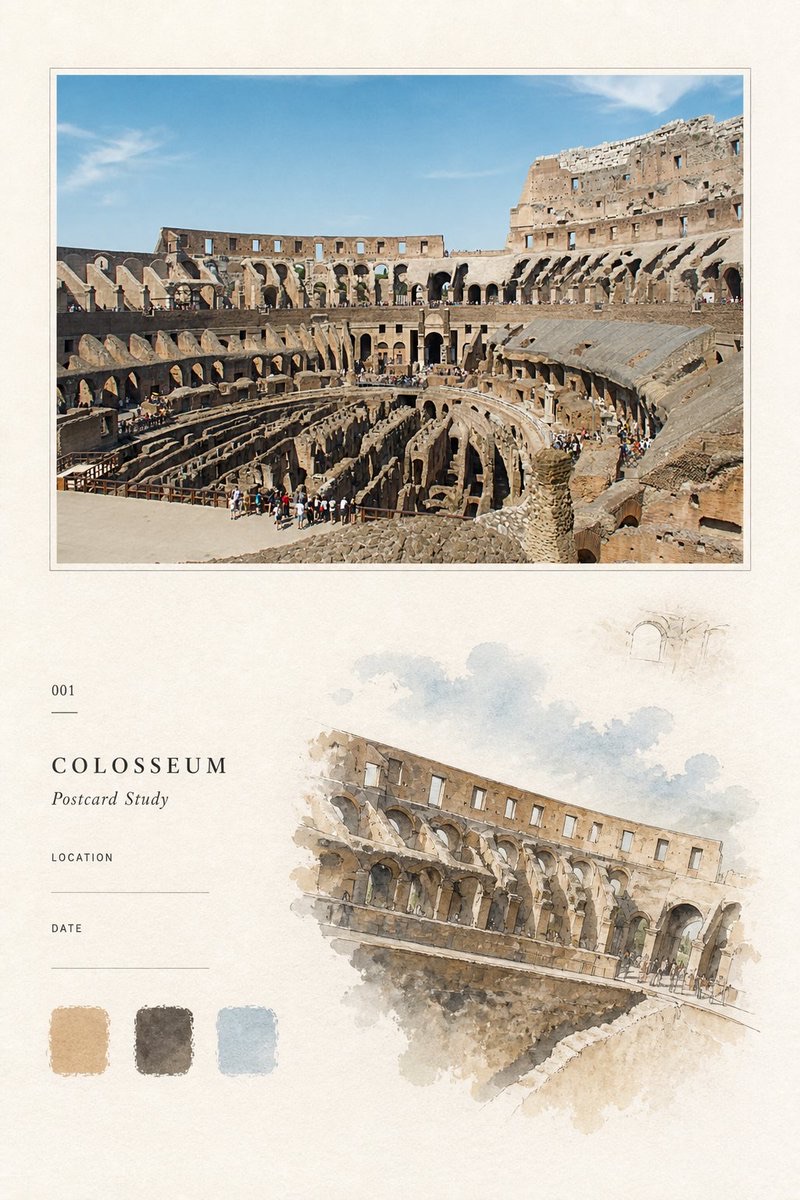
Travel Palette Watercolor Study Poster
-
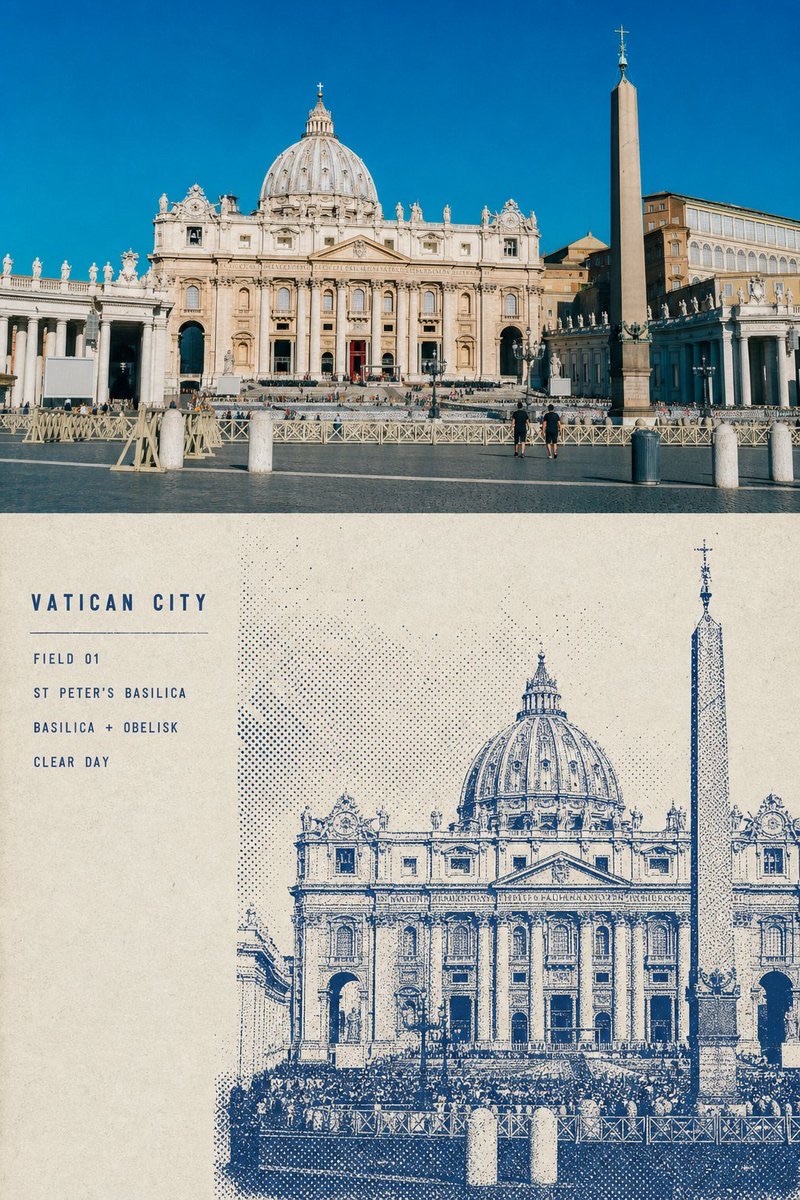
Blue Halftone City Archive
-
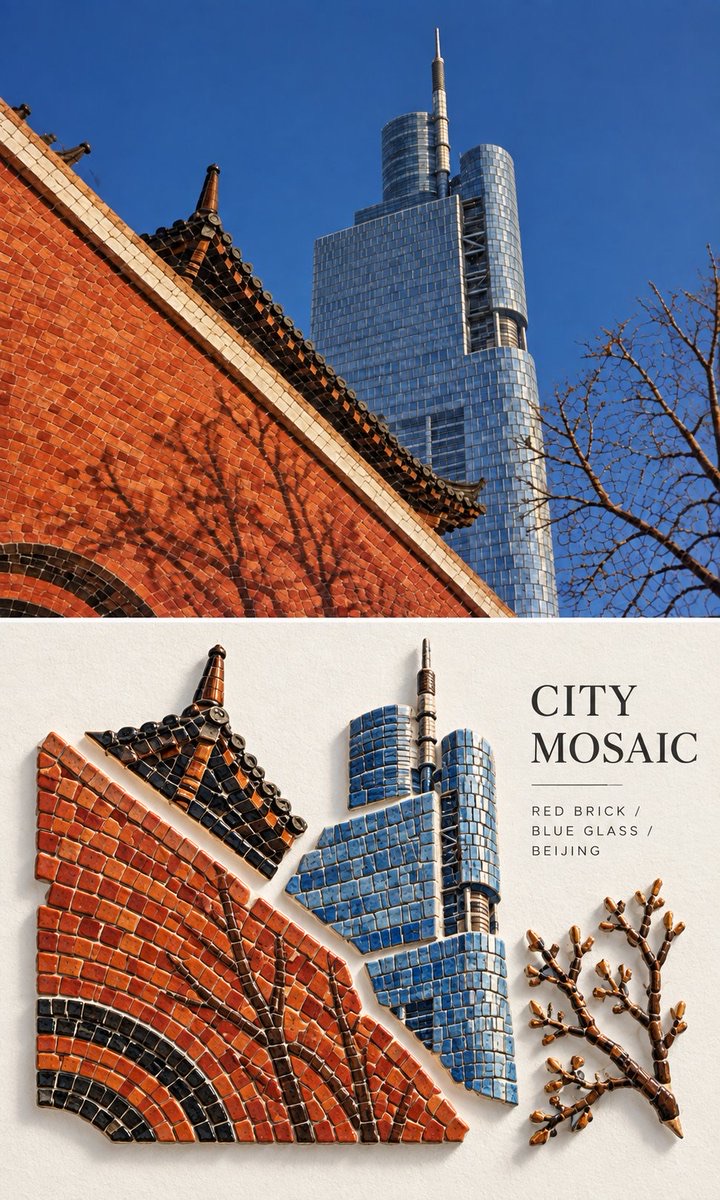
Travel Photo to Glazed Mosaic Relief Poster
-
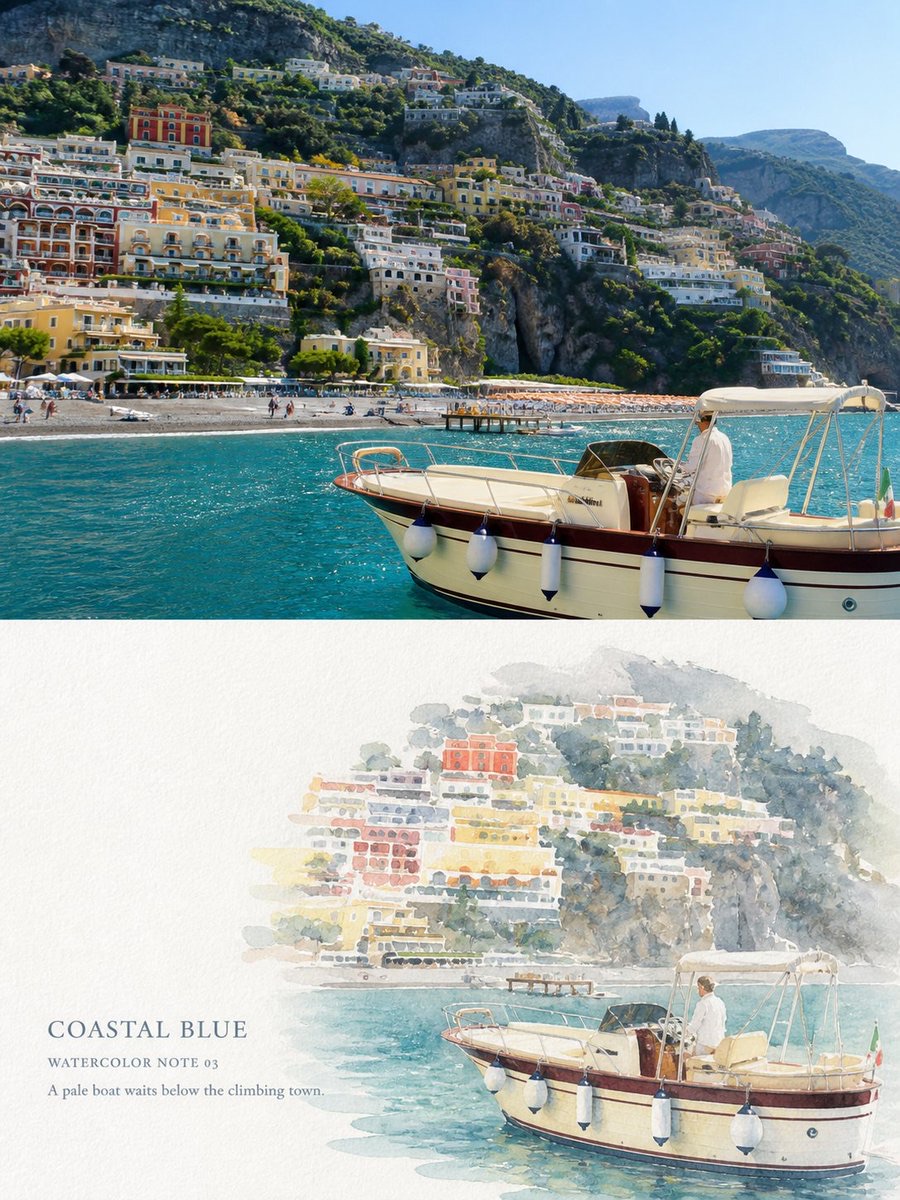
Clear White-Paper Travel Watercolor Editorial Poster
-
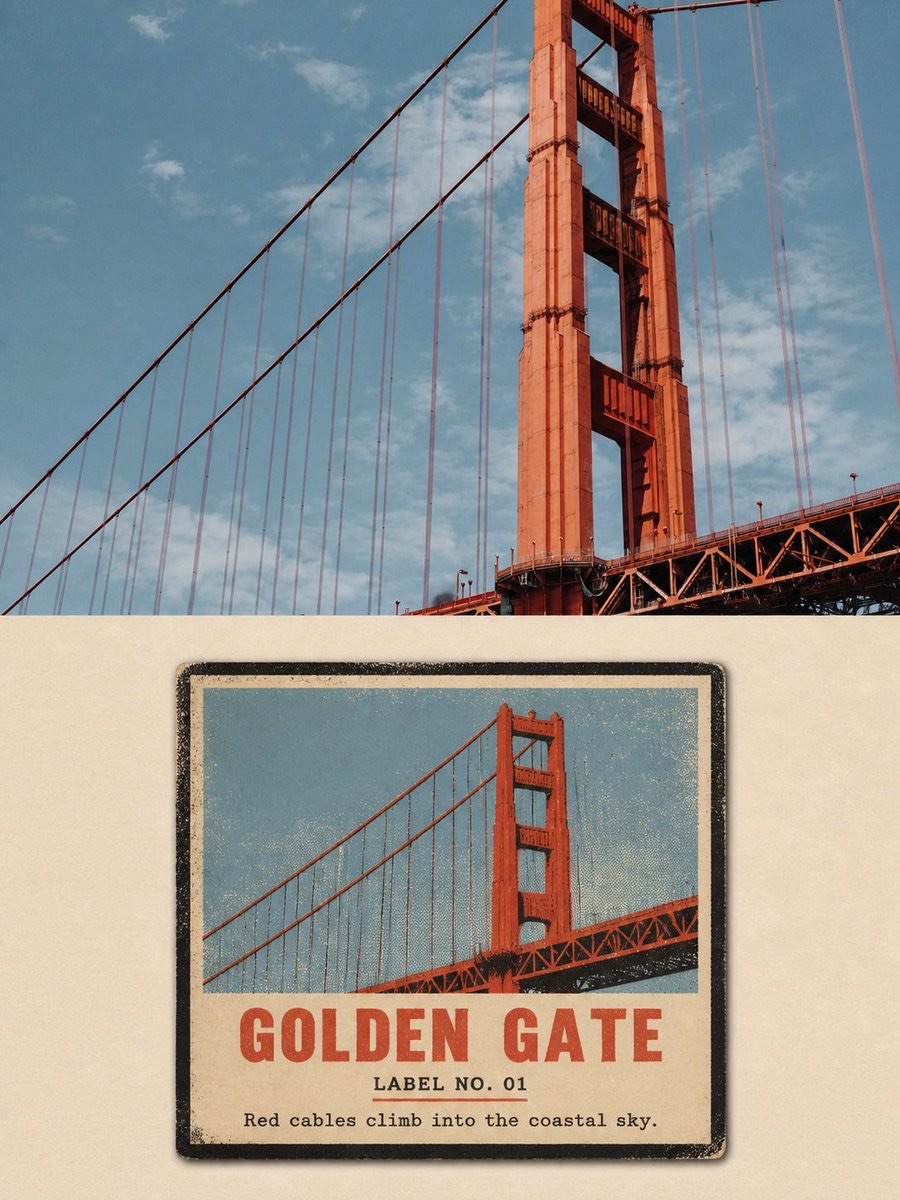
Vintage Matchbox Travel Label Poster
-
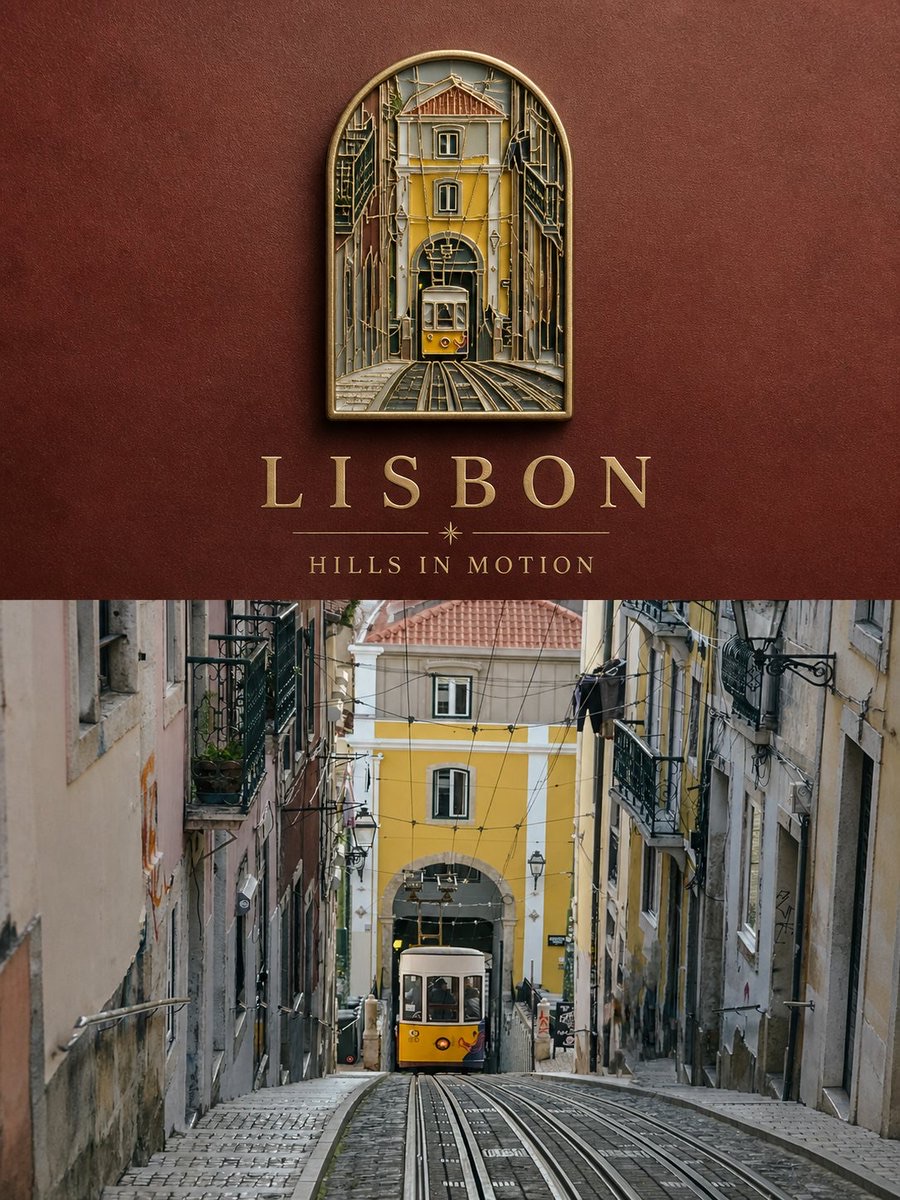
Travel Enamel Fridge Magnet Souvenir Poster
-
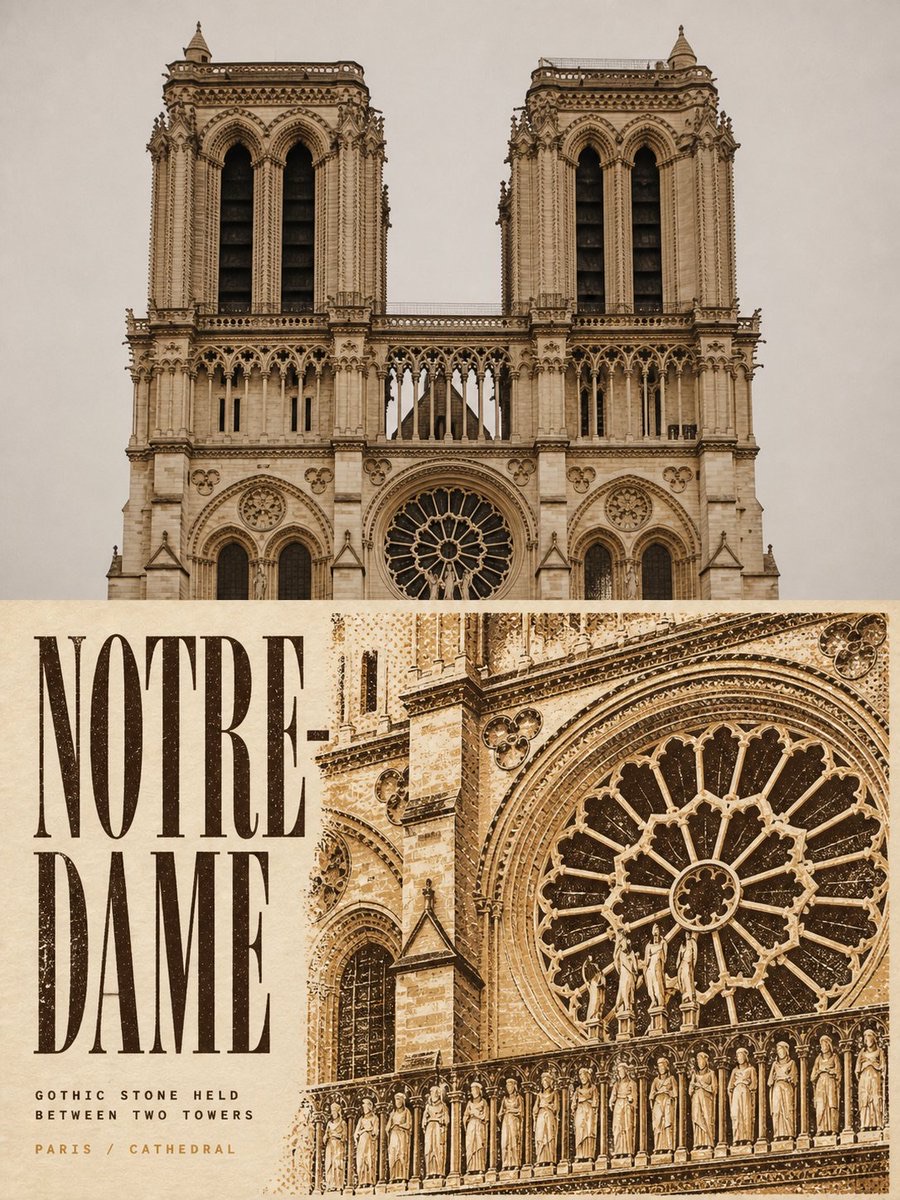
Two-Color Cultural Landmark Editorial Poster
-
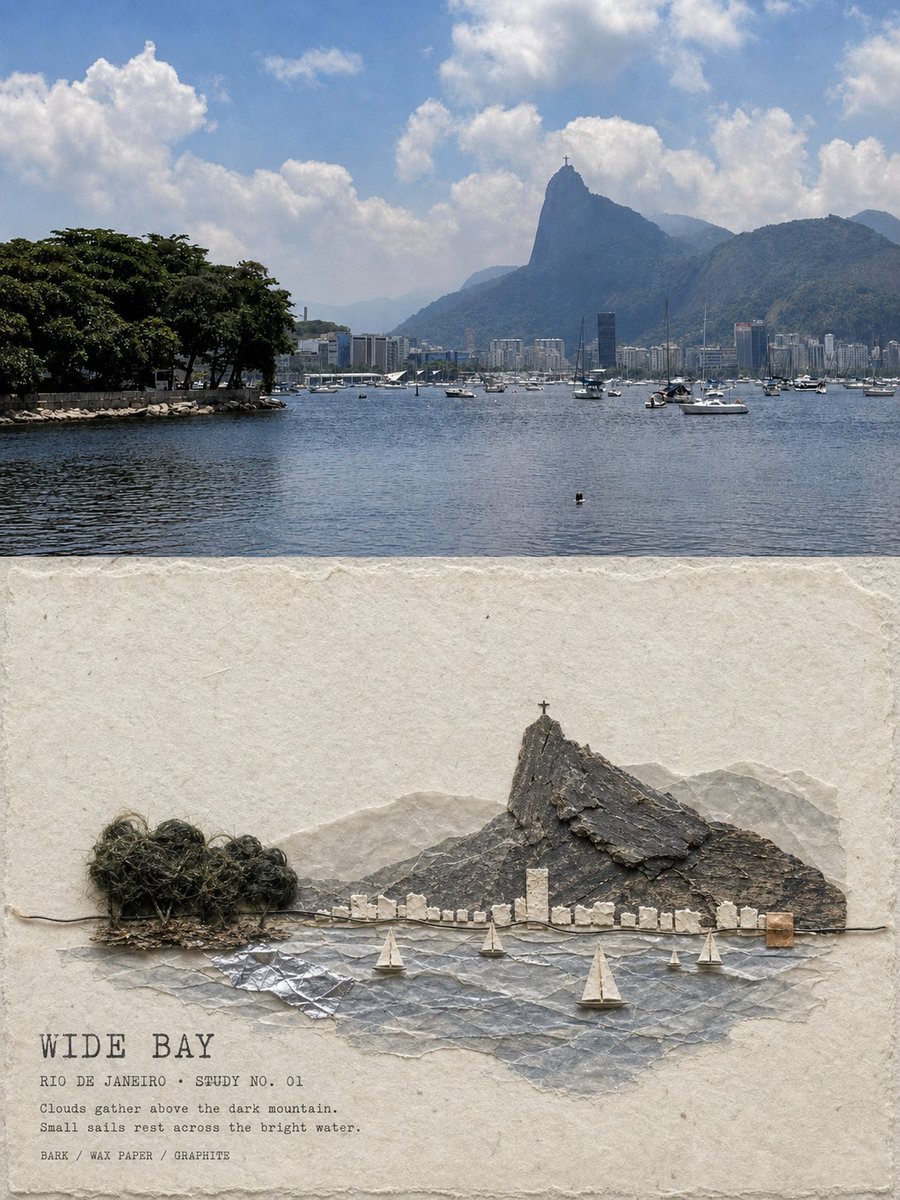
Material Assemblage Contrast Poster from a Travel Photo