图片
角色面具下的微型自我驾驶舱
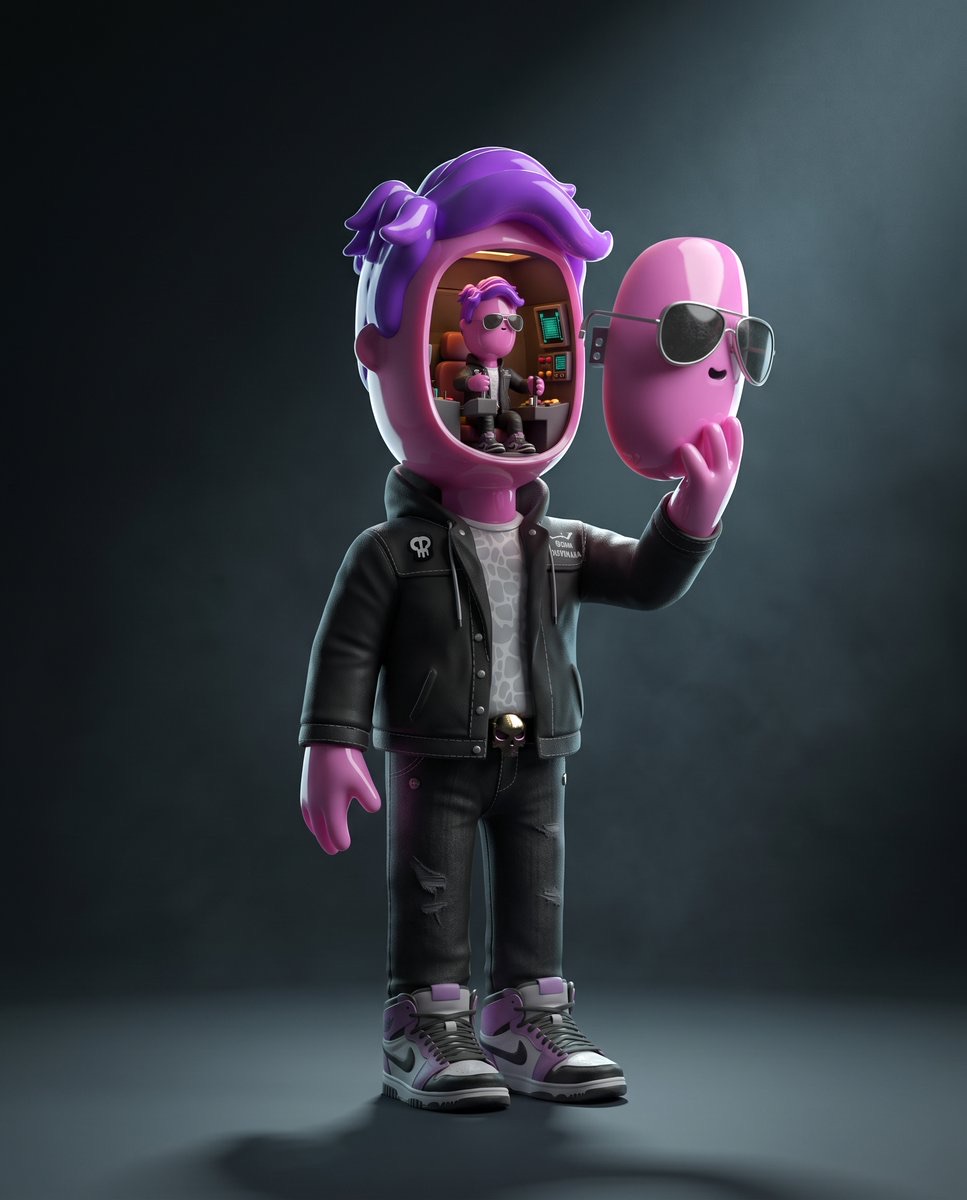
将上传的角色呈现为揭下面部薄面具、露出由同一角色驾驶的微型内部控制舱的电影感全身画面。
 Edizkan ⭕🦇@edizkan_
Prompt
创作一张电影感全身图像:上传的参考角色正从自己的脸上揭下一张薄面具,露出头部内部一个微型操控舱,里面有一个与角色完全相同的迷你版本正在操控身体。

## 外观一致性

准确保留上传角色的:

* 头身比例
* 眼睛形状与间距
* 轮廓
* 解剖结构
* 服装与配饰
* 原有颜色
* 材质特性
* 整体设计语言

不要拟人化。

不要改变角色的面部结构。

迷你驾驶员必须是同一角色的精确缩小版,保留完全相同的比例、眼睛、轮廓、材质、颜色与设计。

两个版本都不得重新设计。

## 核心概念

主角色应完整呈现全身。

它用一只手或相应肢体,从头部正面揭下一张**仅覆盖脸部的薄面具**。

取下的面具只包含熟悉的外部脸部。

它不包括:

* 头顶
* 耳朵
* 头发
* 头盔外壳
* 头部侧面
* 后脑勺
* 脖子

面具后面不是另一张普通的脸。

相反,头部正面打开,露出一个类似微型驾驶舱的内部空间。

舱内坐着一个**与角色完全相同的微型版本**,正在主动操控较大的身体。

揭示效果应让人一眼明白:

**这个巨大角色实际上由它自己的微型版本操控。**

## 迷你驾驶员

微型角色坐着或站在头部空腔内的紧凑控制台前。

驾驶员应能通过打开的面部区域清晰看见。

尺寸:

微型角色应小到能够舒适地容纳在主角色头部内,同时仍清晰可辨。

迷你驾驶员必须保留角色原有的精确设计。

不要简化成Q版。

不要使用通用操作员形象。

不要使用人类驾驶员。

小角色正在积极操作:

* 一只手操作控制杆
* 另一只手触碰紧凑控制面板
* 身体略微前倾
* 眼睛专注于控制器,或透过开口向外看

驾驶员应显得忙碌且专注,而不是只坐在里面。

## 控制舱

内部应围绕角色自身的设计语言定制。

加入克制的细节,例如:

* 微型控制杆
* 微型按钮
* 紧凑屏幕
* 可活动的机械连杆
* 小型线缆
* 细微指示灯
* 内部结构肋条
* 微型座椅或站立平台

不要把它变成通用的宇宙飞船驾驶舱。

这个舱室应像隐藏在角色体内、专为其打造的生物尺度指挥中心。

使用从上传角色身上获得灵感的形状、材质和点缀色,但应有所克制。

## 面具互动

主角色用一只手捏住取下面具的一侧边缘,将其拿在头部旁边。

面具必须明显薄。

外侧应显示那张熟悉的脸。

背面应露出细微的连接细节:

* 微型卡扣
* 磁性触点
* 连接点
* 机械铰链或锁定片

清晰区分:

**面具 → 握持的手 → 打开的头部 → 迷你驾驶员**

不要让这些元素融合在一起。

## 手部准确性

保留上传角色准确的手部或肢体结构。

保留准确的手指数量。

不要多出手指。

不要有粘连的手指。

不要有重复的手指。

不要让手指穿过面具。

手应自然地只握住面具的外缘。

## 全身姿势

定格在主角色刚取下面具之后的瞬间。

姿势:

* 躯干略微转动
* 头部朝向取下的面具倾斜
* 一侧肩膀抬起
* 身体重心主要由一条腿支撑
* 另一条腿稍微向后或向外迈出
* 空着的手臂垂得更低,或稍稍伸出以保持平衡

身体应呈现片刻停顿的感觉,仿佛驾驶员暂停了机器,向人揭示其中真相。

避免摆出中性的假人姿势。

## 摄影机与透视

使用低机位、略偏轴的电影感镜头。

28–35mm镜头。

摄影机放在膝盖高度左右,轻微向上拍摄。

完整呈现全身。

不要裁掉脚。

角色约占画面高度的70–75%。

将主角色略微放在画面中心一侧。

抬起的面具在画面上方一侧营造张力,同时让驾驶舱开口成为主要焦点。

## 景深

主要焦平面:

**迷你驾驶员 + 驾驶舱开口**

两者必须锐利清晰。

次要清晰区域:

**握着面具的手 + 取下的面具**

主角色躯干仍应清晰可辨。

下半身逐渐变柔。

背景呈现有氛围的模糊效果。

不要让整个画面都清晰锐利。

## 灯光

打造强烈的雕塑感光线。

外部:

使用坚硬的侧向定向光塑造主角色的身体。

用克制的冷色轮廓光将角色轮廓与背景分开。

内部:

驾驶舱发出微妙的暖色实用光,照亮迷你驾驶员。

微型控制器产生微弱的局部照明。

头部内部的光线应明显比外部环境暖,形成清晰的视觉层次。

在打开的面部空腔周围勾勒一道细窄轮廓光,以表现其深度。

不要让驾驶舱发出过强的光。

不要用霓虹光铺满画面。

## 内部尺寸线索

让驾驶舱确实显得微型。

在驾驶员附近加入细小而可信的细节:

* 与微型手掌大小相称的控制器
* 小座椅
* 小型脚踏平台
* 纤细布线
* 微型标签或符号,不含可读文字
* 微型机械关节

微型角色应明显小于主角色。

尺寸关系必须明确。

## 环境

简约的暗调电影感环境。

大面积留白。

轻微的氛围雾。

头部后方一束微弱光线有助于分离面具和驾驶舱开口。

全身角色脚下应能看见地面,并投下柔和的长影。

不要加入不必要的道具。

## 表面细节

主角色:

准确保留原有材质。

驾驶舱:

采用符合角色世界观的精细金属、塑料、织物或机械纹理。

迷你驾驶员:

与原角色完全相同的材质特性。

焦点区域应包含丰富的微观细节:

* 微小划痕
* 接缝
* 控制表面
* 边缘磨损
* 细微灰尘
* 真实反射

不要过度添加纹理。

## 色彩分级

保留角色原有配色。

外部环境略微降低饱和度。

驾驶舱内部采用克制的暖琥珀色照明。

外部阴影面采用更冷的色调。

控制电影感对比度。

深黑色。

高光平滑过渡。

不要过度饱和。

## 情绪基调

令人惊讶。

聪明得荒诞。

略带超现实感。

揭示效果应立即带来这样的感觉:

**“等等……这个角色正在操控它自己。”**

整体应显得巧妙而神秘,而非滑稽或令人不适。

## 关键限制

只取下面具。

不要移除整个头部。

不要露出血肉。

不要出现头骨。

不要出现机器人脸。

不要出现人类驾驶员。

里面不要出现不同的角色。

迷你驾驶员必须是完全相同的角色。

不要让驾驶舱过大。

不要出现第二个全尺寸头部。

不要让微型角色漂浮。

微型角色必须始终位于头部空腔内。

手指数目不能错误。

肢体不能融合。

不要重新设计面部。

不要裁掉脚。

不要摆出居中、中性的站姿。

不要使用平淡的光线。

不要出现文字。

不要出现标志。

宽高比 1:1
Create a cinematic full-body image of the uploaded reference character removing a thin mask from its own face, revealing a tiny control chamber inside the head where a miniature version of the exact same character is operating the body.
## Likeness Integrity
Preserve the uploaded character’s exact:
* head-to-body proportions
* eye shape and spacing
* silhouette
* anatomy
* clothing and accessories
* original colors
* material identity
* overall design language
Do not humanize.
Do not alter the character’s facial structure.
The miniature pilot must be an exact smaller instance of the same character, preserving identical proportions, eyes, silhouette, materials, colors, and design.
No redesign of either version.
## Core Concept
The main character is shown completely full body.
With one hand or equivalent limb, it has removed a **thin face-only mask** from the front of its head.
The removed mask contains only the familiar exterior face.
It does NOT include:
* top of head
* ears
* hair
* helmet shell
* side of head
* back of head
* neck
Behind the mask is not another normal face.
Instead, the front of the head opens into a miniature cockpit-like interior.
Inside this chamber sits a **tiny exact version of the same character**, actively controlling the larger body.
The reveal should instantly communicate:
**the giant character is actually being piloted by a miniature version of itself.**
## Miniature Pilot
The tiny character sits or stands inside the head cavity at a compact control station.
The pilot is clearly visible through the opened facial area.
Scale:
The miniature character should be roughly small enough to fit comfortably inside the main head while remaining readable.
The tiny pilot must retain the exact original character design.
No simplified chibi version.
No generic operator.
No human pilot.
The small character is actively working:
* one hand operating a control lever
* the other touching a compact control panel
* body leaning slightly forward
* eyes focused on the controls or looking outward through the opening
The pilot should feel busy and intentional, not merely sitting inside.
## Control Chamber
The interior should feel custom-built around the character’s own design language.
Include restrained details such as:
* miniature control levers
* tiny buttons
* compact screens
* articulated mechanical linkages
* small cables
* subtle indicator lights
* interior structural ribs
* miniature seat or standing platform
Do not turn it into a generic spaceship cockpit.
The chamber should feel like a hidden biological-scale command center built specifically inside this character.
Use shapes, materials, and accent colors inspired subtly by the uploaded character.
## Mask Interaction
The main character holds the removed face mask beside the head by one edge.
The mask must remain visibly thin.
Its outer side displays the exact familiar face.
Its backside reveals subtle attachment details:
* tiny clips
* magnetic contacts
* connection points
* mechanical hinges or locking tabs
Keep clear visual separation between:
**mask → gripping hand → open head → miniature pilot**
Do not merge these elements.
## Hand Accuracy
Preserve the exact hand or limb structure of the uploaded character.
Preserve the exact finger count.
No extra fingers.
No fused fingers.
No duplicated fingers.
No fingers intersecting the mask.
The hand must grip only the outer edge of the face mask naturally.
## Full-Body Pose
The main body is caught immediately after removing the face mask.
Pose:
* torso rotated slightly
* head tilted toward the removed mask
* one shoulder raised
* weight supported mostly by one leg
* opposite leg placed slightly back or outward
* free arm hanging lower or extended subtly for balance
The body should feel momentarily paused, as though the pilot has stopped the machine to reveal itself.
Avoid a neutral mannequin pose.
## Camera & Perspective
Use a low, slightly off-axis cinematic camera.
28–35mm lens.
Camera placed around knee height, looking gently upward.
Full body completely visible.
No cropped feet.
Character occupies approximately 70–75% of vertical frame.
Place the main character slightly off-center.
The raised mask creates tension on one upper side of the frame while the cockpit opening becomes the primary focal point.
## Depth of Field
Primary focal plane:
**miniature pilot + cockpit opening**
These must be razor sharp.
Secondary sharpness:
**mask-holding hand + removed face mask**
Main torso remains readable.
Lower body progressively softens.
Background falls into atmospheric blur.
No full-frame sharpness.
## Lighting
Create strong sculptural lighting.
Exterior:
A hard directional side light shapes the main body.
A restrained cool rim separates the silhouette from the background.
Interior:
The cockpit emits a subtle warm practical light onto the miniature pilot.
Tiny controls produce faint localized illumination.
The light inside the head should be visibly warmer than the exterior environment, creating a clear visual hierarchy.
A thin rim of light around the open facial cavity defines its depth.
Do not make the cockpit glow excessively.
No neon flooding.
## Interior Scale Cues
Make the cockpit feel genuinely miniature.
Include tiny believable details near the pilot:
* miniature hand-sized controls
* tiny seat
* small foot platform
* fine wiring
* miniature labels or symbols without readable text
* tiny mechanical joints
The miniature character should clearly be much smaller than the main character.
No ambiguity in scale.
## Environment
Minimal dark cinematic environment.
Large negative space.
Subtle atmospheric haze.
A faint light beam behind the head helps separate the mask and cockpit opening.
Ground plane remains visible beneath the full-body character with a soft elongated shadow.
No unnecessary props.
## Surface Detail
Main character:
Preserve original materials exactly.
Cockpit:
Fine metallic, plastic, fabric, or mechanical textures adapted to the character’s world.
Miniature pilot:
Same exact material identity as the original character.
In the focal area, include high micro-detail:
* tiny scratches
* seams
* control surfaces
* edge wear
* subtle dust
* realistic reflections
No over-texturing.
## Color Grade
Preserve the character’s original palette.
Exterior environment slightly desaturated.
Cockpit interior receives restrained warm amber illumination.
Exterior shadow side receives cooler tones.
Controlled cinematic contrast.
Deep blacks.
Smooth highlight roll-off.
No oversaturation.
## Emotional Tone
Surprising.
Absurdly intelligent.
Slightly surreal.
The reveal should create the immediate feeling:
**“Wait... the character is operating itself.”**
It should feel clever and mysterious rather than comedic or grotesque.
## Critical Constraints
Face mask only.
Do not remove the whole head.
No exposed flesh.
No skull.
No robot face.
No human pilot.
No different character inside.
The miniature pilot must be the exact same character.
No oversized cockpit.
No second full-size head.
No floating miniature character.
The miniature must remain physically inside the head cavity.
No incorrect finger count.
No merged limbs.
No facial redesign.
No cropped feet.
No centered neutral stance.
No flat lighting.
No text.
No logos.
ar 1:1
使用建议
使用建议:先上传清晰的角色参考图,再在支持参考图生图的工具中使用;需准备可接受角色面部、材质和配件被严格保留的参考图,并检查面具边缘、手指数量、驾驶舱尺度及完整脚部。
信息
- 类型
- 图片
- 许可
- Source-author-rights
- 发布时间