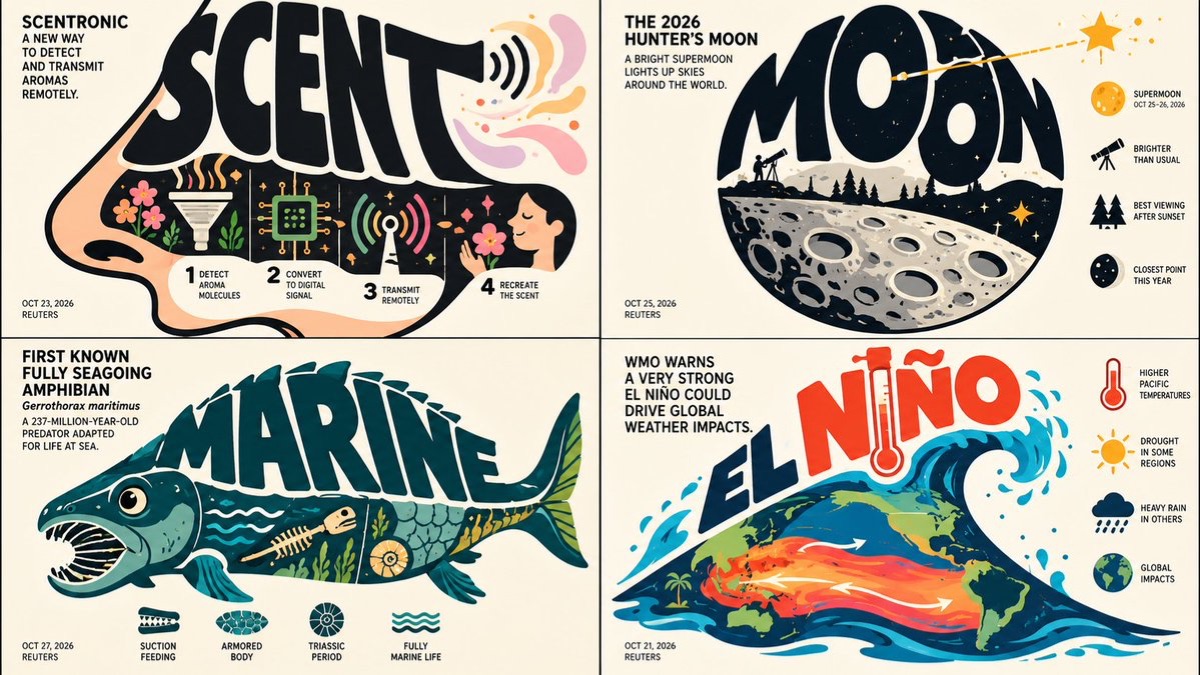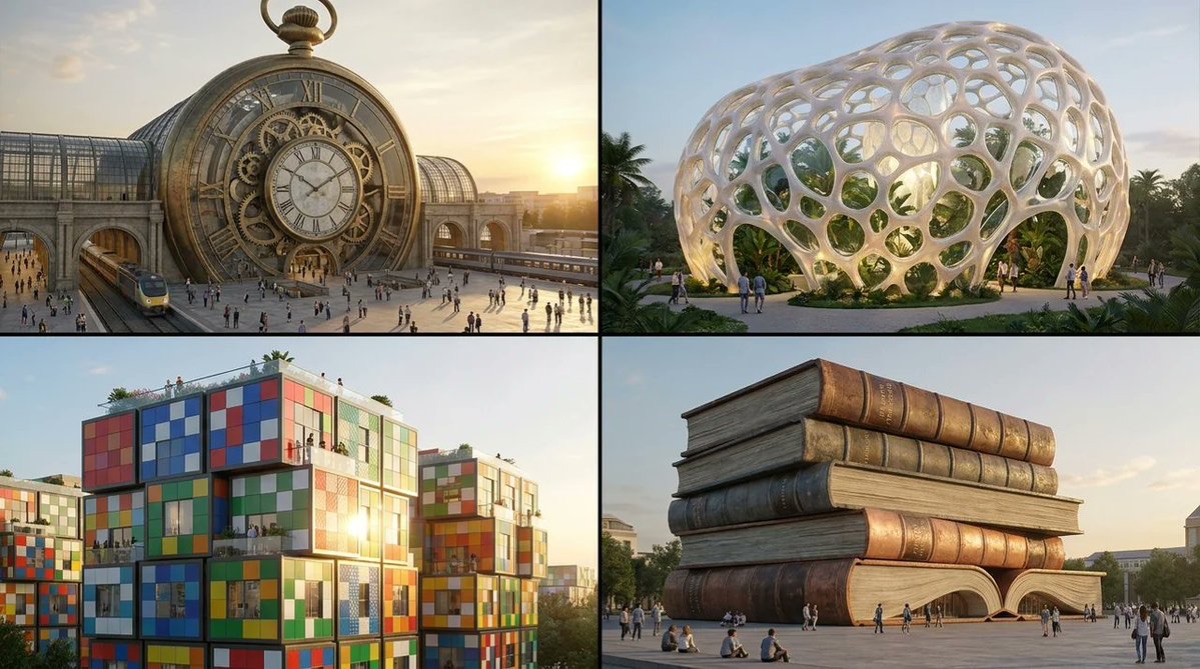
Image · Nano Banana Pro
Turn Everyday Objects into Architectural Concepts
Starting from an object’s mass, surface, and structure, transform it into a museum, residence, or transportation building, presented as a four-panel render.
 Gadgetify@Gdgtify
Prompt
Transform random objects into architecture.

2x2 grid layout, performing this for 4 different random objects. Concept: transform the objects into iconic buildings that could plausibly exist.

1. Analyze the input (mass and structure):

Mass: (monolithic / fragmented / stacked / slender)

Surface: (reflective / porous / layered / patterned)

Mechanism: (static / dynamic / modular)

2. Automatically select the architectural type:

Monolithic + stone-like texture → museum

Reflective + aerodynamic form → skyscraper

Modular + stacked → residential complex

Porous + organic form → botanical greenhouse

Dynamic + mechanical structure → transportation hub

3. Execute:
Golden-hour exterior rendering, include people to show scale, use plausible materials, and employ a cinematic wide-angle lens.
将随机物体转化为建筑。
2x2 网格布局,针对 4 个不同的随机物体执行此操作。概念:将物体转化为可能存在的标志性建筑。
1. 分析输入(体量与结构):
体量:(整体式/碎片化/堆叠式/纤细型)
表面:(反射性/多孔性/层状/图案化)
机制:(静态/动态/模块化)
2. 自动选择建筑类型:
若为整体式 + 石质感 → 博物馆
若为反射性 + 空气动力学造型 → 摩天大楼
若为模块化 + 堆叠式 → 住宅综合体
若为多孔性 + 有机形态 → 植物温室
若为动态 + 机械结构 → 交通枢纽
3. 执行:
黄金时段外观渲染,包含人物以体现比例,使用合理材质,电影感广角镜头。
How to use
The source image transforms a clock, a perforated structure, stacked blocks, and book-like forms into architecture. You can let the model choose four objects directly or specify them yourself; this is an exterior concept design, not an engineering-validated architectural plan.