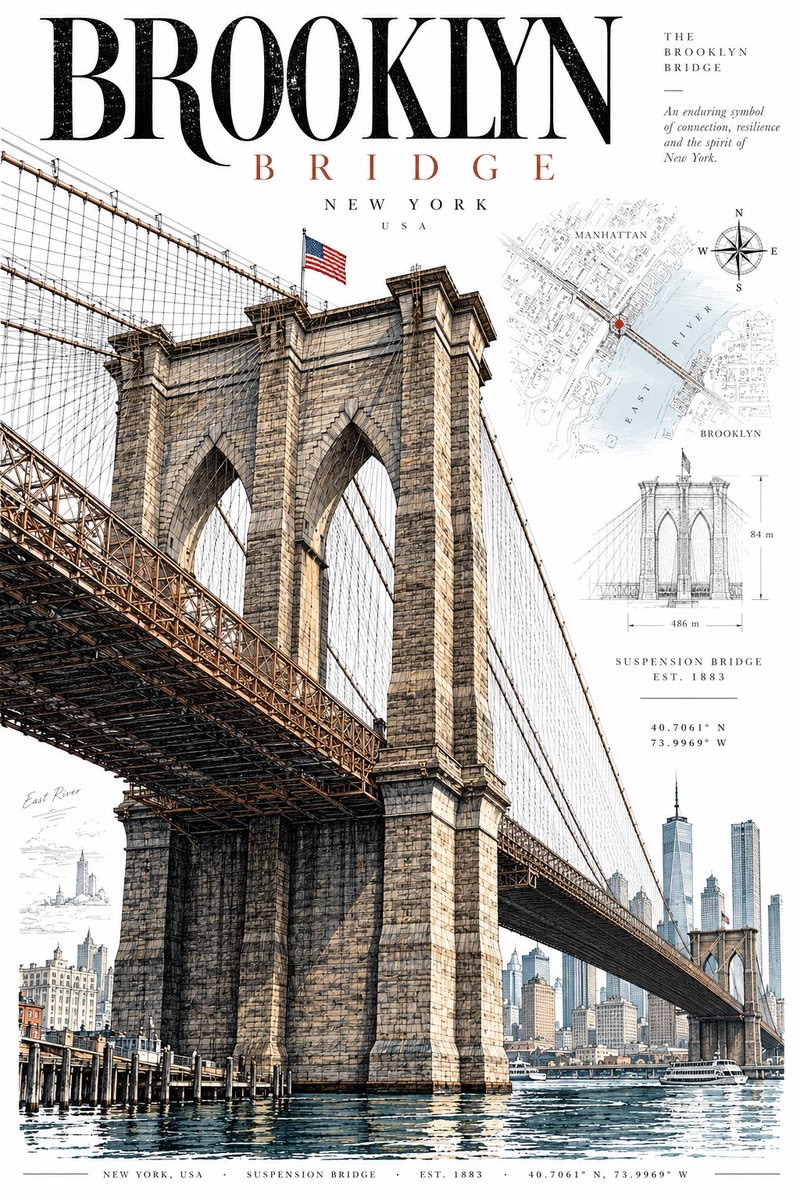
图片 · GPT Image 2.5
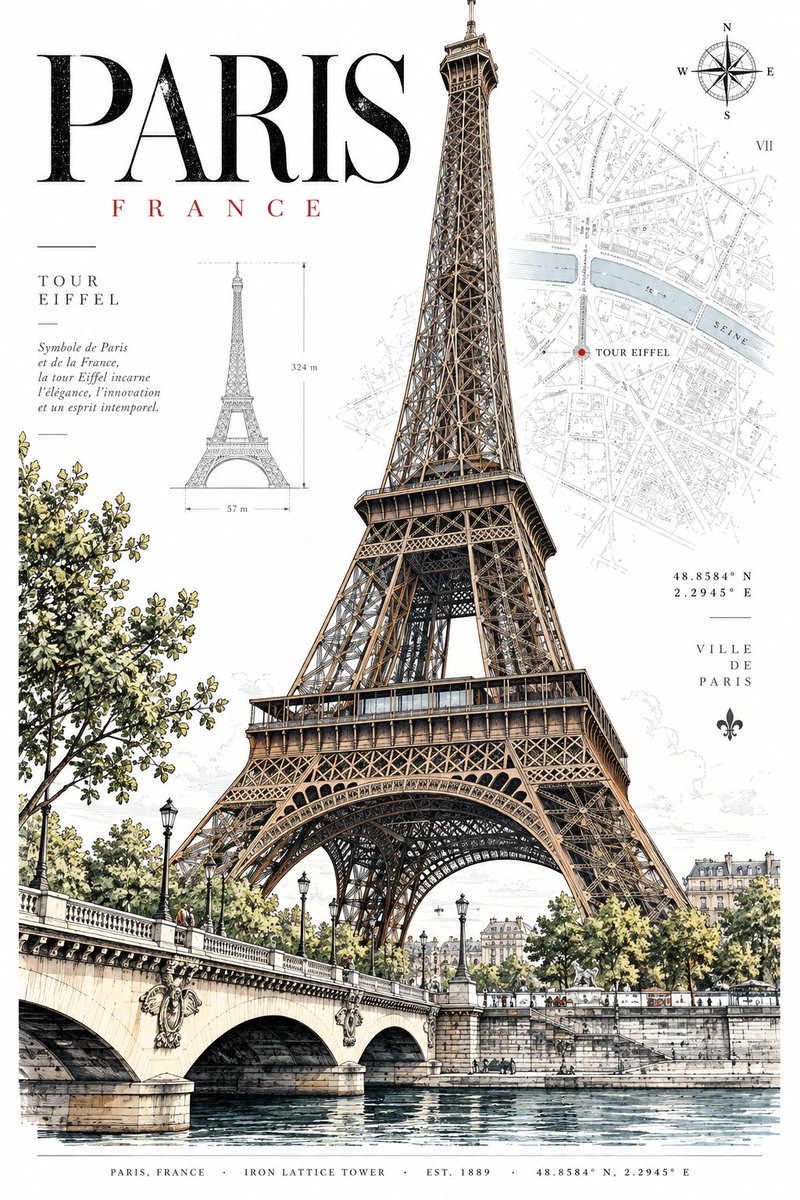
建筑地标博物馆风旅行明信片
将指定目的地转化为一张2:3竖幅建筑旅行明信片,以单一地标为视觉主体,结合精细钢笔线稿、有限色彩、淡化地图元素和克制的博物馆目录式排版。
 Saul Goodman@Goodmanprotocol
Prompt
目的地:[DESTINATION]

创作一张精致的竖版 2:3 建筑旅行明信片,展现 [DESTINATION]。

风格

高端现代编辑风明信片,带有微妙的复古气息。融合精准的建筑钢笔与墨水插画、克制的旅行图形、档案元素和现代平面设计。成品应显得有文化底蕴、历久弥新、富有建筑美感且值得收藏,而非像旅游纪念品。

主体

以一座与 [DESTINATION] 密切相关的标志性建筑、纪念碑、构筑物、街道立面或建筑地标为主角。让它成为清晰的视觉焦点,以可信的三分之四视角或略带戏剧性的建筑视角呈现。不要拼贴多个地标。

插画

使用极其精细的黑色或深石墨色线稿、细致的建筑排线、准确的比例,并保留微妙的手绘瑕疵。适当呈现窗户、立面、屋顶、柱子或装饰等易于辨认的结构细节。

色彩

建筑大部分保留为线稿,仅选择 2–4 种目的地特色色调进行平涂。色彩应精致且略显柔和。避免渐变、亮面渲染、照片级写实、过多米色和浑浊的棕褐色。

背景

采用干净的纯白背景,搭配微妙的档案元素,例如淡淡的地图、街道平面图、坐标、等高线、建筑示意图或极简的当地语言注释。这些元素应处于次要位置,并淡淡呈现。

构图

竖版 2:3 格式,地标约占画面 60–75%。留出充足的负空间,采用不对称的编辑式布局。若有助于构图,可进行雅致的裁切。

字体

加入克制的文字排版:

[LOCAL NAME]
[DESTINATION]

采用优雅的建筑风格或博物馆目录风格字体。在底部加入一条细小的信息栏,列出相关细节,例如城市 / 国家 · 建筑 · 建成年份 · 坐标。

细节与氛围

仅在合适时加入少量细小的环境元素——人物、自行车、树木、路灯、车辆或街景细节——主要用于体现尺度。

氛围:静谧的都市雅致、真实的文化气息、历史感与精致设计。

避免

旅游陈词滥调、卡通风格、虚假的建筑、地标拼贴、巨幅文字、过度装饰、厚重的复古滤镜、虚假邮戳、杂乱、3D 渲染和不必要的文字。

最终目标:创作一张历久弥新、细节丰富且高端的建筑明信片,宛如博物馆商店的收藏品或当代设计版画。
DESTINATION: [DESTINATION]
Create a sophisticated vertical 2:3 architectural travel postcard featuring [DESTINATION].
STYLE
Premium contemporary editorial postcard with subtle vintage influence. Combine precise architectural pen-and-ink illustration, restrained travel graphics, archival details, and modern graphic design. The result should feel cultured, timeless, architectural, and collectible—not like a tourist souvenir.
MAIN SUBJECT
Feature ONE iconic building, monument, structure, street façade, or architectural landmark strongly associated with [DESTINATION]. Make it the clear visual hero, shown from a believable three-quarter or slightly dramatic architectural perspective. No landmark collage.
ILLUSTRATION
Use exceptionally fine black or dark graphite linework, detailed architectural hatching, accurate proportions, and subtle hand-drawn imperfections. Include recognizable structural details such as windows, façades, roofs, columns, or ornaments where appropriate.
COLOR
Keep much of the architecture as line art with selective flat color using only 2–4 destination-specific tones. Colors should be sophisticated and slightly muted. Avoid gradients, glossy rendering, photorealism, excessive beige, and muddy sepia.
BACKGROUND
Use a clean pure white background with subtle archival elements such as faint maps, street plans, coordinates, contour lines, architectural diagrams, or minimal local-language annotations. Keep these elements secondary and lightly faded.
COMPOSITION
Vertical 2:3 format, with the landmark occupying roughly 60–75% of the artwork. Use generous negative space and an asymmetric editorial layout. Allow tasteful cropping when it improves the composition.
TYPOGRAPHY
Add restrained typography:
[LOCAL NAME]
[DESTINATION]
Use elegant architectural or museum-catalogue-inspired typography. Add a tiny bottom information strip with relevant details such as CITY / COUNTRY · ARCHITECTURE · EST. YEAR · COORDINATES.
DETAILS & MOOD
Add only a few tiny contextual elements—people, bicycles, trees, lamps, vehicles, or street details—when appropriate, mainly to establish scale.
Mood: quiet urban sophistication, cultural authenticity, history, and refined design.
AVOID
Tourist clichés, cartoon styling, fake architecture, landmark collages, giant typography, excessive decoration, heavy vintage filters, fake stamps, clutter, 3D rendering, and unnecessary text.
FINAL GOAL: A timeless, highly detailed, premium architectural postcard that feels like a museum-shop collectible or contemporary design print.
使用建议
使用建议:将[DESTINATION]替换为具体城市或目的地,并提供对应的[LOCAL NAME];如需更准确的建筑细节,可补充地标名称、建成年份与坐标等信息。
信息
- 类型
- 图片
- 模型
- GPT Image 2.5
- 许可
- Source-author-rights
- 发布时间