图片 · GPT Image 2.5
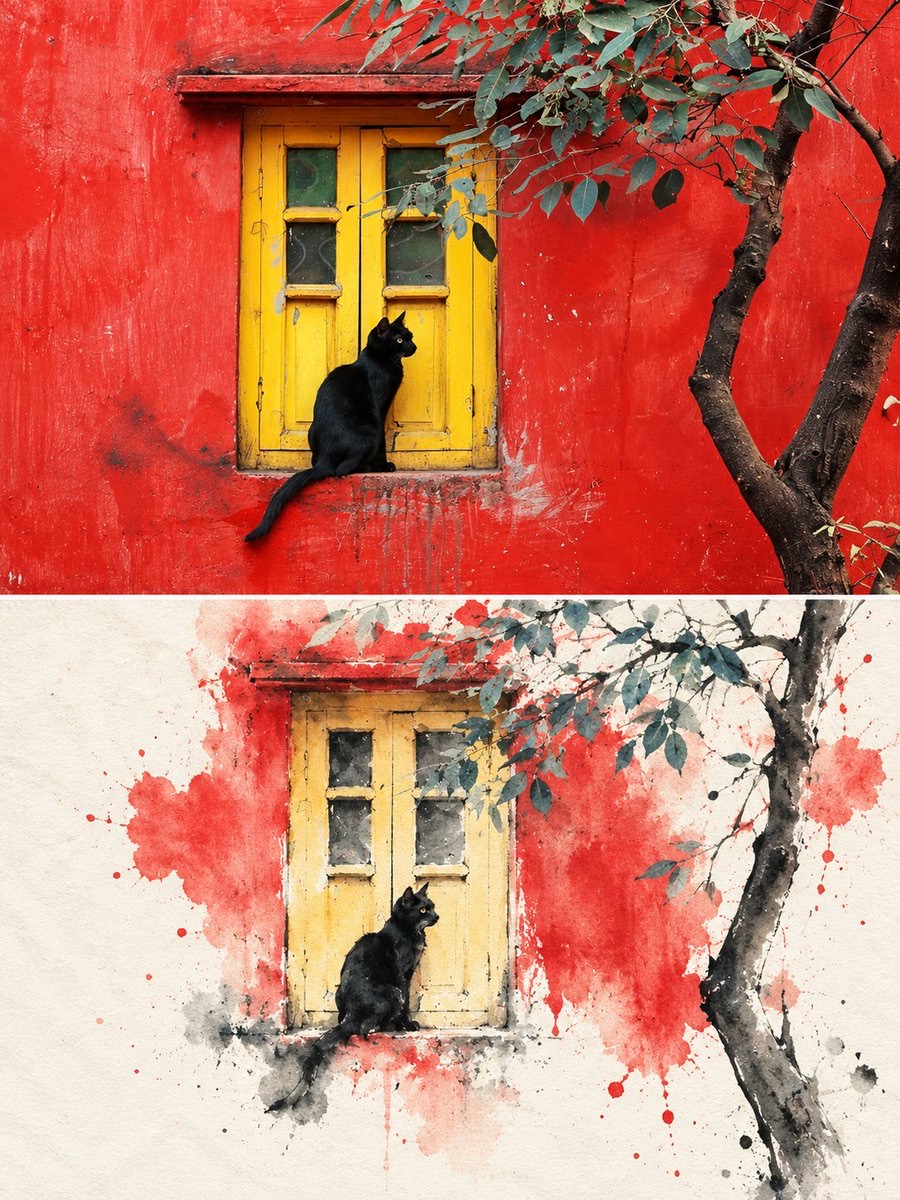
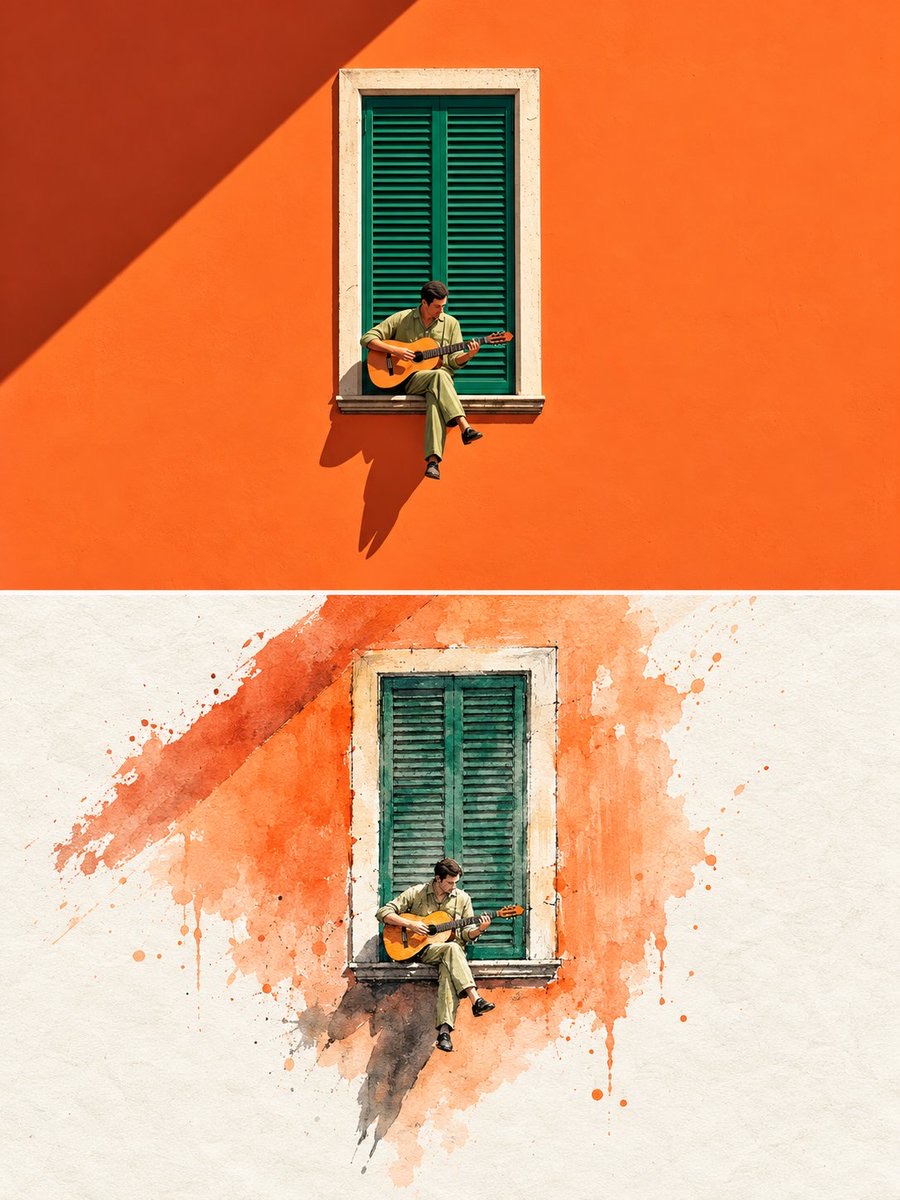
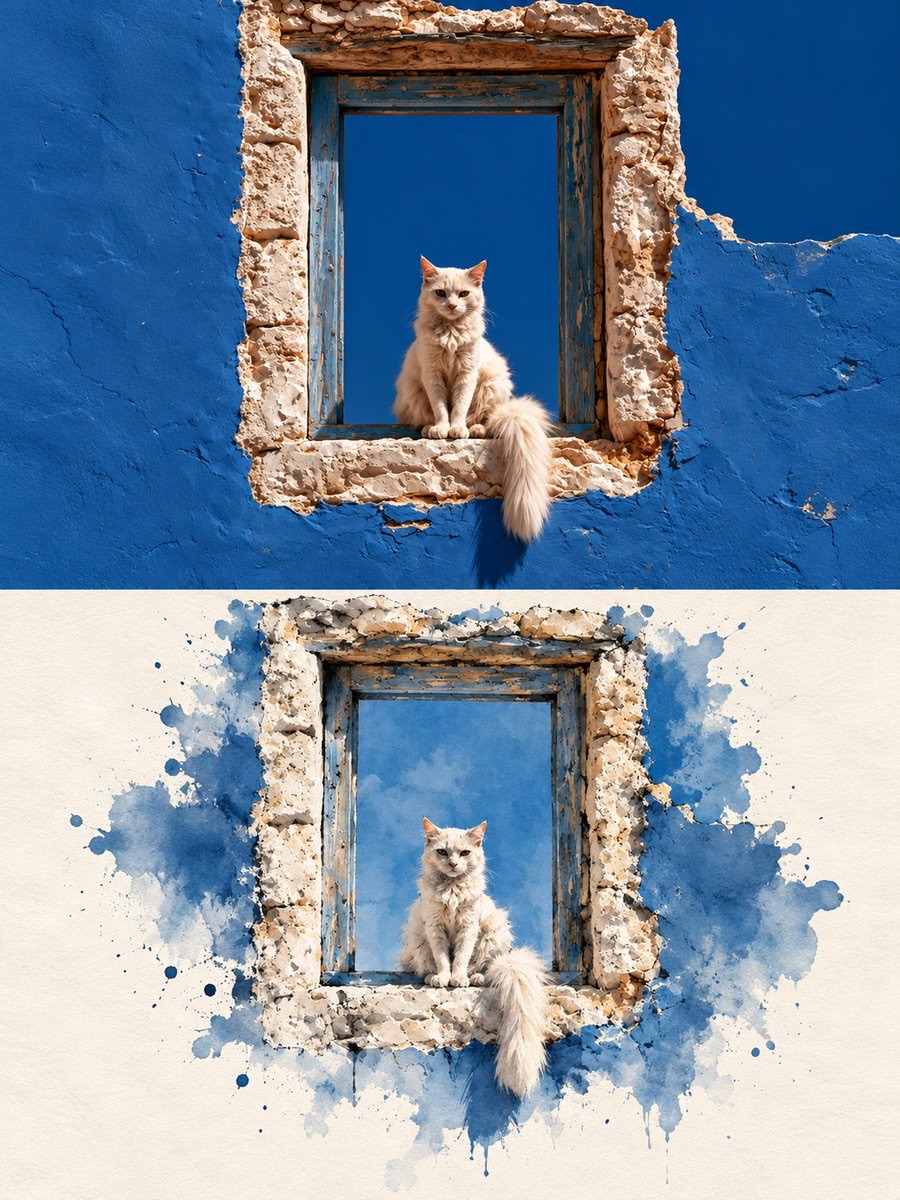
分屏水墨重构艺术海报
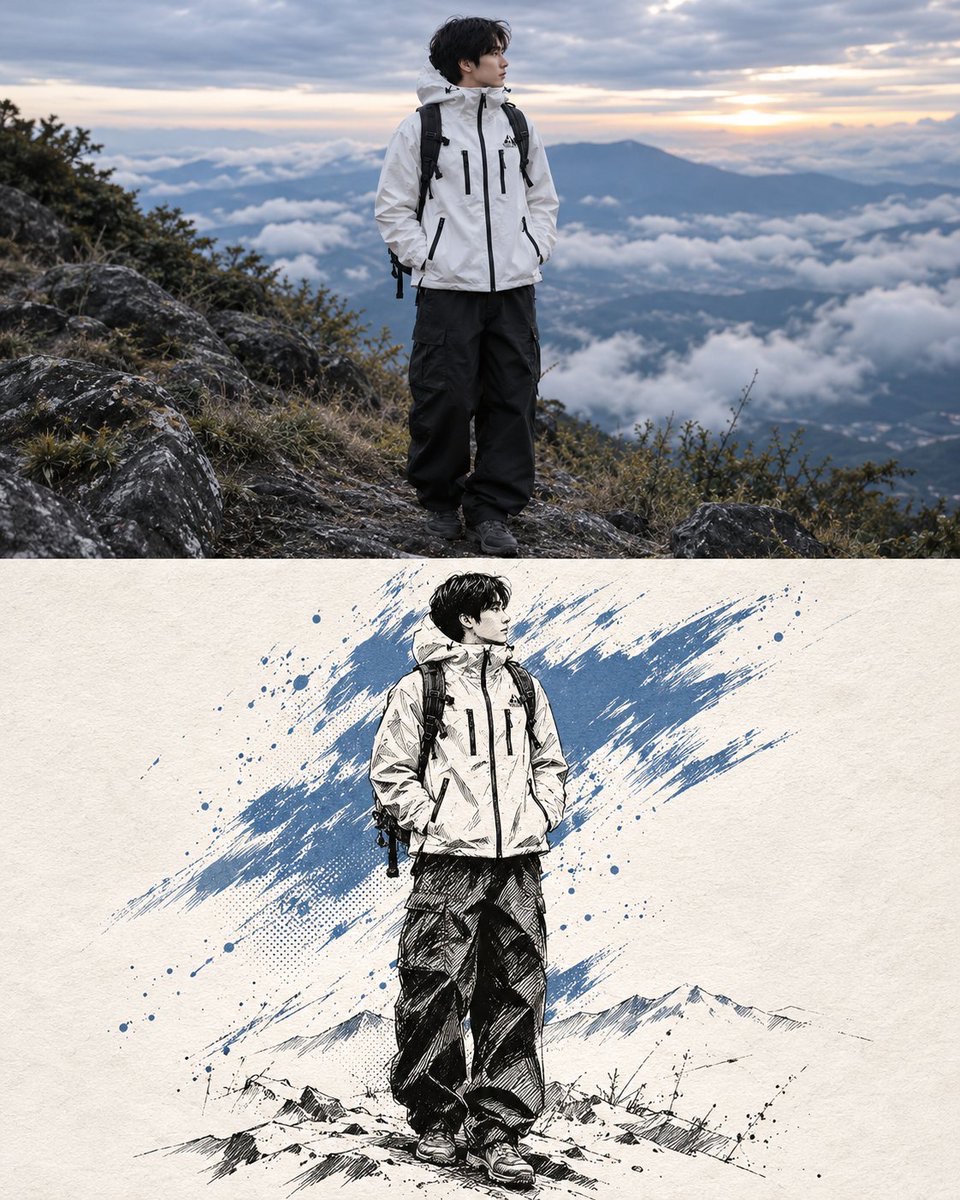
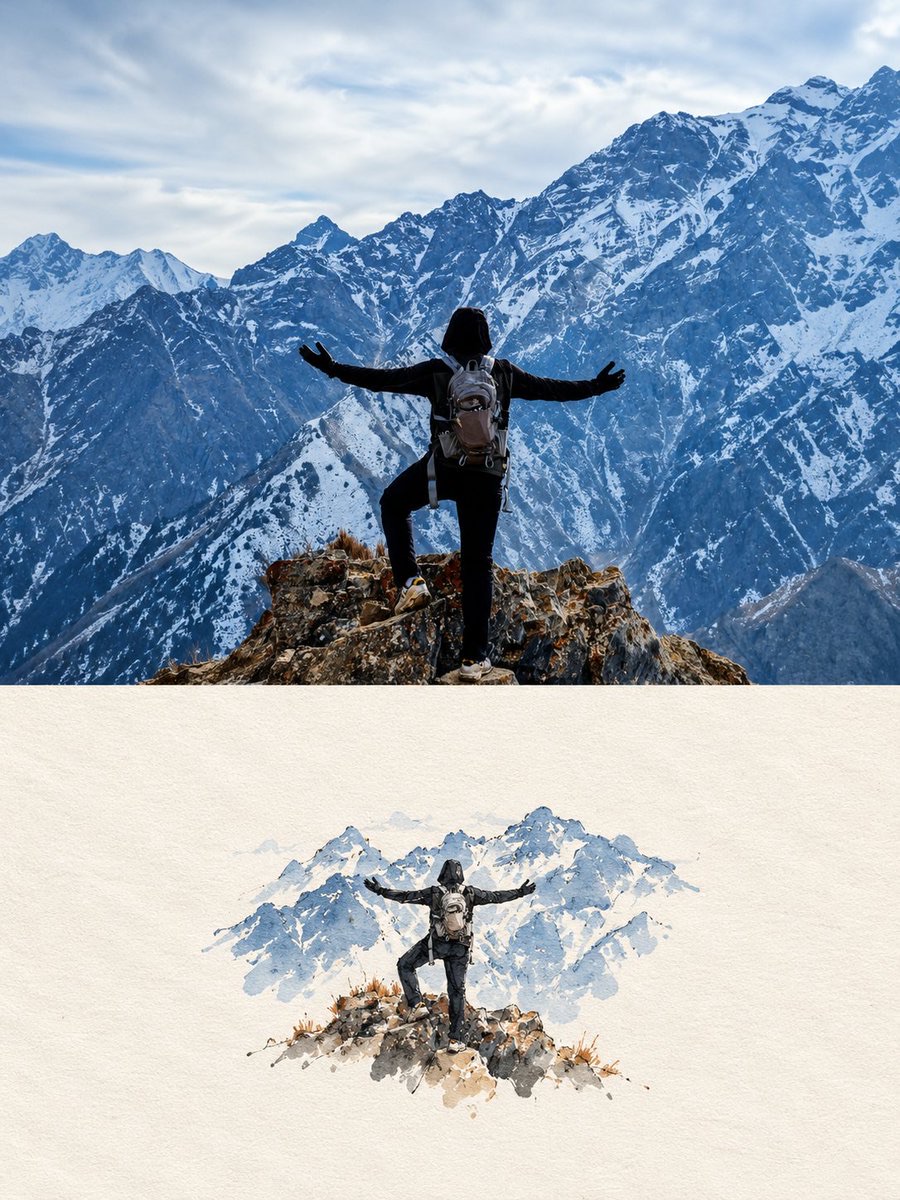
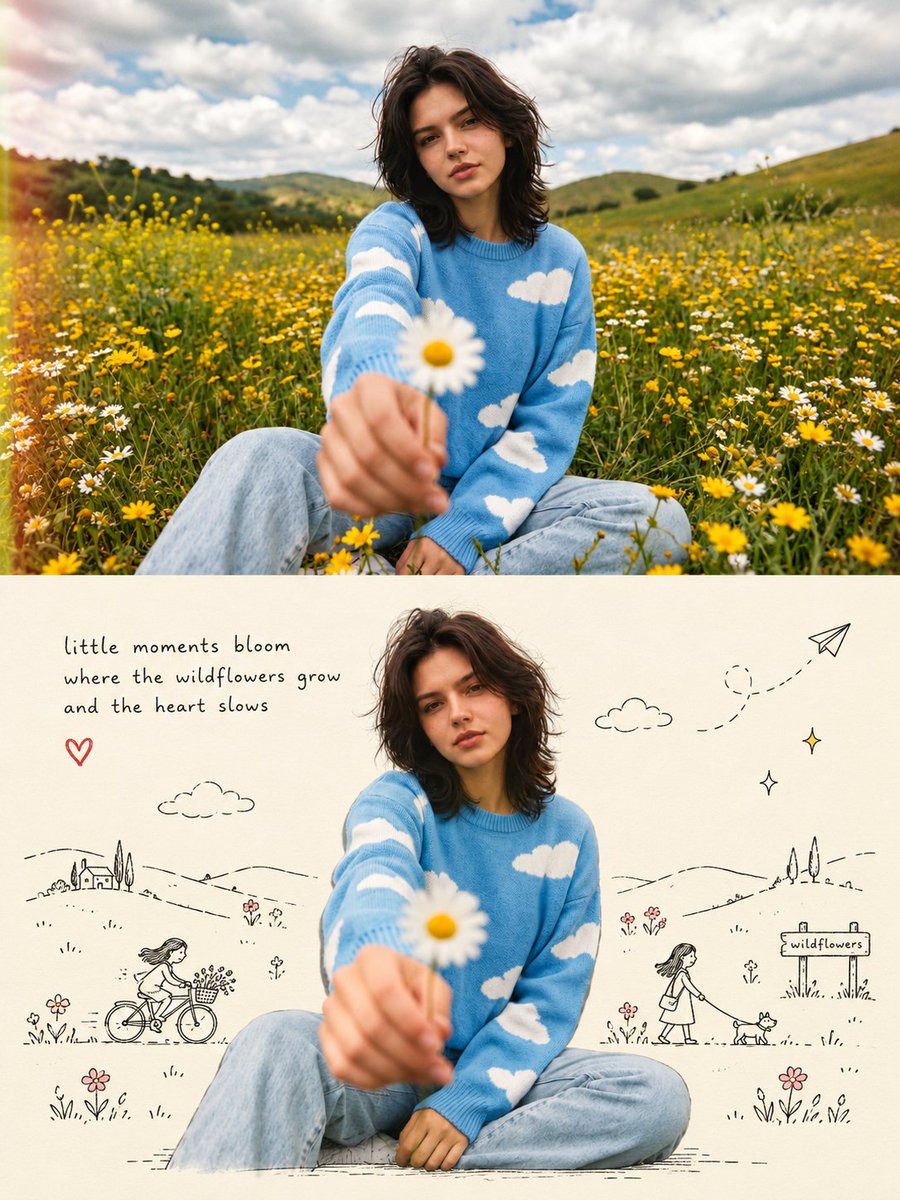
将一张主体照片与其极简水墨意象重构上下分屏呈现,形成兼具对应关系、东方审美与展览感的竖幅视觉作品。
 Harboris@harboriis
Prompt
分屏水墨重构
3:4 竖幅构图 · 照片 / 水墨分屏 · 当代东方美学
画面采用 3:4 竖幅构图,分为两个区域,严格按照 1:1 的比例划分,各占画面的 50%。
上部区域——原始照片拍摄区
保留主体的身份特征、结构、透视、真实材质、自然光线和原有色彩氛围,仅进行轻微的高端调色与画面净化,呈现艺术杂志或展览摄影的质感。可适度扩展背景以适应画面尺寸,但不得拉伸、扭曲或重塑主体,也不得改变主体的结构、姿势和核心构图。
下部区域——极简水墨重构区
首先提炼主体最令人印象深刻的细节,如轮廓、结构、走势、透视、节奏和氛围,然后将同一场景重构为极简水墨材质的风景。不要照搬照片细节,不要写实复刻,只保留最易辨认的结构与神韵,让人一眼就能看出下部区域与上方原始照片之间的对应关系。
下半部分整体以乳白色、暖白色或纸白色为底,带有细腻的纸纤维和自然纹理。主体以水墨晕染、干湿交融、飞白、渗化、积墨和留白来重构,形成安静、克制而富有诗意的东方视觉效果。去除次要细节,只保留最鲜明的轮廓、结构转折、空间层次与气息;不追求写实的完整,而是通过概括、提炼,留下余韵。用墨以黑、灰、淡墨为主,层层递进,浓淡和节奏各有变化。
可从原图提取最鲜明的色彩,作为少量染色或着色点缀,但不要机械复刻色值。局部可以转化为清透的蓝灰、远山蓝、柔和金色、暖黄、朱红、浅青等,以突出视觉重点和情绪节奏,但整体构图仍以墨色和留白为主。避免沉闷、厚重、陈旧的棕色调、过度装饰和俗艳的色彩搭配。
核心主体区域应更精致、更集中,边缘则逐渐松散、断开、隐去、散开,借助大面积留白形成呼吸感。构图下半部分约占 30%–45%,其余留作大面积留白。构图可以偏置、框取、悬置或略微裁切,但必须保持不对称的平衡感与高端编辑感。留白并非空白,而是视觉结构的重要组成部分。宁可减少信息,也不要填满整幅画面,让主体像一方墨印或一件东方材质作品,陈列在页面之上。
文字处理
文字只允许极少量编辑性介入,不预设标题和数字。可从主体、地点、时间、动作、情绪或隐喻中提取少量词语或短句,静静地放在留白处或主体边缘。文字应克制、稀疏、留有呼吸感,不要喧闹或喧宾夺主。
整体呈现
当代东方美学、极简水墨重构、大面积艺术留白、小面积印章感、安静的编辑式版面与展览海报风格。避免复杂背景、堆砌真实细节、过度装饰、文字过多、模板化排版和填满画面的构图。
Split-Frame Ink Wash Reconstruction
3:4 vertical composition · photo / ink wash split · contemporary Eastern aesthetic
The image is in a 3:4 vertical composition, divided into two regions, with a strict 1:1 ratio, each taking up 50% of the image.
Upper Region — Original Photo Shoot Area
Preserves the subject's identity, structure, perspective, and true material, natural light, and original color atmosphere, with only slight high-end color grading and image purification, presenting it with the texture of art magazines or exhibition photography. It allows for a moderate expansion of the background to fit the screen size, but does not stretch, distort, or reshape the subject, without changing the subject's structure, posture, and core composition.
Lower Region — Minimalist Ink Wash Reconstruction Area
First, refine the subject with the most memorable details, such as the outline, structure, trend, perspective, rhythm, and atmosphere, and then reconstruct the same scene into a minimalist ink wash material landscape. Do not copy the photo details, do not make a realistic copy, only preserve the most recognizable structure and charm, allowing people to recognize the corresponding relationship between the upper region and the original photo at first glance.
The overall base of the lower half is milky white, warm white or paper white, with delicate paper fiber and natural texture. The main body is reconstructed in ink wash blending, dry-wet interplay, flying white, seepage, ink accumulation, and white space, forming a quiet, restrained, and poetic Eastern visual. Removing secondary details, only retaining the most distinctive contours, structural turns, spatial layers, and breath, not pursuing realistic completeness, but rather summarizing, refining, and leaving a lingering impression. The use of ink in black, gray, and light ink tones, layered and progressing, with varying intensities and rhythms.
The most vibrant colors can be extracted from the original image to create a few spots of dyeing or coloring, without mechanically replicating the color values. The colors can be transformed locally into clear blue-gray, distant blue, soft gold, warm yellow, vermilion red, light cyan, etc., to emphasize the main focus and emotional rhythm, but the overall composition is still dominated by ink tones and negative space. Avoiding dull, heavy, old brown, excessive decoration, and vulgar color combinations.
The main core areas should be more refined and concentrated, with edges gradually loosening, breaking away, disappearing, and scattering, forming a sense of breathing with the large negative space. The lower half of the composition should account for about 30%–45%, with the rest reserved for large negative spaces. The composition can be biased, framed, suspended, or slightly cut, but must maintain an asymmetrical balance and a high-end editorial feel. Negative space is not blank, but an important component of the visual structure. It is better to reduce information than to fill the entire image, so that the main focus looks like an ink seal or an oriental material work displayed on a page.
Text Treatment
Text is only allowed a very small amount of editing intervention, without preset titles and numbers. A small number of words or short sentences can be extracted from the subject, location, time, action, emotion, or metaphor, and quietly placed in the blank area or the edge of the subject. The text should be restrained, sparse, and have a sense of breathing, not noisy or dominant.
Overall Presentation
Contemporary Eastern aesthetics, minimalist ink wash reconstruction, large-scale art blank, small-scale seal impression, quiet editing layout and exhibition poster style. Avoid complex backgrounds, piled-up real details, overly decorative, excessive text, template layout and filled composition.
使用建议
使用建议:上传一张主体结构清晰、光线自然的照片,按提示生成3:4竖幅分屏构图;重点检查上下区域的主体对应关系、水墨留白比例、局部点染色彩与文字克制程度。