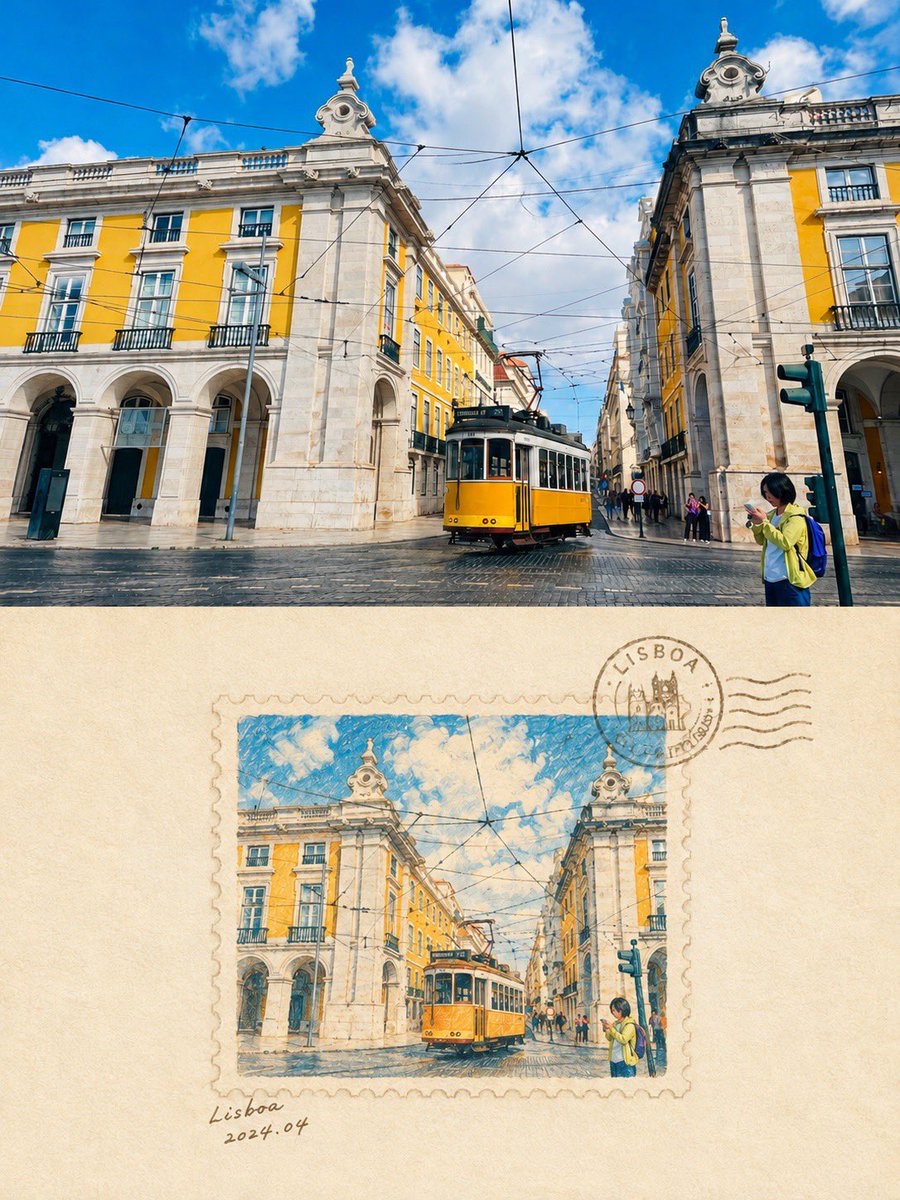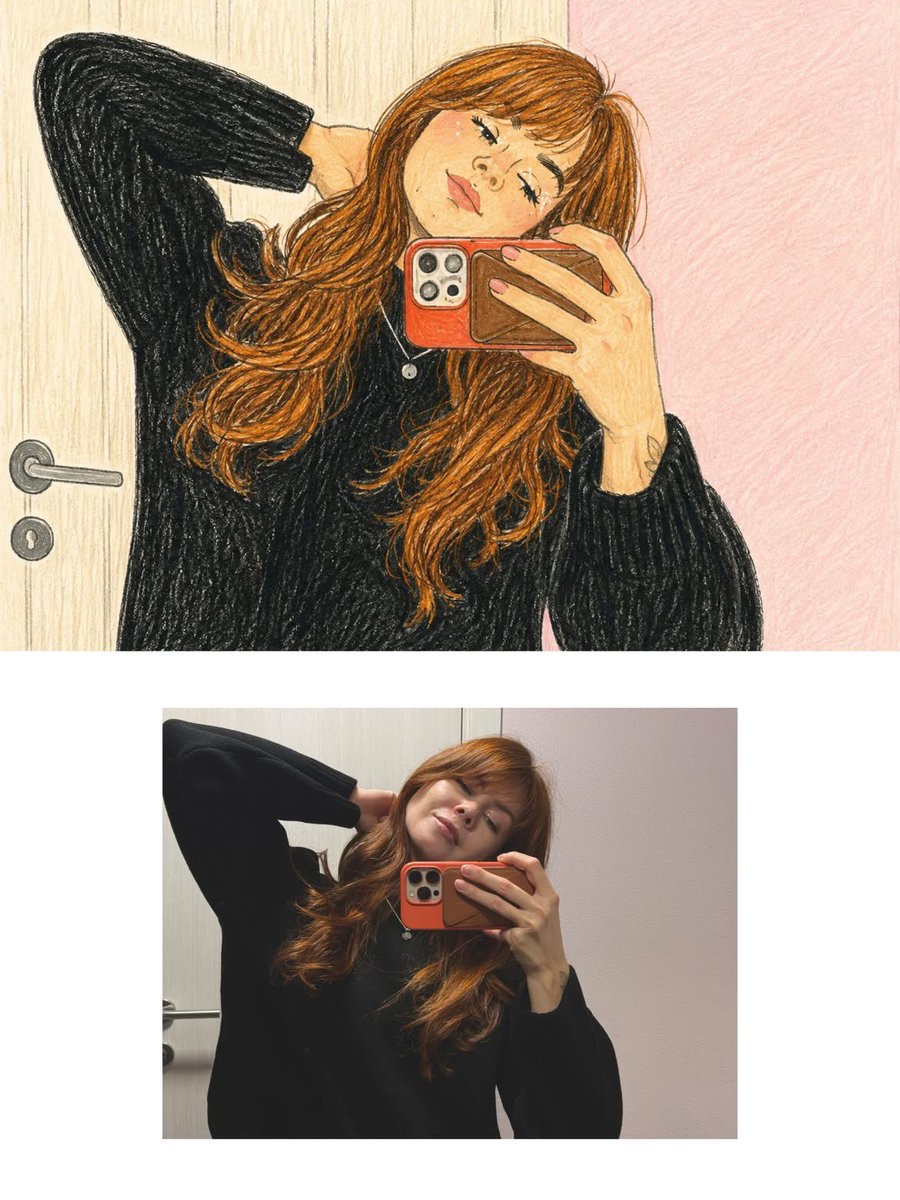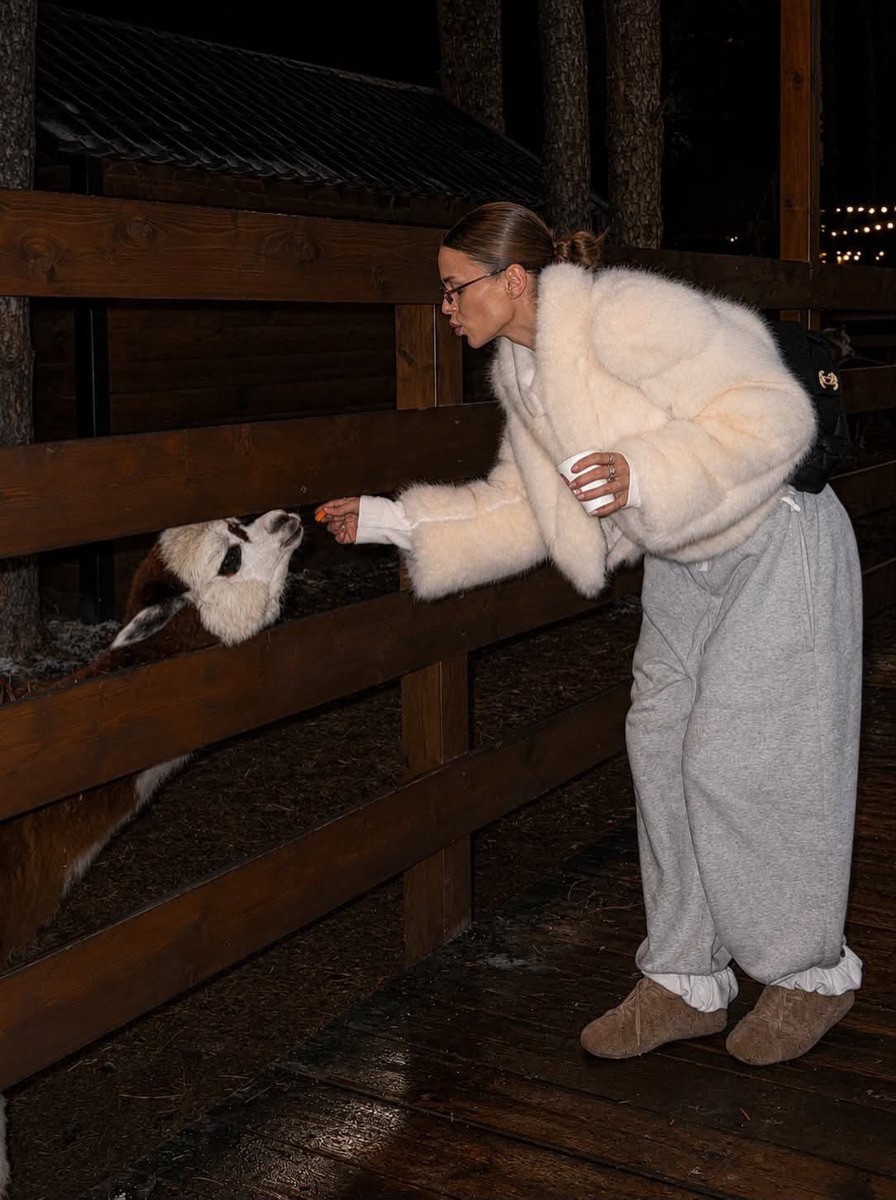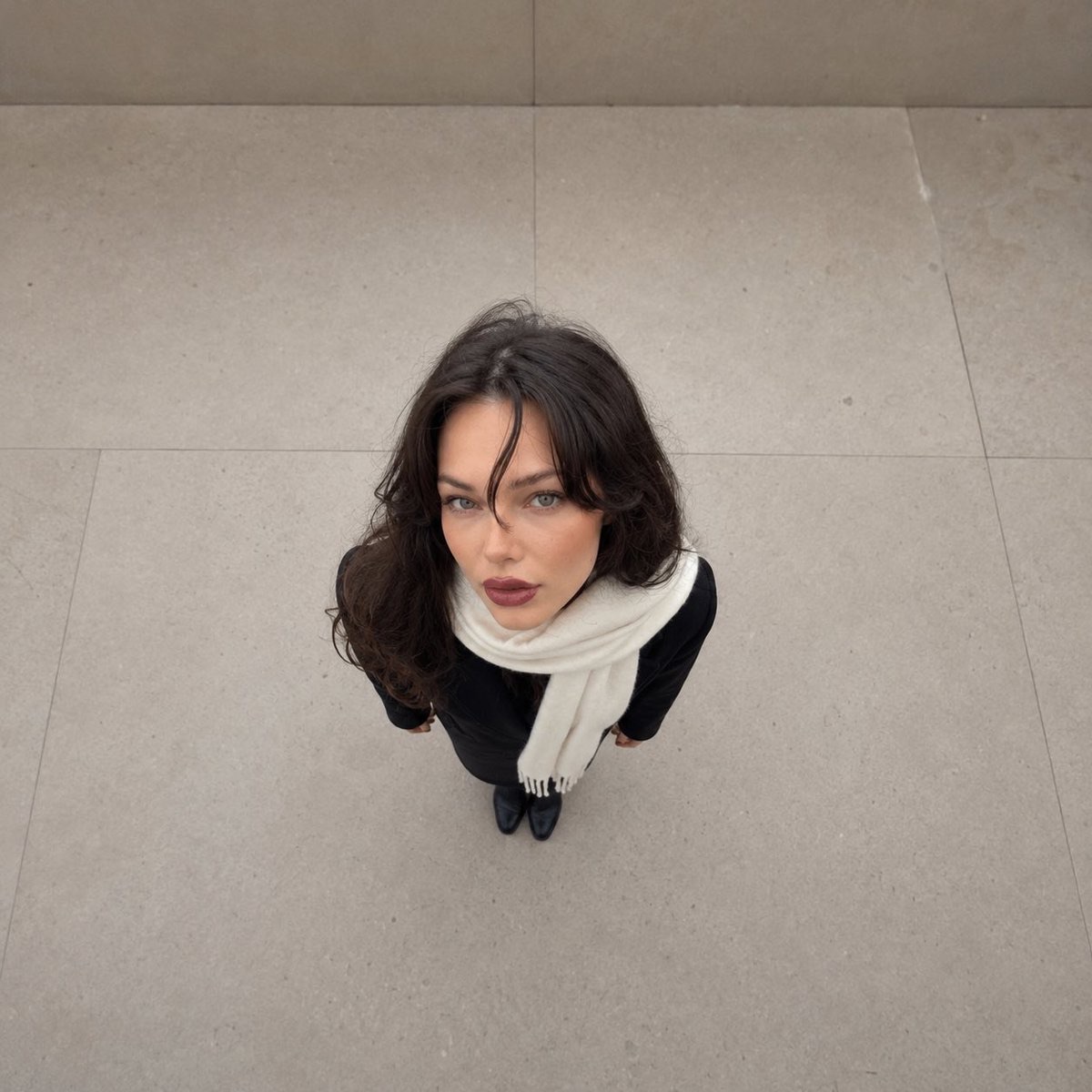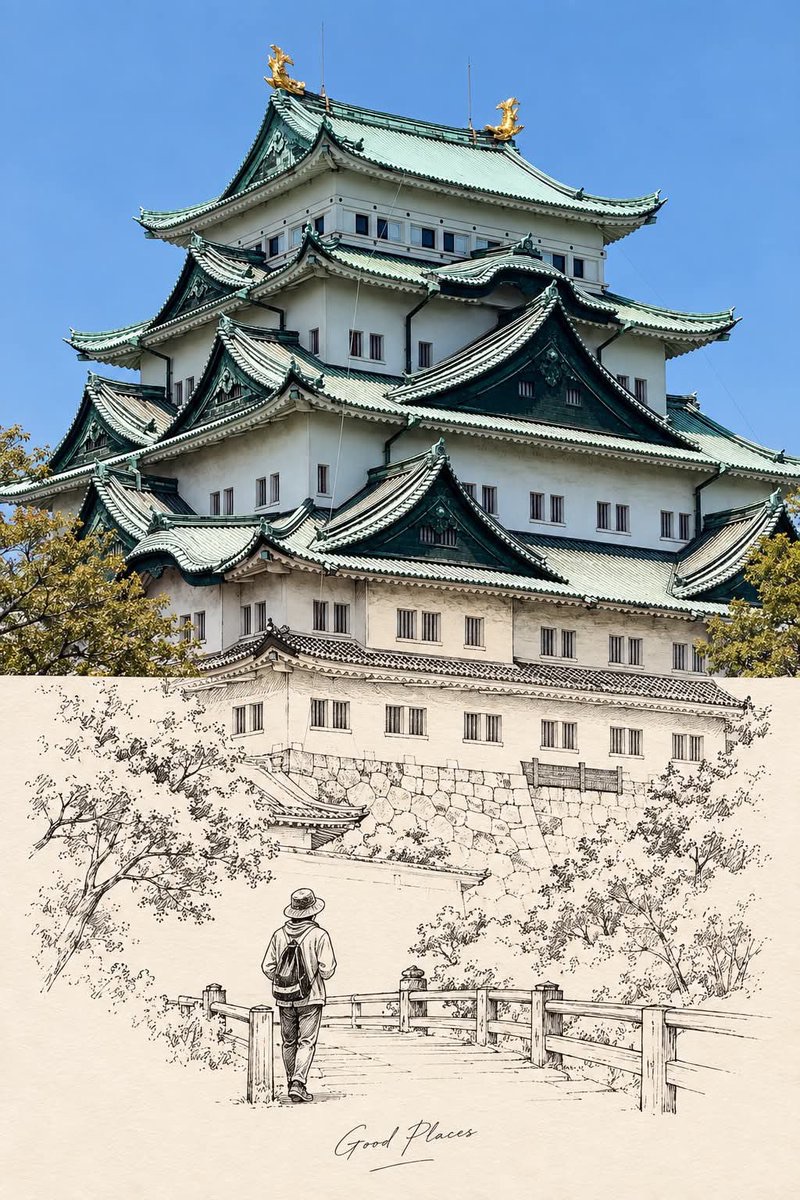
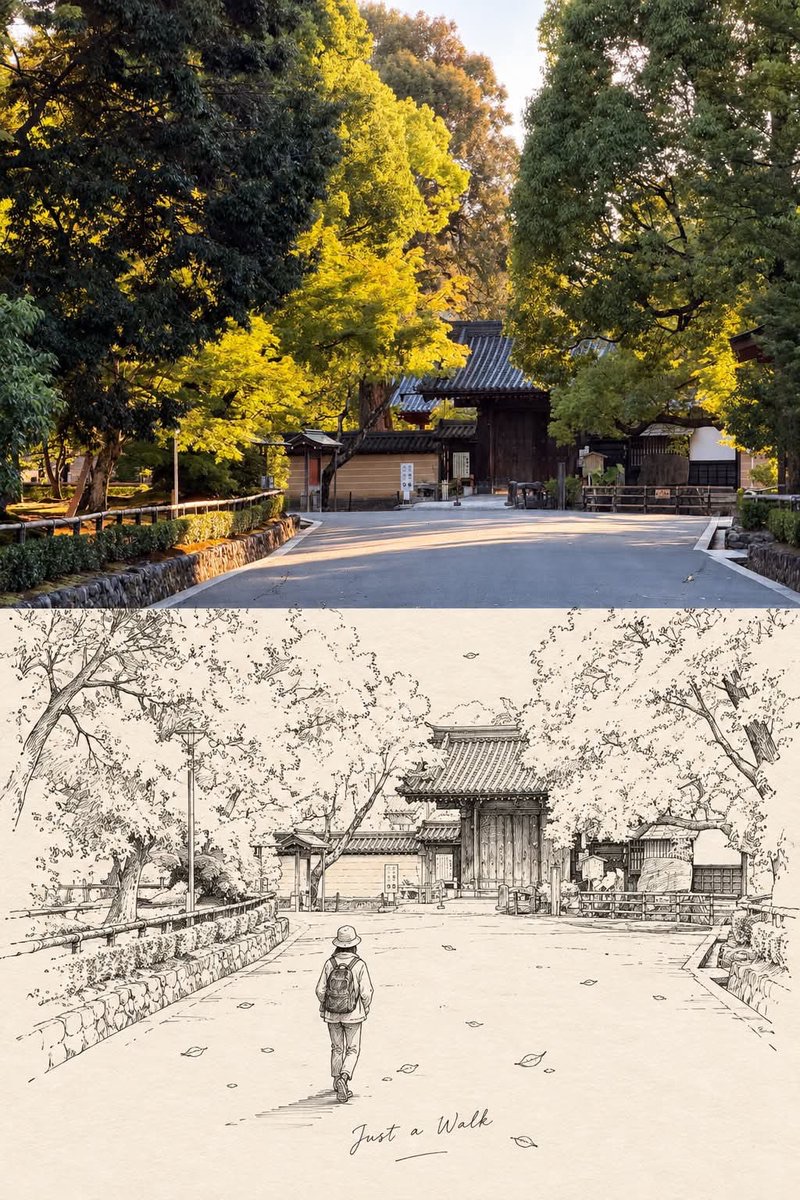
图片 · GPT Image 2
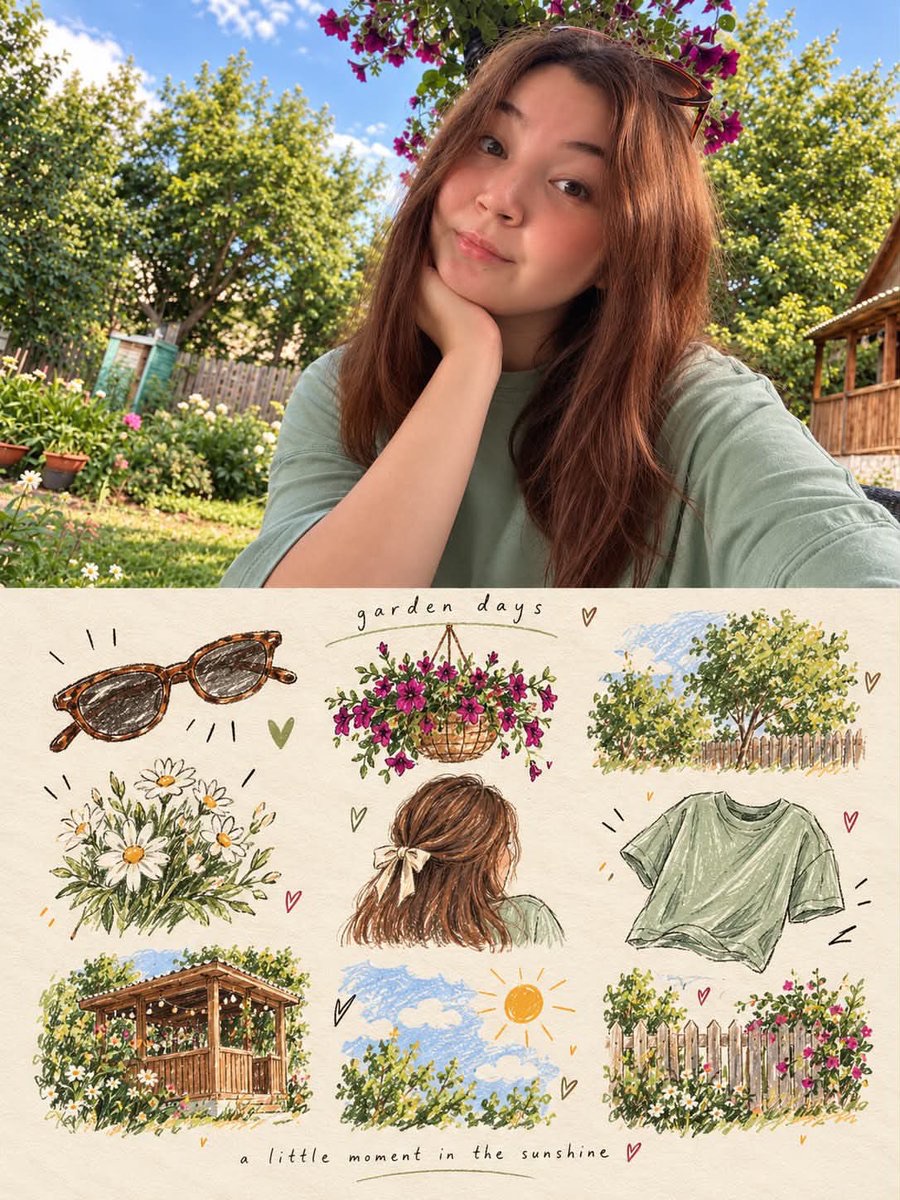
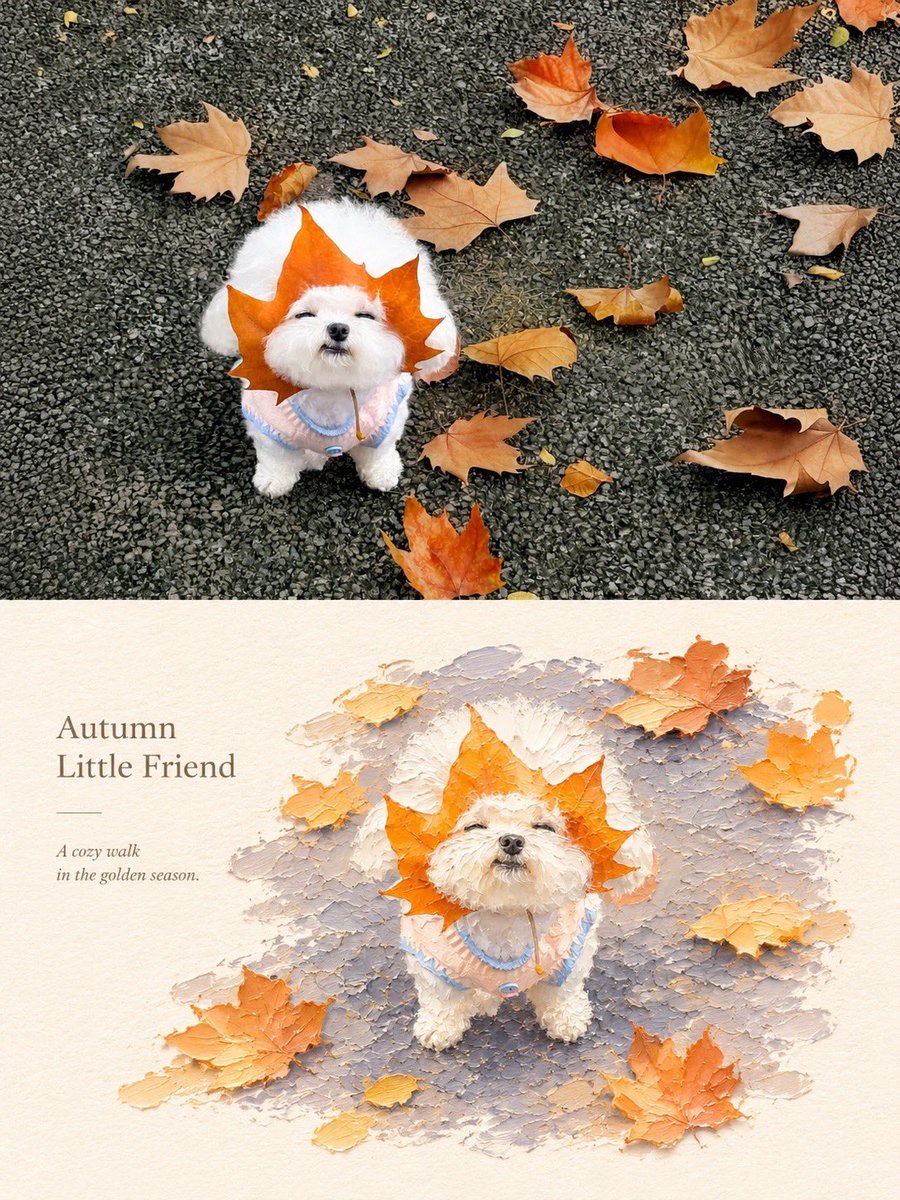
照片与线稿衔接的诗意旅行海报
将用户上传的照片置于海报上半部,并把其中一个真实视觉元素自然延伸为下半部的极简黑色线稿角色互动场景,形成克制而有概念感的旅行海报。
 Sairah@Sairah_0
Prompt
照片 × 线稿|实景延伸旅行海报

将上传的照片转化为“照片 × 线稿|实景延伸旅行海报”。

画布必须采用竖版 2:3 宽高比,水平划分为两个完全相等的 50/50 部分,分割线精确位于正中央。

上方 50%——原始照片

上半部分直接使用上传的原始照片。

保留原照片中的:

* 主体和人物
* 建筑、动物和物体
* 光线和色彩
* 构图
* 摄影细节和清晰度

不要重绘、模糊、拉伸、镜像、复制或随意改动照片。

仅在必要时,为适应所需画幅,允许进行最小限度的等比例裁剪或自然的环境延伸。

衔接——照片 → 线稿

分析原始照片,找出一个最适合延伸的真实视觉元素,例如:

水面、道路、绳索、缆线、光束、桥、码头、树枝、山坡、建筑轮廓、系船柱、倒影,或其他自然存在的元素。

该元素必须从它在原始照片中的确切位置开始,连续地穿过中央分割线,并逐渐从写实的摄影质感过渡为简洁的黑色线稿。

延伸出的元素必须与下半部分的小型插画人物产生清晰的视觉互动。

中心线处不得出现缺口、错位、重新开始或断开的过渡。

插画人物不能让人觉得与照片无关或相互割裂。

下方 50%——极简线稿

使用干净、中性的暖白/象牙色纸张背景,带有极其细微的细纤维纹理。

添加一个黑色钢笔线条绘制的小人物,约占海报总高度的 7–10%。

根据照片内容创作一个原创动作。例如,人物可以:

拉、握、折、推、攀爬、观察、行走、休息,或以其他有意义的方式与延伸出的照片元素互动。

人物应具有:

* 没有明确的面部特征
* 高度简化的服装和道具
* 纤细的黑色钢笔线条
* 略显不规则的手绘笔触
* 松弛自然的线条

手写短句

根据照片的氛围和内容,生成一句温柔的、2–5 个单词的英文短句。

以小号手写字体呈现。

这句话应作为含蓄的情感注脚或诗意的题注,而不是主标题。

整体风格

最终效果应给人以下感觉:

高级、克制、诗意、编辑感、极简,并且构思巧妙。

将照片与线稿之间的过渡作为一种含蓄的视觉隐喻。

保持充足的留白。

对于每一张新上传的照片,都要专门根据该图像创作不同的衔接概念。

禁止事项

不要创作:

* 照片与插画两部分完全脱节
* 悬浮的人物
* 孤立的图标
* 过大的人物
* 细致的面部特征
* Q版或动漫人物
* 粗重的轮廓线
* 密集的素描
* 对整个场景的完整线稿复刻
* 信息图式构图
* 拼贴网格
* 邮票样式的元素
* 装饰性边框
* 水印
* 手机界面元素
* 过于发黄的纸张
* 过大的文字
Photo × Line Art | Real-Scene Extension Travel Poster
Transform the uploaded photo into a “Photo × Line Art | Real-Scene Extension Travel Poster.”
The canvas must use a vertical 2:3 aspect ratio, divided horizontally into two exactly equal 50/50 sections, with the dividing line positioned precisely at the center.
TOP 50% — ORIGINAL PHOTO
Use the original uploaded photograph directly in the upper half.
Preserve the original:
* subjects and people
* buildings, animals, and objects
* lighting and colors
* composition
* photographic detail and sharpness
Do not redraw, blur, stretch, mirror, duplicate, or arbitrarily alter the photograph.
Only minimal proportional cropping or natural environmental extension is allowed when necessary to fit the required format.
CONNECTION — PHOTO → LINE ART
Analyze the original photograph and identify one real visual element that is best suited for extension, such as:
water, a road, rope, cable, beam of light, bridge, pier, tree branch, mountain slope, architectural contour, mooring post, reflection, or another naturally occurring element.
This element must begin from its exact position in the original photograph, cross the center dividing line continuously, and gradually transition from realistic photographic texture into simple black line art.
The extended element must have a clear visual interaction with the small illustrated character in the lower half.
There must be no gap, misalignment, restart, or disconnected transition at the center line.
The illustrated character must not feel unrelated to or separate from the photograph.
BOTTOM 50% — MINIMAL LINE ART
Use a clean, neutral warm-white / ivory paper background with an extremely subtle fine-fiber texture.
Add one small black pen-line character, occupying approximately 7–10% of the total poster height.
Create an original action based on the content of the photograph. For example, the character may be:
pulling, holding, folding, pushing, climbing, observing, walking, resting, or interacting with the extended photographic element in another meaningful way.
The character should have:
* no clearly defined facial features
* highly simplified clothing and props
* thin black pen lines
* slightly irregular, handmade strokes
* relaxed and natural linework
HANDWRITTEN PHRASE
Based on the mood and content of the photograph, generate a gentle 2–5 word English phrase.
Render it in small handwritten lettering.
The phrase should function as a subtle emotional note or poetic caption — not as a main headline.
OVERALL STYLE
The final result should feel:
premium, restrained, poetic, editorial, minimal, and conceptually clever.
Use the transition between photography and line art as a subtle visual metaphor.
Maintain generous negative space.
For every new uploaded photograph, create a different connection concept based specifically on that image.
DO NOT
Do not create:
* completely disconnected photo and illustration sections
* floating characters
* isolated icons
* oversized characters
* detailed facial features
* chibi or anime characters
* thick/heavy outlines
* dense sketching
* a full line-art recreation of the entire scene
* infographic-style compositions
* collage grids
* postage-stamp elements
* decorative borders
* watermarks
* phone UI elements
* overly yellow paper
* oversized typography
使用建议
使用建议:上传一张主体和环境清晰的照片;确保照片中有适合延伸的道路、水面、建筑轮廓或其他连续元素。生成时重点检查中心分界处是否无缝衔接,并让英文短句保持低调、非主标题化。