图片
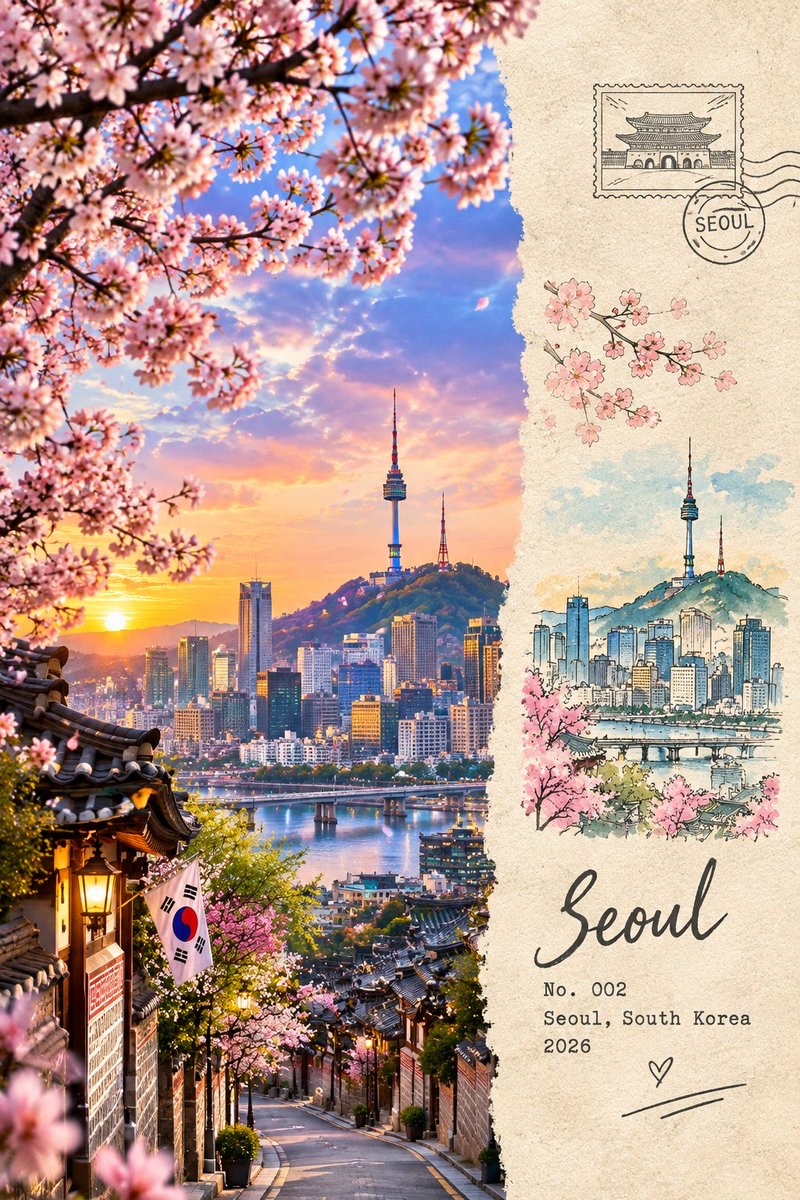
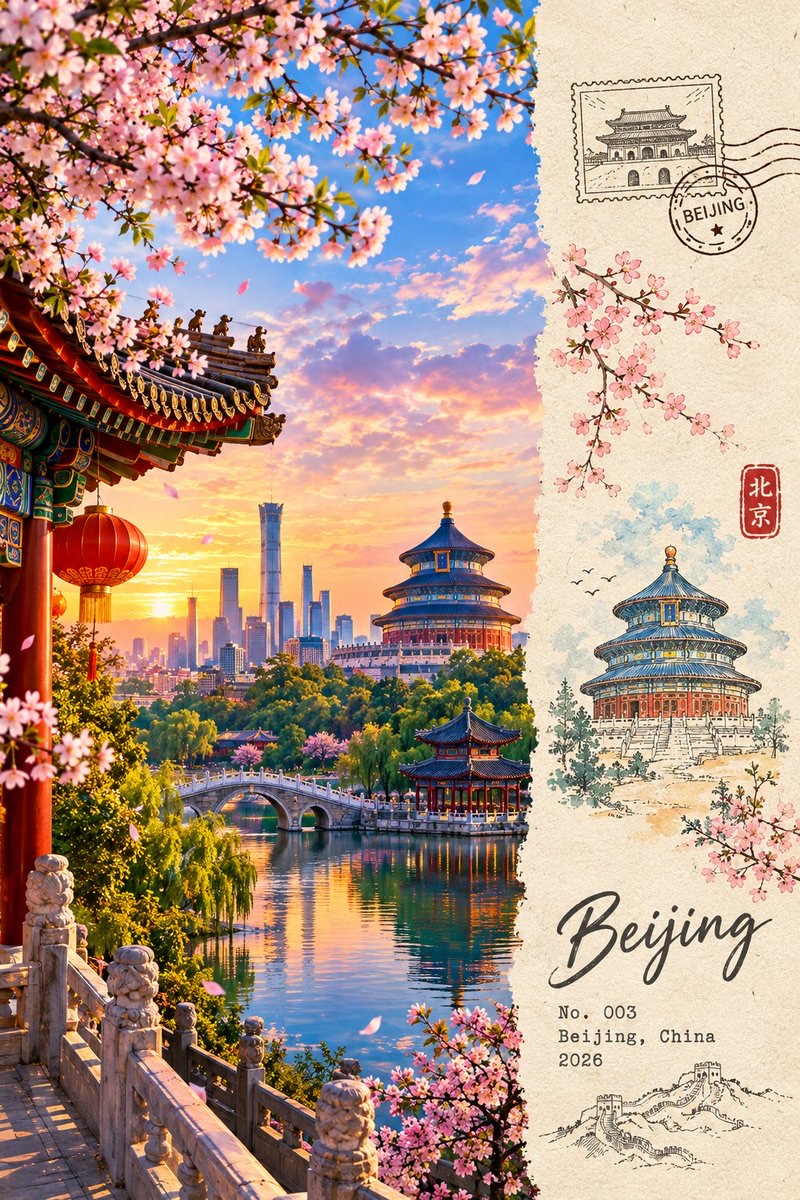
樱花连接首尔与北京的复古旅行明信片
将城市日落摄影、传统建筑与樱花意象融入撕边分栏明信片,结合复古纸张、邮票、取消戳和手绘地标装饰。
 Minahil@Minahil42298354
Prompt
竖向分割的旅行明信片美学:左侧是一张超写实的日落照片,前景以樱花枝条为框,画面中有传统东亚建筑与屋顶线条,挂着灯笼或传统韩国国旗横幅;一条宁静的倒影水道旁有一座拱桥,现代天际线与历史山丘或皇家寺庙相融合。照片沿竖向撕开,与右侧纹理细腻的奶油色复古明信片纸相接。右侧有一枚带传统建筑轮廓和城市邮戳的复古邮票、精致的水彩植物樱花素描、标志性地标的写意水墨与水彩插画(山丘上的首尔塔或天坛)、手写草书城市名称字体("Seoul" / "Beijing")、目录信息(“No. 002, Seoul, South Korea, 2026”)、一颗小小的墨绘爱心,以及一枚低调的中国印章(用于北京)。A split-vertical travel postcard aesthetic featuring a hyper-realistic sunset photograph on the left—framed by foreground cherry blossom branches, traditional East Asian architecture/rooflines with hanging lanterns or a traditional Korean flag banner, a calm reflective waterway with a arched bridge, and a modern skyline blending historic hills or imperial temples—torn vertically and joined to a textured cream-colored vintage postcard paper on the right. The right side features a retro postage stamp with a traditional building outline and city cancellation stamp, delicate watercolor botanical cherry blossom sketches, an expressive ink-wash/watercolor illustration of the iconic landmark (N Seoul Tower over hills or Temple of Heaven), handwritten cursive city name typography ("Seoul" / "Beijing"), catalog metadata ("No. 002, Seoul, South Korea, 2026"), a small ink heart sketch, and a subtle Chinese seal stamp (for Beijing).
使用建议
使用建议:在支持图像生成与文字排版的工具中使用;将城市名、地标、年份和邮政信息替换为目标旅行地点,并在生成后人工校正英文或中文文字、印章与邮票细节。