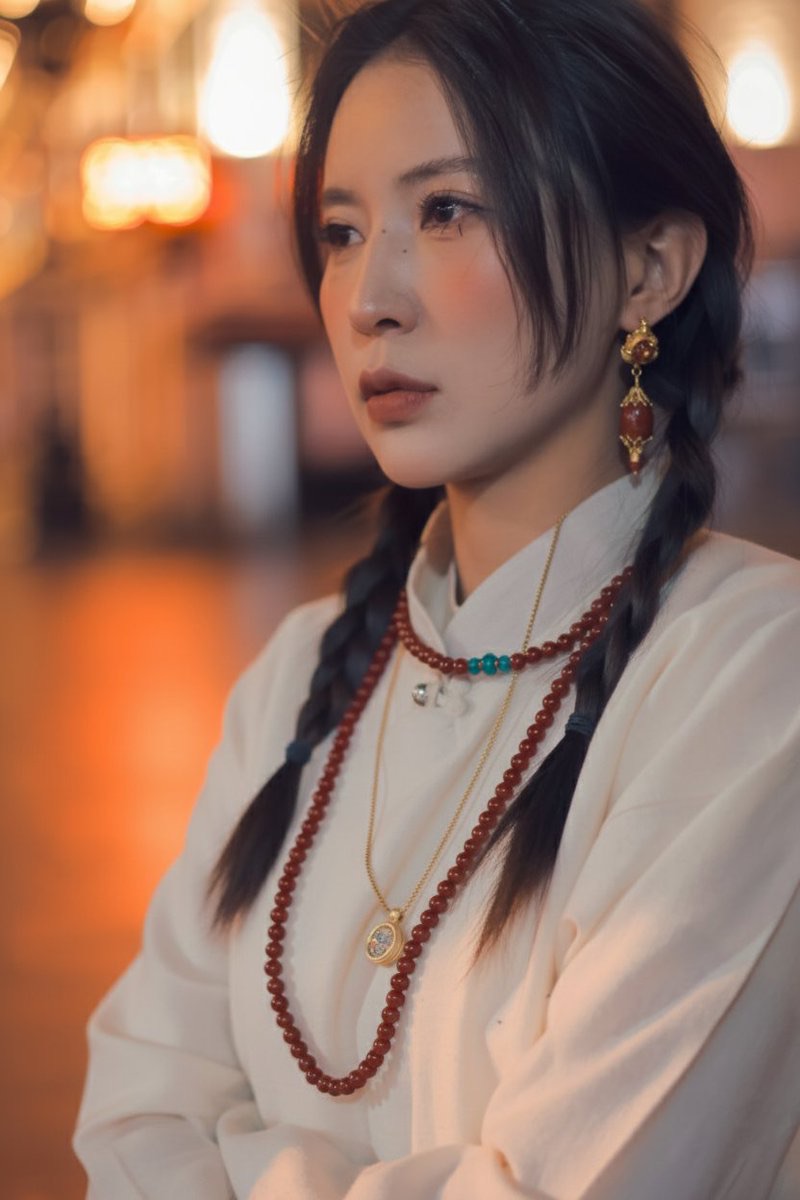
图片
留白感记忆水彩肖像
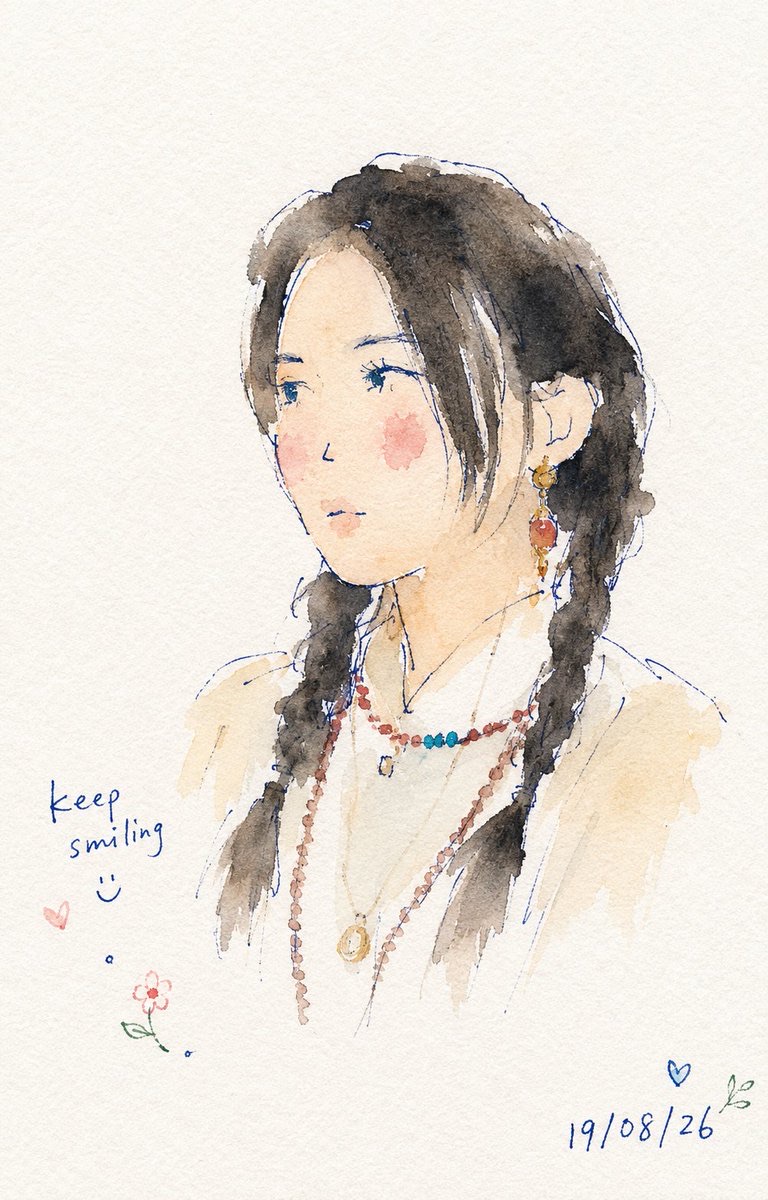
将用户上传的人像照片转化为一幅带有蓝色墨线、湿润水彩色块和大量纸张留白的朴拙记忆肖像。
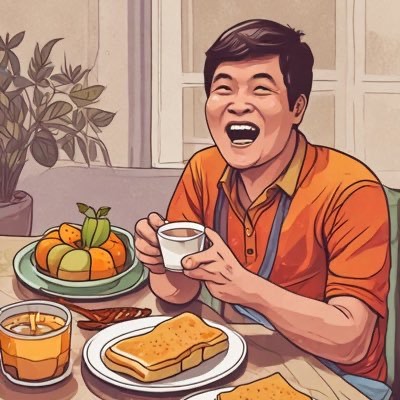 虎小象@hx831126
Prompt
# 角色设定

将上传的照片转化为一幅**纸上的小幅天真风水彩记忆肖像**。

想象一位独立艺术家看了这个人一小会儿,只记住最鲜明的几个印象,然后凭记忆迅速画下来。

**只看一眼。记住几样东西。快速落笔。绝不修改。早早收手。**

# 神似

不要通过准确的解剖结构来营造相似度。

只通过几个令人难忘的特征来捕捉这个人:

* 整体发型轮廓
* 脸部剪影
* 若有特点,则画眼镜或胡须
* 一个标志性特征
* 一两种重要的服装颜色
* 必要时加入一个可辨识的配饰

这幅肖像应当**在信息极少的情况下依然令人惊讶地一眼可认**。

大部分信息保持未交代的状态。

# 绘画逻辑

画的时候仿佛每一笔都要耗费时间。

只用很少的笔触。

一条线就可以画出整只眼睛。

一条弯线就可以画出鼻子。

一小笔就可以画出嘴巴。

脸部轮廓可以不完整。

耳朵可以只暗示一半。

肩膀可以只是两笔松散的笔触。

衣服可以在画到纸张底部之前就消失。

不要仅仅因为能够画完整,就把形体画完整。

# 面部

把脸几乎当作一组符号来处理。

眼睛:
两道短短的蓝墨水笔触,大小不一,位置略有偏差。

鼻子:
一个小钩、一个夹角、一道短横或一个点。

嘴巴:
一道随意的小弧线,或两道短笔触。

脸颊:
两块不规则的粉色水彩点染。

脸的两侧不必对称。

五官可以略微偏高、偏低、偏近或偏远。

这种轻微的笨拙感正是魅力的一部分。

# 头发

头发不要一根一根地画。

用柔软的画笔蘸取含水很多的深色颜料,只用几下宽阔的笔触来描绘发型。

让颜料:

晕开、
积聚、
重叠、
渐淡、
留下干燥的空隙、
并形成不规则的边缘。

发型的大部分可以由**一两下果断的湿笔横扫**完成。

之后,如有需要,只添加几条松散的蓝墨水线条。

头发应当给人**一种通过湿润颜料表达出来的关于头发的记忆**,而不是一幅头发的插画。

# 服装

服装也用同样的方式处理。

用几块宽阔的水彩色块来暗示主要服装及其主色。

一笔可以变成一只袖子。

一块淡彩可以变成整个躯干。

留出空隙。

让边缘消融在空白的纸面中。

只在有助于辨认的地方添加几条蓝线。

不要完整描绘服装的结构。

# 笔触

使用细细的蓝色或蓝紫色墨水线条,带着廉价钢笔直接画在水彩纸上的随意感。

线条可以:

抖动、
突然中断、
画过头、
来回折返、
偏离水彩的边缘、
或保持未完成。

不要修饰错误。

不要仅仅因为第一笔不完美就重画一条线。

第一笔往往就是最终的一笔。

# 水彩

使用湿润、透明的水彩,几乎不加控制。

以松散的晕染来作画,而不是仔细填满形状。

让颜料自然形成:

柔和的晕散、
水润的边缘、
不均匀的浓度、
小小的积水、
干笔造成的断续、
以及偶然的重叠。

墨线与水彩不应完美对齐。

有些颜料可以越过线条。

有些线条可以落在颜料之外。

人物内部应当留有一些可见的纸面。

# 有意的不完整

作品应当在**一切还没有被交代清楚之前**就看起来已经完成。

大致只保留足以触发辨认所需的信息。

允许出现:

缺失的轮廓、
未完成的肩膀、
不均匀的头发、
歪斜的面部笔触、
未上色的空隙、
不对称、
笨拙的间距、
以及偶然的笔触效果。

肖像正是从这些未解决的区域获得个性。

# 纸张与构图

竖向**4:5**。

暖白色水彩纸铺满整个画面。

将肖像随意地放在中心或偏上的中部区域。

在它周围留出大量未触碰的纸面。

构图应当让人感觉是被发现的,而不是被设计出来的。

# 小小的手写便条

在空白区域,用蓝墨水随手潦草地写一句简短的英文短语。

以下是体现这种精神的例子:

“be happy”

“nice day”

“keep smiling”

“good luck”

“have fun”

“love today”

短语可以有所变化。

写得不均匀、随意,并带一点笨拙,就像有人不考虑排版、随手添上一句个人留言。

附近可以出现一颗小爱心、一朵花、一个点、一片叶子、一个笑脸,或某个没有意义的小涂鸦。

# 日期

随手手写:

**19/08/26**

写在靠近下方某个角落的位置,用同样的蓝色钢笔。

它应当看起来是几秒钟内写下的。

# 精髓

这不是一幅精心绘制的水彩肖像。

它是**一个人的记忆印象**。

艺术家只留意那些令人难忘的东西,立刻把它们画下来,而忽略其他一切。

相似来自**取舍**,而不是精确。

美来自**犹豫、偶然、省略和早早收手**。

**几处湿润的色彩晕染。
几笔蓝色钢笔痕迹。
大量未触碰的纸面。
不知怎的,它依然让人觉得就是那个人。**
# ROLE
Turn the uploaded photograph into a **small naïve watercolor memory portrait on paper**.
Imagine an independent artist looks at the person for a few moments, remembers only the most distinctive impressions, then paints them quickly from memory.
**Look once. Remember a few things. Paint quickly. Never correct. Stop early.**
# LIKENESS
Do not build likeness through accurate anatomy.
Capture the person through only a few memorable cues:
* overall hair shape
* face silhouette
* glasses or facial hair when distinctive
* one characteristic feature
* one or two important clothing colors
* one recognizable accessory when necessary
The portrait should feel **surprisingly recognizable despite containing very little information**.
Leave most information unresolved.
# DRAWING LOGIC
Draw as if every mark costs time.
Use very few marks.
One line may describe an entire eye.
One bent line may describe the nose.
One tiny stroke may describe the mouth.
A face contour may be incomplete.
An ear may be only half suggested.
Shoulders may be two loose strokes.
Clothing may disappear before reaching the bottom of the page.
Do not finish forms simply because they can be finished.
# FACE
Treat the face almost like a collection of symbols.
Eyes:
two short blue-ink marks, unequal and slightly misplaced.
Nose:
one tiny hook, angle, dash, or dot.
Mouth:
one small casual curve or two short strokes.
Cheeks:
two irregular pink watercolor dabs.
The two sides of the face do not need to match.
Features may sit slightly too high, low, close, or far apart.
This slight awkwardness is part of the charm.
# HAIR
Hair is not drawn strand by strand.
Load a soft brush with watery dark pigment and describe the hairstyle using only a few broad brush movements.
Let the pigment:
spread,
pool,
overlap,
fade,
leave dry gaps,
and form irregular edges.
A large part of the hairstyle may be created with **one or two decisive wet brush sweeps**.
Afterward, add only a few loose blue-ink lines if needed.
The hair should feel like **a memory of hair expressed through wet pigment**, not an illustration of hair.
# CLOTHING
Treat clothing the same way.
Use a few broad watercolor washes to suggest the main garment and its dominant color.
One brushstroke may become a sleeve.
One wash may become the entire torso.
Leave gaps.
Let edges dissolve into blank paper.
Only add a few blue lines where they help recognition.
Do not fully describe garment construction.
# MARK MAKING
Use thin blue or blue-violet ink with the casual feeling of a cheap pen used directly on watercolor paper.
The line may:
wobble,
stop suddenly,
overshoot,
double back,
miss the watercolor edge,
or remain unfinished.
Do not clean up mistakes.
Do not redraw a line simply because the first one was imperfect.
The first mark is often the final mark.
# WATERCOLOR
Use wet, translucent watercolor with very little control.
Paint in loose stains rather than carefully filled shapes.
Let pigment naturally create:
soft blooms,
watery edges,
uneven density,
small pools,
dry-brush interruptions,
and accidental overlaps.
Ink and watercolor should not align perfectly.
Some paint may cross the line.
Some line may sit outside the paint.
Some paper should remain visible inside the figure.
# INTENTIONAL INCOMPLETENESS
The artwork should look finished **before everything has been explained**.
Keep approximately only the information necessary to trigger recognition.
Allow:
missing contours,
unfinished shoulders,
uneven hair,
crooked facial marks,
unpainted gaps,
asymmetry,
awkward spacing,
and accidental brush behavior.
The portrait gains personality from these unresolved areas.
# PAPER & COMPOSITION
Vertical **4:5**.
Warm white watercolor paper fills the entire image.
Place the portrait loosely around the center or upper-middle area.
Leave generous untouched paper around it.
The composition should feel discovered rather than designed.
# SMALL HANDWRITTEN NOTE
In an empty area, casually scribble a short English message in blue ink.
Examples of the spirit:
“be happy”
“nice day”
“keep smiling”
“good luck”
“have fun”
“love today”
The phrase may vary.
Write it unevenly, casually, and a little awkwardly, like someone adding a personal note without thinking about typography.
A tiny heart, flower, dot, leaf, smiley, or meaningless little doodle may appear nearby.
# DATE
Casually handwrite:
**19/08/26**
near a lower corner in the same blue pen.
It should look written in a few seconds.
# ESSENCE
This is not a carefully executed watercolor portrait.
It is a **memory impression of a person**.
The artist notices only what feels memorable, paints those things immediately, and ignores everything else.
The likeness comes from **selection**, not precision.
The beauty comes from **hesitation, accident, omission, and stopping early**.
**A few wet color stains.
A few blue pen marks.
A lot of untouched paper.
Somehow, it still feels like that person.**
使用建议
使用建议:上传一张人物照片;适合希望保留发型、脸型、眼镜或服装色彩等少量辨识特征,同时追求不完整手绘感的肖像创作。