Image · GPT Image 2
Explain the prompt as an ancient-style comic
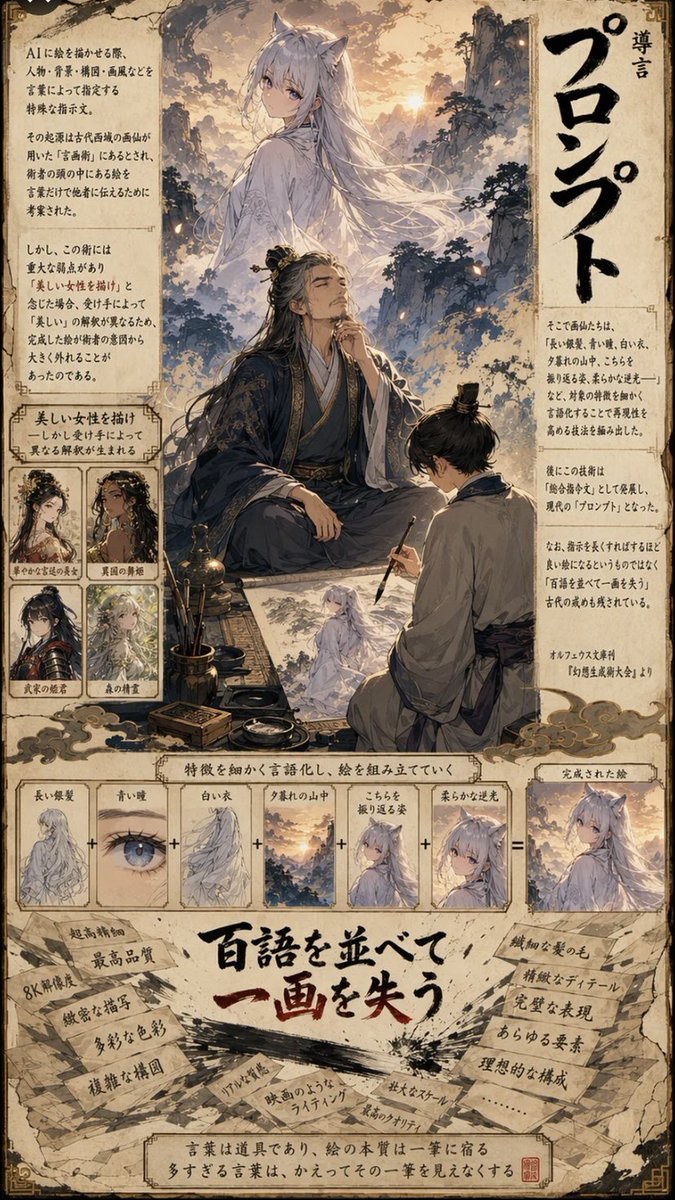
Use ancient-style figures, feature breakdowns, and diagrams to explain how the prompt constructs the image, then use scraps of paper to depict the problem of excessively stacked modifiers. Suitable as a reference for a comic-style instructional layout.
 レティシア・ノエル@N7S6P1
Prompt
This is a vertically laid-out, richly detailed comic-style infographic with a parchment-like textured background. The layout is mainly divided into three sections: a top illustration area, a middle diagram breakdown area, and a bottom text summary area.

Top area:
- A grand and ethereal illustration depicting a woman with long white hair and fox ears (fox spirit), wearing flowing white robes and standing atop a mountain at sunset.
- Below her, an elderly man with long black hair tied back, wearing a dark blue traditional Chinese robe, sits cross-legged holding a calligraphy brush and gazes thoughtfully upward.
- To the right of the elderly man, a young man in a gray robe kneels and draws the fox spirit’s image on paper.
- Blocks of Japanese text surround the scene, explaining the concept of “Prompt” (プロンプト, meaning prompt).
- Four small square character portraits appear on the left, labeled with descriptions such as “美女” and “舞者”, showing different variants of the female character.
- Large vertically arranged Japanese lettering on the right reads “提示词入门”.

Middle area:
- A horizontal flowchart titled “将特征语言化以构建画面”.
- The diagram shows a sequence of six small square images connected by plus signs (+), ultimately leading to an equals sign (=) and a complete final image.
- The sequence includes: 1. Silver hair, 2. blue eyes, 3. white clothing, 4. sunset in the mountains, 5. looking-back pose, 6. soft backlighting.
- The final result is the complete fox spirit figure shown in the top area.

Bottom area:
- A striking large Japanese title in a red-and-black ink style: “百語を並べて一画を失う” (listing a hundred words, losing a stroke in reverse).
- Scraps of paper with handwritten notes are scattered around the title, listing the negative effects of overusing prompts, such as “8K 分辨率”, “超高质量”, “复杂构图”, “不自然光照”, “电影感光照”, “宏大尺度”, “最高品质”.
- The box at the very bottom contains a concluding statement: Words are tools, but too many modifiers obscure the essential spirit of that stroke.
这是一张垂直布局、细节丰富的漫画风格信息图,背景呈现类似羊皮纸的质感。版面主要分为三个部分:顶部插画区、中部图解分解区和底部文字总结区。
顶部区域:
- 一幅宏大而空灵的插画,描绘了一位拥有白色长发和狐狸耳朵(狐妖)的女子,身着飘逸白袍,伫立于日落时分的山巅。
- 在她下方,一位束着黑色长发的老者身穿深蓝色中式传统长袍,盘腿而坐,手持毛笔,若有所思地仰望上方。
- 在老者右侧,一名身着灰色长袍的年轻男子正跪坐着,将狐妖的形象描绘在纸上。
- 场景周围环绕着日文文本块,解释“Prompt”(プロンプト,即提示词)的概念。
- 左侧有四个小型方形人物肖像,标注有“美女”、“舞者”等描述,展示女性角色的不同变体。
- 右侧竖排大号日文字样写着“提示词入门”。
中部区域:
- 一个横向流程图,标题为“将特征语言化以构建画面”。
- 图中展示了由加号 (+) 连接的六个小方形图像序列,最终指向等号 (=) 和一个完整的结果图像。
- 序列内容包括:1. 银色长发,2. 蓝色眼睛,3. 白色衣物,4. 山间日落,5. 回眸姿态,6. 柔和逆光。
- 最终结果即为顶部区域中完整的狐妖形象。
底部区域:
- 一个醒目的红黑墨迹风格日文大标题:“百語を並べて一画を失う”(罗列百词,反失一笔)。
- 标题周围散落着带有手写笔记的碎纸片,列举了过度使用提示词的负面影响,如“8K 分辨率”、“超高质量”、“复杂构图”、“不自然光照”、“电影感光照”、“宏大尺度”、“最高品质”。
- 最底部的方框内有一句结语:词语是工具,但过多的修饰会掩盖那一笔的神韵本质。
How to use
The source work explains prompts through an ancient-style painting scene, breaking down hair, eyes, clothing, and lighting in the middle, while the bottom warns that stacked modifiers may obscure the image’s focus.