Image
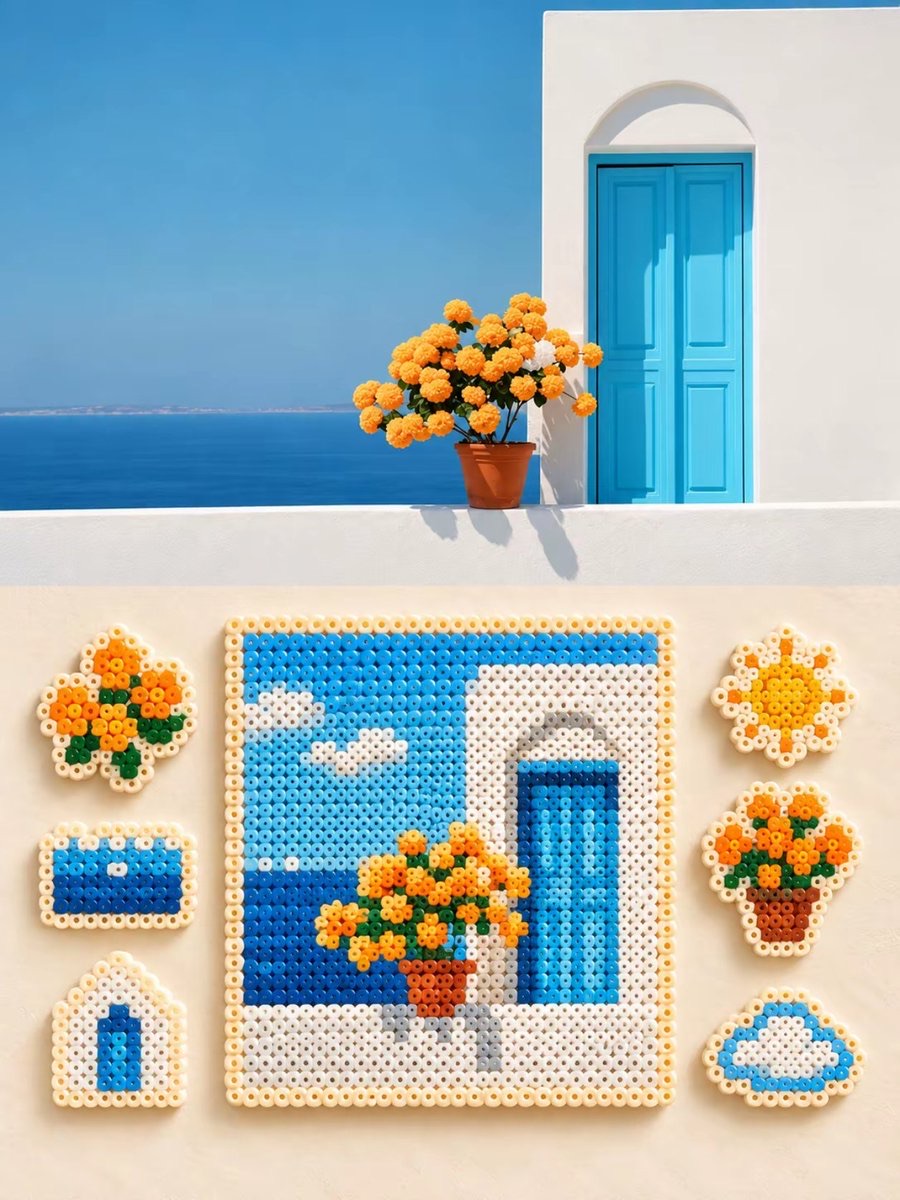
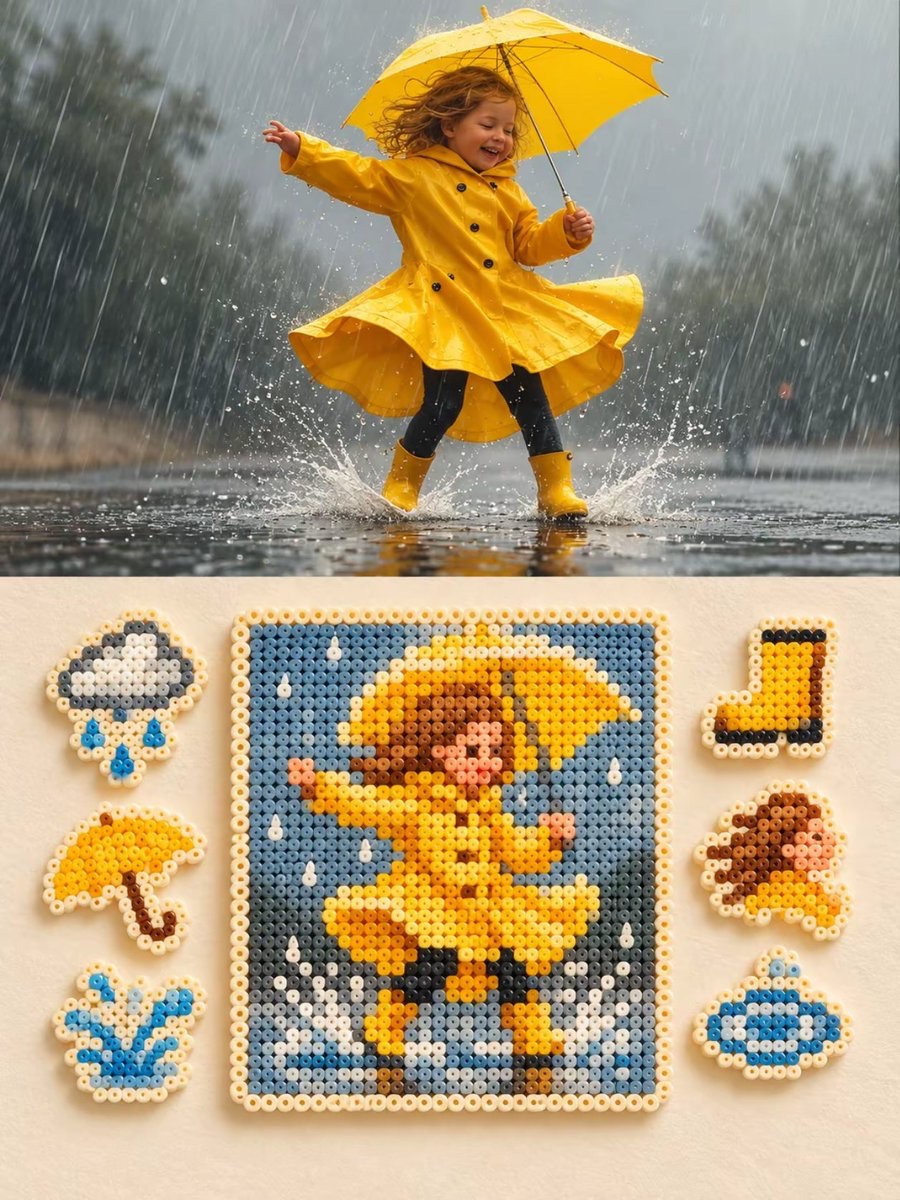
Photo and Perler Bead Dual-Zone Poster
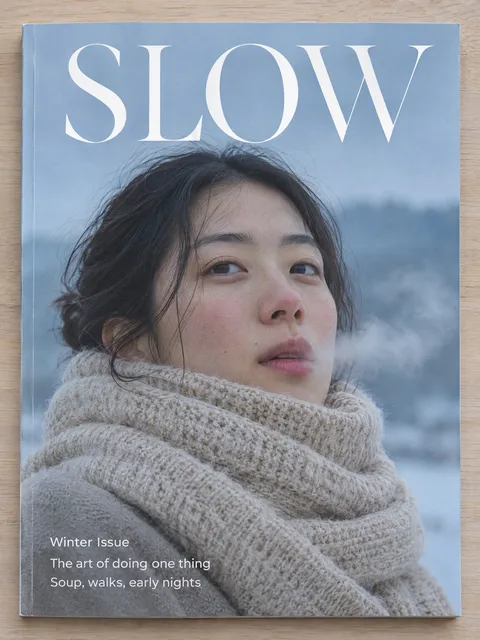
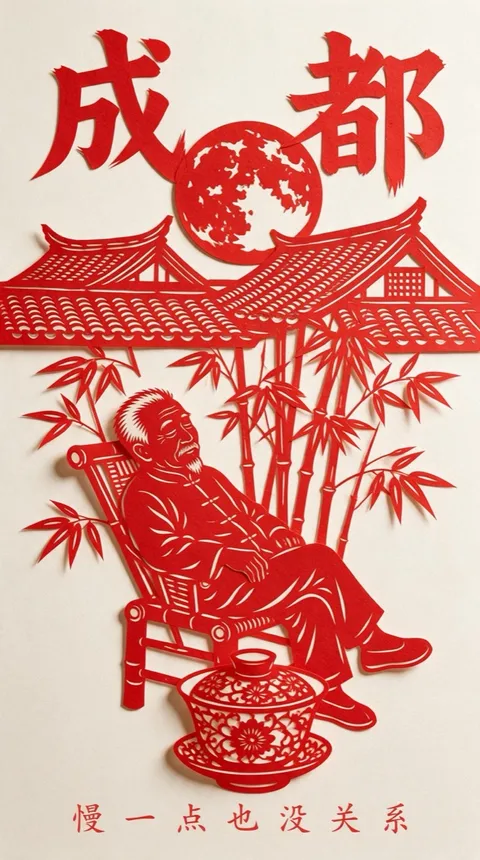
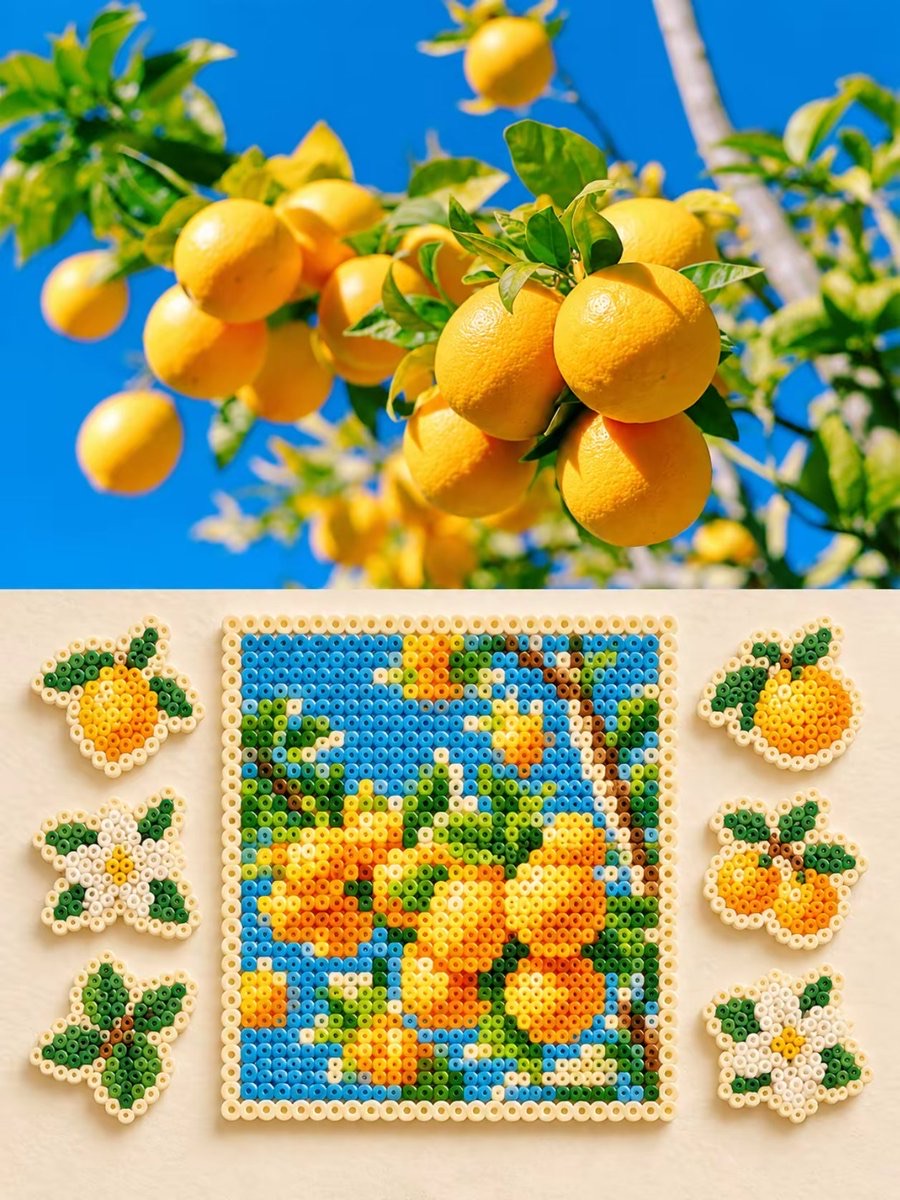
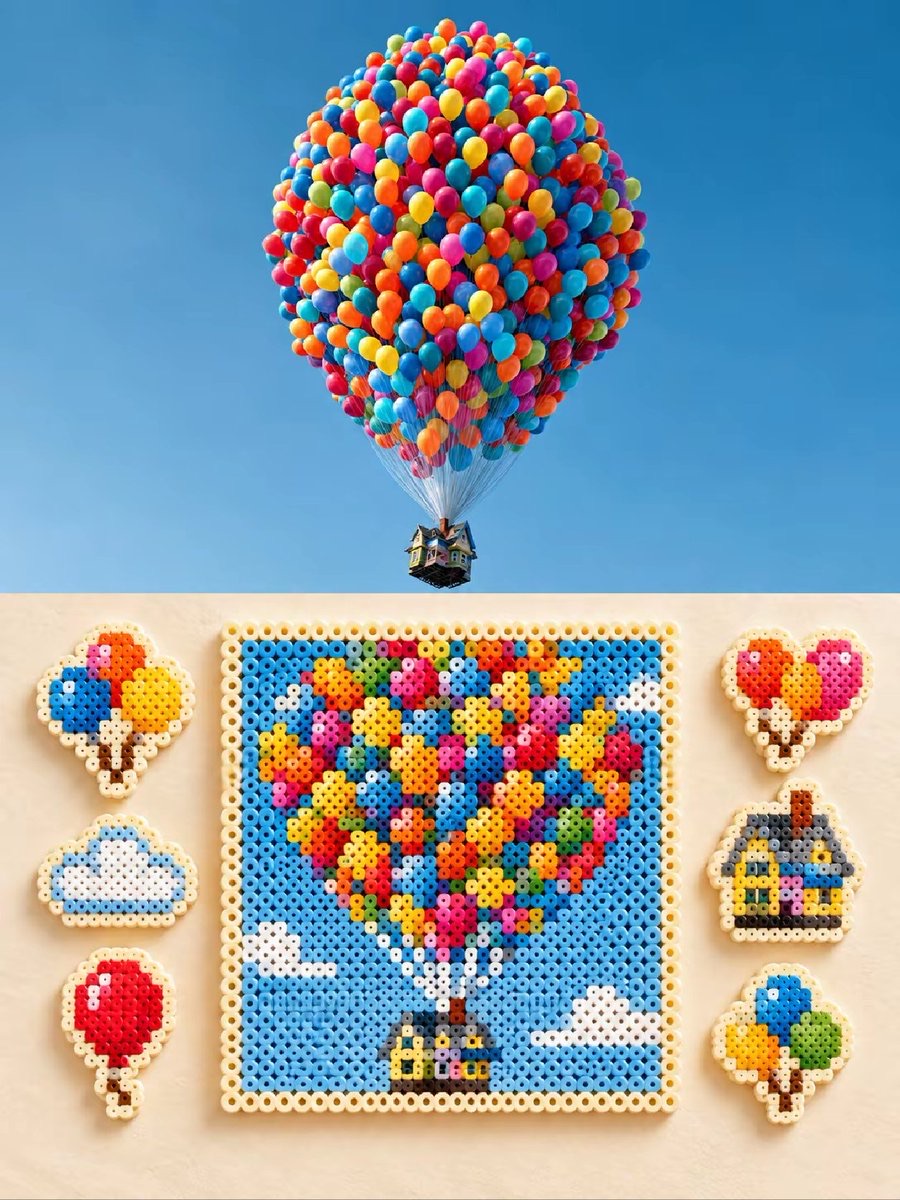
Keep the same user photo in the upper half of the poster, and in the lower half translate it into a handmade fuse-bead pixel art piece with six element patches.
 Aurval 前线@MillerAurval
Prompt
Using each user-uploaded photo as the sole visual reference, generate a separate 3:4 vertical design poster for each one, single sheet per image, with no stitching or merging. The entire canvas is strictly divided into top and bottom zones at a 1:1 ratio, each occupying 50% of the total height. The boundary is stable and clear, and neither side may encroach on the other.

The upper zone fully uses the corresponding original photo, filling edge to edge. Preserve the subject or people in the original photo, facial features, expressions, actions, poses, clothing, accessories, objects, environment, composition, proportions, perspective, spatial relationships, real materials, natural light and shadow, depth of field, and original colors. Only slight premium photographic color grading is allowed, to give it the texture of an art magazine or independent publication. If the proportions do not fit, the background may be naturally extended along the original sky, ground, or environment. However, stretching, distorting, repainting the subject, changing identity, expression, action, posture, or spatial relationships, and adding irrelevant elements are prohibited. The upper zone must have no text, graphics, stickers, or decoration.

The lower zone uses warm, natural off-white textured paper with fine paper fibers, slight grain, and soft diffuse light, keeping ample white space. All content must derive from the same original photo: extract the most important subject outline, character relationships, action posture, visual center, representative colors, background symbols, props, and iconic details, then uniformly translate them into real handmade Perler bead art.

At the exact center of the lower zone, place one large square bead artwork as the absolute visual center. Convert the main subjects and core composition of the original photo into clearly recognizable pixel art, retaining key outlines, poses, character relationships, color zones, and representative details, without pursuing realistic copying. The periphery uses a cream-white or warm off-white bead border. Each individual round bead must be clearly visible. The arrangement carries slight natural handmade error, with a slight melted-plastic sheen, fine bumps, and irregular edges on the surface, avoiding smooth digital illustration or an ordinary mosaic effect. The whole artwork floats slightly above the paper, casting soft shallow shadows.

On the left and right sides of the central artwork, place a total of 6 small irregular-shaped bead patches: 3 on the left and 3 on the right, arranged staggered and balanced above and below. Each patch extracts one recognizable element from the original photo, such as a partial figure, clothing, an accessory, an action prop, a background object, a natural element, or an environmental symbol. All patches use a cream-colored edge, retaining pixel grain, slight plastic texture, and soft shadows, with similar sizes but outlines that vary with the element. Overall, use a hierarchical composition of a large central subject with six small side elements: the center is largest and the surroundings are smaller, and all elements do not touch the edges, do not overlap, and are not crowded.

The entire poster must completely avoid any text, English, Chinese, numbers, letters, titles, labels, logos, watermarks, signatures, or similar characters. The overall mood stays handmade, minimal, gentle, clean, real, and collectible, emphasizing the contrast among three materials: photography, off-white paper, and beads. Avoid excessive cartoonishness, overly glossy plastic, excessive toy feel, overly dense pixels, cluttered elements, crowded patches, and imbalanced top-and-bottom proportions.

#Prompt #AITool #AIPainting #Skill #PerlerBeads
请以用户上传的每张照片为唯一视觉参考,分别生成一张独立3:4竖版设计海报,单张单出,不拼接、不合并。整张画布上下严格1:1分区,各占总高度50%,分界稳定清晰,任何一侧不得侵占另一半。
上半区完整使用对应原始照片,满版铺至边缘。保留原照中的人物或主体、五官、表情、动作、姿态、服装、配饰、物体、环境、构图、比例、透视、空间关系、真实材质、自然光影、景深和原有色彩,仅允许轻微高级摄影调色,使其具有艺术杂志或独立出版物质感。若比例不适配,可沿原有天空、地面或环境自然延展背景,但禁止拉伸、扭曲、重绘主体、改变身份、表情、动作、姿势或空间关系,也不得新增无关元素;上半区不加任何文字、图形、贴纸或装饰。
下半区使用温暖自然的米白色纹理纸,带细腻纸纤维、轻微颗粒和柔和漫反射光感,保持充足留白。所有内容必须来源于同一张原照,提取最重要的主体轮廓、人物关系、动作姿态、视觉中心、代表性色彩、背景符号、道具及标志性细节,再统一转译为真实手工Perler bead熔珠艺术。
下半区正中央放置一幅大号正方形熔珠作品,作为绝对视觉中心,将原照主要主体与核心构图转化为清晰可识别的像素艺术,保留关键轮廓、姿态、人物关系、颜色分区和代表性细节,不追求写实临摹。外围使用奶油白或暖米白熔珠边框。单颗圆形熔珠必须清晰可见,排列略带自然手作误差,表面有轻微熔化塑料高光、细小凹凸和不规则边缘,避免光滑数字插画或普通马赛克效果;整幅作品轻微悬浮于纸面,并投下柔软浅阴影。
中央作品左右两侧共放置6枚小型异形熔珠贴片,左3枚、右3枚,上下错落且平衡排列。每枚分别提取原照中的一个辨识度元素,如人物局部、服装、配饰、动作道具、背景物件、自然元素或环境符号。所有贴片使用奶油色描边,保留像素颗粒、轻微塑料质感和柔和投影,尺寸接近但轮廓随元素变化。整体采用“中央大主体+左右六枚小元素”的层级构图,中央最大,周围更小,所有元素不贴边、不重叠、不拥挤。
整张海报完全禁止出现任何文字、英文、中文、数字、字母、标题、标签、Logo、水印、签名或类似字符。整体气质保持手工、极简、温柔、干净、真实、有收藏感,重点表现摄影、米白纸张与熔珠三种材质对比,避免过度卡通、塑料过亮、玩具感过强、像素过密、元素杂乱、贴片拥挤和上下比例失衡。
#提示词 #AI工具 #AI绘画 #Skill #拼豆
How to use
Usage tips: Upload a photo with a clear subject that includes a recognizable environment or props. When generating, keep the 3:4 vertical ratio, and check that the person’s identity, top-and-bottom zoning, and bead details meet expectations.